
Intro
Nausea and vomiting in pregnancy can make food feel unpredictable, even when you know good nutrition matters. The phrase “morning sickness” is often misleading: queasiness may happen at any time of day, may come in waves, and may be triggered by smells, fatigue, hunger, heat, or certain textures. For many pregnant people, eating becomes less about perfect meals and more about finding small, tolerable ways to stay nourished and hydrated.
This article focuses on food and fluid strategies that may help manage typical pregnancy-related nausea. It is not meant to diagnose the cause of nausea or replace individualized medical care. If vomiting is persistent, you cannot keep fluids down, you are losing weight, or you feel weak or dehydrated, contact a healthcare professional promptly because more intensive treatment may be needed.
Highlights
An empty stomach can worsen nausea for many pregnant people, so small, frequent intake is often more manageable than three large meals.
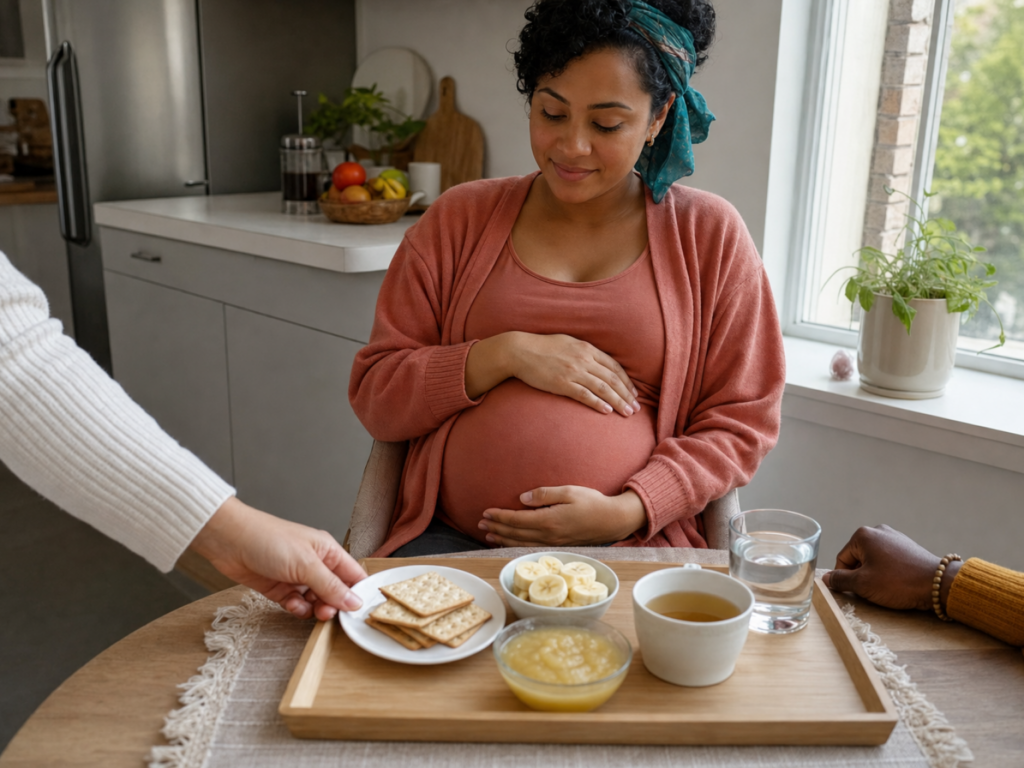
Bland, low-fat, easy-to-digest foods such as toast, crackers, rice, bananas, applesauce, and potatoes are commonly better tolerated.
Cold foods and low-odor meals may be easier when smell sensitivity is strong.
Hydration matters, but drinking large volumes with meals can aggravate nausea; small sips between meals may work better.
Severe or persistent vomiting is not something to simply “push through”; medical assessment can prevent dehydration and complications.
Why eating patterns can affect pregnancy nausea
Nausea and vomiting in pregnancy are influenced by hormonal, gastrointestinal, sensory, and metabolic changes. Human chorionic gonadotropin, estrogen, altered gastric motility, heightened smell sensitivity, and reflux-like symptoms may all contribute. Food choices do not “cause” morning sickness, and symptoms are not a sign of weak willpower. Still, eating patterns can make a noticeable difference in day-to-day functioning.
Many people feel worse when they go too long without eating. An empty stomach may allow gastric acid to build up and can intensify queasiness. On the other hand, very large meals can distend the stomach and slow gastric emptying, which may also worsen nausea. This is why small, frequent meals or snacks are a common first-line nutrition strategy.
Fatty and fried foods often take longer to digest and may aggravate nausea or reflux. Strong-smelling foods can become intolerable because pregnancy can sharpen olfactory sensitivity. The goal is not to follow a rigid “perfect pregnancy diet” during the worst weeks. The immediate aim is to maintain hydration, prevent prolonged fasting, and use foods that your body can tolerate.
Start with small, frequent meals and snacks
A practical approach is to eat a small amount every one to three hours while awake, adjusting to your own pattern. Some people do better with a few bites at a time rather than a full snack. If mornings are hardest, keeping plain crackers, dry cereal, or toast near the bed may help you eat something before standing up. Rising slowly can also reduce the sudden wave of nausea that some people experience.
Small portions are especially useful when fatigue makes meal preparation difficult. A snack does not have to look like a complete meal. A few crackers with cheese, half a banana, a small bowl of rice, applesauce, or a slice of toast may be enough to interrupt the hunger-nausea cycle.
- Try eating before you become very hungry, because intense hunger can be a nausea trigger.
- Keep shelf-stable options nearby: crackers, pretzels, dry cereal, granola bars, rice cakes, or plain biscuits.
- Choose mini-meals if full meals feel impossible: toast with nut butter, yogurt with cereal, soup with bread, or a small baked potato.
- If evenings are worse, consider a bedtime snack with carbohydrate and some protein, such as toast with cheese or crackers with peanut butter if tolerated.
If you have diabetes, a history of disordered eating, gastrointestinal disease, or specific medical dietary needs, ask your clinician or dietitian how to adapt frequent snacking safely.
Foods that are often easier to tolerate
There is no single nausea diet that works for everyone. However, bland, low-fat, easy-to-digest foods are often recommended because they are less likely to provoke the stomach or the senses. The classic examples include bananas, rice, applesauce, and toast. Other simple options include plain pasta, potatoes, oatmeal, crackers, dry cereal, broth-based soups, and lightly seasoned noodles.
Carbohydrate-rich foods can be particularly helpful because they are often easy to digest and can be eaten in small amounts. Protein may also help some people feel more stable, especially when nausea is linked to hunger. The key is to use protein in tolerable forms: eggs may be appealing to one person and impossible for another; yogurt, cheese, tofu, nut butter, lentil soup, or chicken may work depending on aversions.
- Low-odor carbohydrates: toast, rice, pasta, potatoes, oatmeal, cereal, crackers.
- Gentle fruits: bananas, applesauce, melon, pears, or chilled fruit cups.
- Simple proteins: yogurt, cheese, nuts, nut butter, hummus, tofu, eggs, beans, or lean meats if tolerated.
- Lower-fat meals: baked or steamed foods rather than fried foods.
- Milder seasonings: plain, lightly salted, or gently flavored foods when spices or aromas trigger nausea.
Cold or room-temperature foods may be easier than hot foods because they produce fewer aromas. Smoothies, yogurt, chilled sandwiches, cold pasta salad, fruit, or overnight oats may be useful if the smell of cooking is a trigger. Continue to follow pregnancy food safety guidance, especially for refrigerated foods and deli-style items.
Hydration when drinking feels difficult
Hydration is central to nausea management, but the way fluids are taken can matter. Large drinks may stretch the stomach and trigger vomiting, especially with meals. Many people tolerate small, frequent sips better than full glasses. Sipping fluids between meals rather than during meals may also help.
Water is appropriate, but it is not the only option. Some people do better with cold drinks, ice chips, diluted juice, oral rehydration solutions, sparkling water, ginger drinks, lemon water, broth, or popsicles. If vomiting has been frequent, fluids that contain electrolytes may be more helpful than plain water alone. Ask a clinician for guidance if you have kidney disease, hypertension, preeclampsia risk, diabetes, or any condition requiring fluid or electrolyte monitoring.
- Try chilled fluids, ice chips, or popsicles if room-temperature drinks worsen nausea.
- Use small sips every few minutes instead of forcing a full glass.
- Separate drinks from meals if drinking while eating makes you feel too full.
- Watch urine color and frequency as rough hydration clues, while recognizing they are not perfect measures.
Seek medical advice urgently if you cannot keep fluids down, urinate very little, feel dizzy or faint, have a racing heartbeat, or notice signs of dehydration. Pregnancy-related vomiting can progress quickly from uncomfortable to medically significant.
Ginger, sour flavors, and other symptom tools
Ginger is commonly used for pregnancy nausea and is mentioned in several clinical self-care resources. It may be taken as ginger tea, ginger capsules, ginger chews, or ginger-containing foods, but product strength varies widely. Before using concentrated supplements, check with your healthcare professional, especially if you take anticoagulants, have a bleeding disorder, have gallbladder disease, or are scheduled for a procedure.
Some people find sour or tart flavors helpful. Lemon water, citrus slices, sour candies, or lightly tart fruit may reduce queasiness temporarily. Peppermint helps some people but worsens reflux in others. Herbal products are not automatically safe in pregnancy, so discuss regular use of herbal teas or supplements with a clinician or pharmacist.
Non-food strategies can support eating as well. Ventilating the kitchen, avoiding cooking odors, asking someone else to prepare meals, eating outside the kitchen, and keeping snacks in multiple locations can reduce triggers. Rest also matters: fatigue commonly amplifies nausea, and nausea makes fatigue worse, creating a difficult cycle.
Managing aversions and cravings without guilt
Food aversions can be intense in pregnancy. Coffee, meat, eggs, vegetables, garlic, or previously loved foods may suddenly smell or taste unbearable. This can feel upsetting, particularly for people who usually eat a varied diet. During nausea flares, flexibility is a strength. If a nutritious food is intolerable right now, you can often return to it later.
Think in substitutions rather than rules. If meat smells impossible, try yogurt, beans, tofu, nuts, cheese, or eggs if tolerated. If vegetables are difficult, try them cold, blended into soup, paired with a bland starch, or replaced temporarily with fruit and prenatal vitamins as advised by your clinician. If only a narrow range of foods works for a few days, focus on hydration and calories while monitoring for worsening symptoms.
Cravings can also guide tolerability, but they do not need to dominate every choice. Salty crackers, citrus, pickles, or cold fruit may be genuinely useful nausea tools. If cravings lean heavily toward high-fat fast foods, very sweet drinks, or low-nutrient snacks, try pairing the craved food with something more sustaining, such as adding yogurt, fruit, nuts, soup, or a sandwich. The aim is gentle nutritional scaffolding, not shame.
When food strategies are not enough
Dietary adjustments can help many people, but they are not a substitute for medical treatment when nausea and vomiting are severe. Contact your pregnancy care team if symptoms prevent normal eating and drinking, if you are losing weight, if vomiting is persistent, or if you feel unable to function. Clinicians may assess hydration, ketones, electrolytes, weight change, and other possible causes of vomiting. They can also discuss pregnancy-compatible treatments when appropriate.
Hyperemesis gravidarum is a severe form of nausea and vomiting in pregnancy that can involve dehydration, weight loss, electrolyte abnormalities, and the need for medications or intravenous fluids. It deserves prompt care and support. If your experience feels far beyond ordinary nausea, you are not exaggerating and you should not have to manage alone.
It is also important to seek evaluation if nausea begins later in pregnancy, is accompanied by abdominal pain, fever, severe headache, visual symptoms, blood in vomit, diarrhea with dehydration, or reduced fetal movement later in gestation. Not all vomiting in pregnancy is morning sickness.
Seek medical help promptly if
- You cannot keep fluids down or are vomiting repeatedly.
- You are losing weight, fainting, very weak, or unable to function.
- You urinate very little, have dark urine, dizziness, or a racing heartbeat.
- Vomiting is accompanied by fever, severe abdominal pain, headache, visual symptoms, or blood.
- Symptoms feel severe, persistent, or different from typical nausea for you.
Tools & Assistance
- Keep a nausea diary noting timing, foods, smells, fluids, vomiting episodes, and triggers.
- Prepare a bedside snack box with crackers, dry cereal, and a water bottle or electrolyte drink.
- Ask your obstetric clinician, midwife, pharmacist, or registered dietitian about safe medication and supplement options.
- Use grocery delivery, meal help, or ready-to-eat low-odor foods during the worst weeks.
- Seek urgent care or maternity triage if dehydration or severe vomiting symptoms appear.
FAQ
Is it harmful if I cannot eat a balanced diet for a few weeks?
Many people eat a limited diet during the peak of nausea. Short-term imperfect eating is common, but hydration, adequate calories, and prenatal supplementation matter. Tell your clinician if intake is very restricted, weight is dropping, or vomiting is frequent.
Should I drink with meals or between meals?
Either can be acceptable, but many people with nausea tolerate fluids better between meals. If drinking during meals makes you feel overly full or triggers vomiting, try small sips between eating periods.
Are ginger products safe in pregnancy?
Ginger is commonly used for pregnancy nausea, but doses and products vary. Food forms are usually modest, while supplements are more concentrated. Ask your healthcare professional before using ginger capsules or high-dose products.
What if my prenatal vitamin makes nausea worse?
Do not stop prescribed supplements without advice, but contact your clinician. They may suggest changing timing, taking it with food, using a different formulation, or adjusting iron-containing products if appropriate.
When does morning sickness usually need medical treatment?
Medical care is important when vomiting is persistent, fluids cannot be kept down, weight loss occurs, dehydration signs appear, or daily functioning is significantly impaired. Treatment options exist and should be discussed with a clinician.
Sources
- Mayo Clinic — Morning sickness - Diagnosis and treatment
- Ohio State Health & Discovery — Nutrition tips for morning sickness
- NHS — Nausea and vomiting in pregnancy: advice
Disclaimer
This article is for general educational information only and does not provide diagnosis or personalized medical treatment. Consult your obstetric clinician, midwife, pharmacist, or dietitian about persistent nausea, vomiting, dehydration, medications, supplements, or dietary restrictions in pregnancy.















Please log in to leave a comment.