
Intro
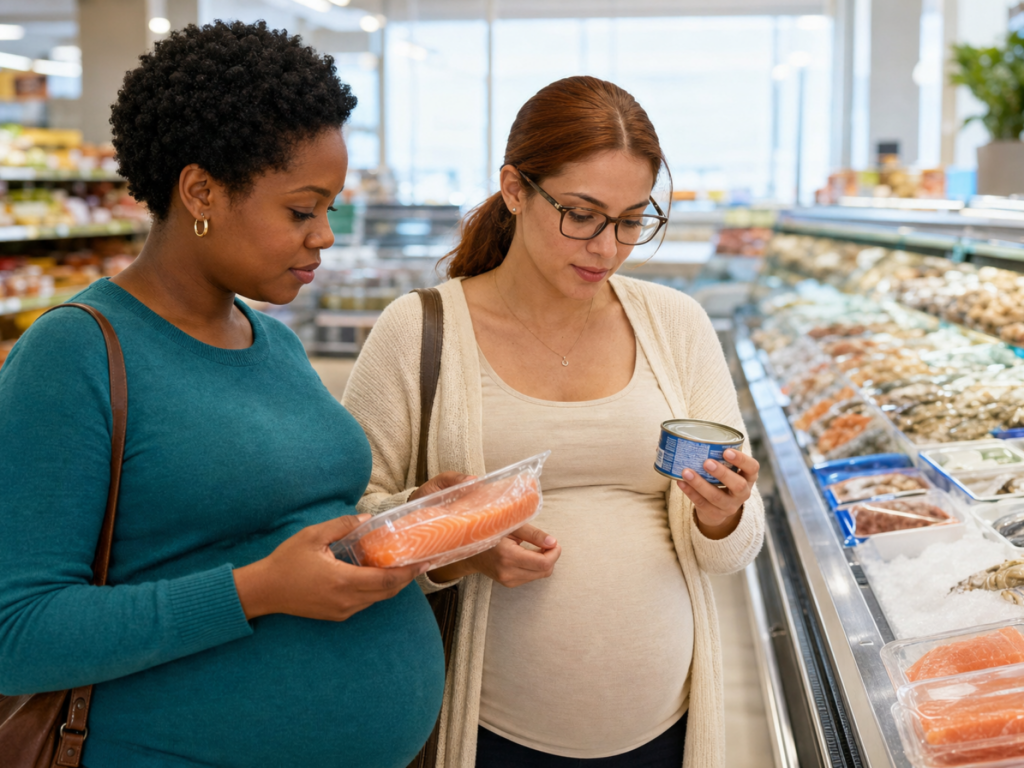
Pregnancy can make routine food choices feel unexpectedly complicated, especially when the same food can offer meaningful benefits and carry specific risks. Fish is a good example: many varieties provide protein, iodine, vitamin D, and omega-3 fatty acids such as DHA, which support fetal brain and eye development. At the same time, some fish accumulate methylmercury, and some seafood can carry bacteria, viruses, or parasites if it is raw, undercooked, or mishandled.
The goal is not to avoid fish altogether unless your clinician has advised that for your individual situation. For most pregnant people, the safest approach is to choose lower-mercury seafood, avoid high-mercury species, and follow careful food-safety practices. If you have eaten a higher-risk food, try not to panic; a single exposure rarely gives enough information to predict harm. Contact your maternity care team for personalized guidance, especially if symptoms develop.
Highlights
Methylmercury is the main mercury form of concern in seafood because it can cross the placenta and may affect the developing fetal nervous system.
Large predatory fish tend to contain more mercury, while many smaller fish and shellfish are lower-mercury choices that can still support pregnancy nutrition.
Food poisoning risks in pregnancy are not limited to mercury; raw shellfish, undercooked seafood, and improperly handled smoked fish can expose pregnant people to pathogens.
Practical risk reduction focuses on species selection, portion awareness, thorough cooking, safe storage, and prompt medical advice for concerning symptoms.
Why fish is both valuable and confusing in pregnancy
Fish can be a nutrient-dense food in pregnancy. It supplies high-quality protein and, depending on the species, omega-3 fatty acids, iodine, selenium, vitamin D, and other micronutrients. DHA, an omega-3 fatty acid concentrated in oily fish, is relevant to fetal neurodevelopment and retinal development. For people who tolerate fish and enjoy it, safer seafood choices can be part of a balanced pregnancy diet.
The confusing part is that seafood risks are not all the same. Mercury is a chemical contaminant, while food poisoning is usually caused by microorganisms or their toxins. A fish meal can be low in mercury but unsafe if it is raw or improperly stored; another fish can be well cooked but still undesirable in pregnancy if it is a high-mercury species. Thinking about both questions separately helps: first, is this a lower-mercury fish? Second, has it been safely prepared?
Mercury and methylmercury: what matters for fetal development
Mercury occurs in several forms, but methylmercury is the main form that accumulates in fish and is the major dietary concern. According to the FDA, seafood is a primary source of methylmercury exposure in the diet. Methylmercury is absorbed through the gastrointestinal tract, circulates in the bloodstream, and can cross the placenta. The developing fetal brain and nervous system are particularly sensitive to toxic exposures, which is why pregnancy guidance is more cautious than general adult advice.
Mercury levels are generally higher in long-lived predatory fish because they eat smaller fish and accumulate methylmercury over time, a process known as biomagnification. This is why species such as shark and swordfish are repeatedly highlighted in public-health guidance. The risk is not that every serving causes harm; rather, repeated exposure to high-mercury fish can raise body burden over time. Preconception and breastfeeding are also relevant periods because mercury can persist in the body and nutritional needs remain high.
Higher-mercury fish and lower-mercury choices
Government guidance varies slightly by country, but the principle is consistent: avoid or strictly limit fish known to have higher mercury concentrations, especially large predatory species. The NHS advises pregnant people not to eat shark, swordfish, or marlin and to limit tuna because it contains more mercury than many other fish. FDA guidance similarly emphasizes choosing lower-mercury fish while avoiding or limiting high-mercury options.
Lower-mercury seafood options commonly include many smaller fish and shellfish. Examples often listed in educational guidance include salmon, sardines, anchovies, trout, tilapia, cod, pollock, shrimp, crab, and scallops. Availability, cultural preferences, cost, and sustainability concerns can all shape choices, so it is reasonable to ask a dietitian, midwife, obstetrician, or local public-health service for advice that fits where you live.
- Usually avoid in pregnancy: shark, swordfish, marlin, and other locally identified high-mercury predatory fish.
- Use limits for tuna: follow your national or clinician-provided guidance on tuna steaks, canned tuna, and overall weekly intake.
- Prefer lower-mercury options: choose smaller fish or shellfish that are commonly categorized as low mercury.
- Check local advisories: fish from lakes, rivers, or coastal areas may have local contaminant warnings beyond general national lists.
Food poisoning risks: raw shellfish, smoked fish, and undercooked seafood
Pregnancy alters immune function and physiology in ways that can make some foodborne infections more concerning. Seafood-related food poisoning may involve bacteria such as Listeria or Vibrio, viruses such as norovirus, or parasites, depending on the food, water source, handling, and preparation. Symptoms can include nausea, vomiting, diarrhea, abdominal cramps, fever, chills, muscle aches, headache, or dehydration, but some infections may be mild or atypical.
The NHS advises avoiding raw or lightly cooked shellfish in pregnancy because it can contain harmful bacteria and viruses. Cooking shellfish thoroughly reduces risk. Smoked fish deserves special attention: guidance may change over time in response to outbreaks, and pregnant people are often advised to ensure smoked fish is thoroughly cooked until steaming hot unless local guidance states otherwise. Sushi and raw fish guidance can vary by country and by whether the fish has been frozen to control parasites, but from a cautious pregnancy perspective, cooked seafood is the lower-risk option.
- Cook fish until the flesh is opaque and flakes easily.
- Cook shellfish such as mussels, clams, and oysters until shells open; discard any that remain closed after cooking.
- Avoid raw oysters, raw clams, and other raw shellfish.
- Keep raw seafood separate from ready-to-eat foods to prevent cross-contamination.
- Refrigerate seafood promptly and respect use-by dates.
Tuna, oily fish, and supplements: balancing benefits and limits
Tuna is nutritionally valuable but contains more mercury than many other commonly eaten fish, so pregnancy guidance usually includes limits rather than unrestricted intake. The exact recommended amount differs by country and by tuna type. If you eat tuna regularly, it is worth checking current national guidance or asking your maternity team how to count tuna portions alongside other fish.
Oily fish such as salmon, sardines, mackerel, and trout can provide DHA and EPA. However, some countries also advise limits on oily fish intake because of other environmental contaminants. This is one reason pregnancy nutrition advice can feel inconsistent: the safest pattern is usually variety, not relying heavily on a single species. If you do not eat fish, DHA supplements may be discussed with your clinician, especially if you follow a vegetarian or vegan diet. Avoid fish liver oil supplements in pregnancy unless specifically advised, because they may contain high levels of preformed vitamin A, which can be harmful in excess.
What to do after a possible high-mercury exposure
If you accidentally ate shark, swordfish, marlin, or more tuna than recommended, it is understandable to feel anxious. In many cases, one meal is unlikely to be treated as an emergency, but your individual risk depends on the species, portion size, frequency of exposure, gestational age, and any additional local contamination issues. Do not start detox products, chelation, or supplements on your own; these can be unsafe and are not appropriate without specialist evaluation.
A practical next step is to stop eating the high-mercury fish, write down what you ate and when, and contact your midwife, obstetrician, family physician, or a poison information service if you are worried. They can advise whether any follow-up is needed. Hair or blood mercury testing is not routinely necessary for everyone and should be interpreted by clinicians familiar with exposure assessment.
When food poisoning symptoms need urgent advice
Food poisoning can be more than an inconvenience in pregnancy because dehydration, fever, and certain infections can affect both maternal and fetal wellbeing. Many mild gastrointestinal illnesses settle with fluids and rest, but pregnancy is a reason to use a lower threshold for medical advice. Contact your healthcare professional promptly if you develop fever, persistent vomiting, bloody diarrhea, severe abdominal pain, signs of dehydration, reduced fetal movements if you are far enough along to monitor them, or symptoms after eating a high-risk food such as raw shellfish.
Seek urgent care if you cannot keep fluids down, feel faint, have a high or persistent fever, have severe headache or neck stiffness, or feel that something is seriously wrong. Clinicians may consider hydration support, stool testing, blood tests, fetal assessment, or targeted treatment depending on the situation. Avoid self-treating with anti-diarrheal or antibiotic medicines unless a healthcare professional recommends them.
Everyday food-safety habits that reduce risk
Food safety is often most effective when it becomes routine rather than fear-based. Buying seafood from reputable suppliers, keeping it cold, cooking it thoroughly, and avoiding cross-contamination all reduce risk. At home, use separate cutting boards or wash boards and knives carefully after contact with raw fish. Wash hands with soap and water before and after handling raw seafood. Keep refrigerator temperatures appropriately cold and do not leave cooked seafood at room temperature for extended periods.
When eating out, choose cooked seafood dishes served hot. If the menu description is unclear, it is completely reasonable to ask whether the fish is raw, seared only on the outside, smoked but not heated, or fully cooked. During pregnancy, these questions are not fussy; they are a normal part of risk reduction.
Seek medical advice promptly
- Fever, chills, severe headache, or flu-like illness after a high-risk food exposure should be discussed with a healthcare professional.
- Persistent vomiting, inability to keep fluids down, dizziness, or reduced urination may indicate dehydration.
- Bloody diarrhea, severe abdominal pain, or symptoms after raw shellfish warrant prompt clinical advice.
- Do not use mercury detox products, chelation, or high-dose supplements without specialist medical supervision.
- If you notice reduced fetal movements later in pregnancy, seek urgent maternity assessment according to your local guidance.
Tools & Assistance
- Keep a simple seafood log if you are unsure how often you eat tuna or other restricted fish.
- Use current national pregnancy food-safety guidance when choosing fish and shellfish.
- Ask your obstetrician, midwife, or dietitian about lower-mercury seafood that fits your diet and culture.
- Check local fish advisories before eating recreationally caught fish.
- Call a poison information service or maternity triage line if you are worried about a specific exposure.
FAQ
Should I stop eating fish completely while pregnant?
Usually no. Many fish are nutritious and can be part of a healthy pregnancy diet. The key is to avoid high-mercury species, follow tuna limits, and choose cooked, lower-mercury seafood.
Is one accidental serving of a high-mercury fish likely to harm my baby?
A single exposure is often unlikely to be treated as an emergency, but it is still sensible to stop eating that fish and ask your maternity care team for individualized advice.
Can I eat sushi while pregnant?
Cooked sushi options are generally lower risk. Guidance on raw fish varies by country and preparation method, but avoiding raw seafood is the more cautious pregnancy choice.
Why is raw shellfish singled out as risky?
Raw or lightly cooked shellfish can contain bacteria and viruses that are reduced by thorough cooking. Pregnancy increases the importance of preventing dehydration and certain foodborne infections.
What if I do not eat fish?
You can discuss alternatives with your clinician or dietitian, including dietary sources of relevant nutrients and whether a pregnancy-appropriate DHA supplement is suitable for you.
Sources
- U.S. Food and Drug Administration (FDA) — Mercury in Food
- NHS — Fish and shellfish
- University of Rochester Medical Center — Is Mercury in Fish Bad for You?
Disclaimer
This article is for informational purposes only and does not replace medical advice, diagnosis, or treatment. In pregnancy, consult your obstetrician, midwife, or other qualified healthcare professional about personal dietary risks or symptoms.














Please log in to leave a comment.