
Intro
Pelvic pain, pressure, and deep aching discomfort are common experiences in pregnancy, but they can be confusing and emotionally draining. Some sensations come from normal anatomical and hormonal adaptation: the uterus enlarges, ligaments stretch, posture shifts, and the pelvic joints become more mobile. Other patterns may point to pelvic girdle pain, urinary infection, preterm labor, or another condition that needs prompt medical assessment.
This article explains the main pregnancy-related causes of pelvic discomfort, how pelvic girdle pain usually feels, practical measures that may reduce strain, and the warning signs that should not be ignored. It is not intended to diagnose your pain; persistent, severe, new, or worrying symptoms deserve individualized advice from a midwife, obstetrician, family doctor, or physiotherapist with pregnancy expertise.
Highlights
Pelvic pressure in pregnancy is often related to uterine growth, posture, ligament stretching, or increased load across the pelvis, but the pattern and associated symptoms matter.
Pelvic girdle pain can cause pain at the pubic symphysis, hips, groin, buttocks, or sacroiliac joints and may worsen with walking, stairs, rolling in bed, or standing on one leg.
Self-care can help many people, especially activity modification, pacing, supportive footwear, gentle movement, and pregnancy-trained physical therapy.
Urgent medical advice is needed for pelvic pain with bleeding, fever, severe abdominal pain, painful urination, fluid leakage, contractions, reduced fetal movement, fainting, or feeling acutely unwell.
Why pelvic discomfort is so common in pregnancy
Pregnancy changes the pelvis mechanically and hormonally. As the uterus enlarges, the center of gravity shifts forward, the lumbar spine often curves more, and the muscles of the abdomen, pelvic floor, back, and hips must share load differently. Hormones that support pregnancy also contribute to increased laxity in ligaments and connective tissues, which can make the pelvic joints less stable for some people.
Pelvic discomfort may feel like pressure low in the pelvis, aching across the pubic bone, pain in the groin, a pulling sensation in the lower abdomen, or soreness around the hips and buttocks. Some people describe heaviness, as if the baby is pressing down; others notice sharp pain with movement. The same person may experience different sensations on different days depending on activity, fetal position, bowel habits, hydration, and fatigue.
Although pelvic pain can be common, it should not be dismissed. The most useful clinical details are location, timing, severity, triggers, associated symptoms, gestational age, and whether the pain is improving, stable, or escalating. Pain that interferes with walking, sleep, work, or daily activities is worth discussing even if there are no emergency warning signs.
Pelvic girdle pain: a frequent cause of pressure, aching, and instability
Pelvic girdle pain, sometimes abbreviated PGP, refers to pain involving the joints and structures of the pelvic ring. It may affect the pubic symphysis at the front of the pelvis, one or both sacroiliac joints at the back, the hips, groin, thighs, or buttocks. The pain can be mild and intermittent, or it can be intense enough to limit mobility.
Typical triggers include walking, climbing stairs, getting in and out of a car, turning over in bed, standing on one leg, lifting, carrying a toddler, or separating the knees widely. Some people hear or feel clicking or grinding in the pelvic area. Others describe a deep ache that worsens by the end of the day or after repeated activity.
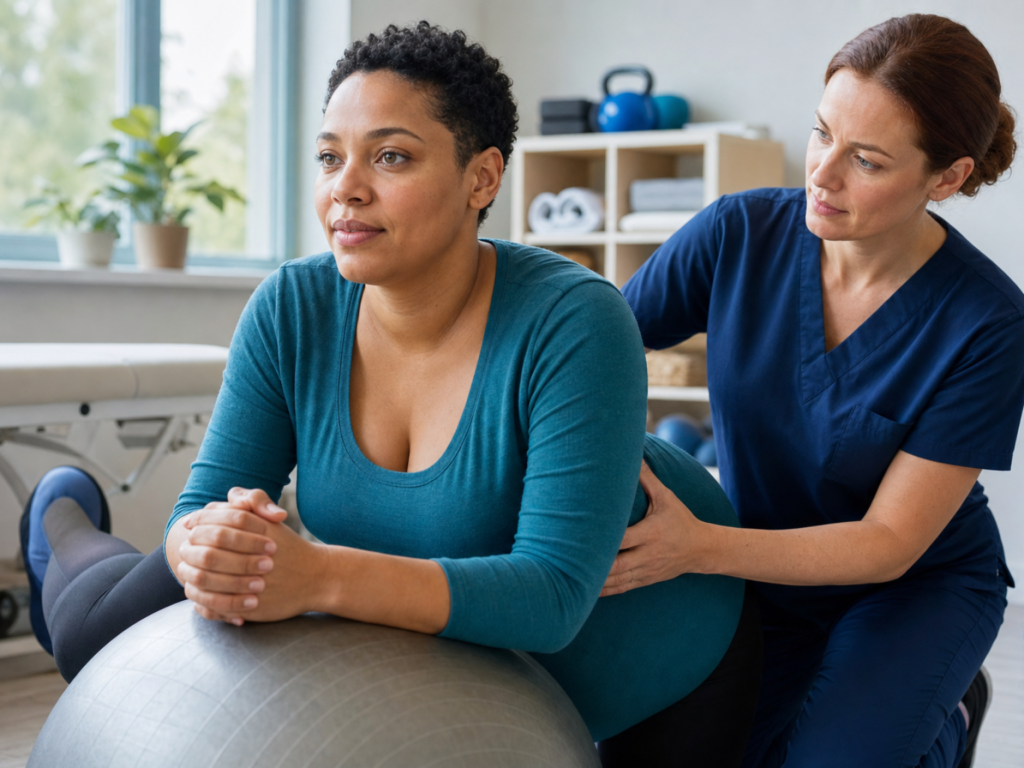
PGP is not usually dangerous to the baby, but it can be very painful and functionally limiting. Early recognition matters because small adaptations can prevent a pain cycle from worsening. A pregnancy-informed physiotherapist may assess gait, pelvic joint irritation, hip strength, posture, and movement patterns, then suggest targeted exercises, manual techniques, braces or belts when appropriate, and practical strategies for daily tasks.
Other common sources of pelvic pressure and pain
Not all pelvic discomfort is pelvic girdle pain. In early pregnancy, mild uterine cramping or pulling can occur as the uterus grows and the supporting ligaments stretch. Round ligament pain is often felt as a sharp or stabbing pain on one or both sides of the lower abdomen or groin, especially with sudden movement, coughing, sneezing, or changing position. In later pregnancy, the weight of the uterus and the baby’s position can create a heavy downward pressure in the pelvis.
Digestive and urinary factors can also mimic pelvic pain. Constipation, gas, and bloating can create cramping or pressure in the lower abdomen. Urinary tract infections may cause pelvic discomfort, bladder pressure, urinary urgency, burning with urination, fever, back pain, or feeling generally unwell. Because infections in pregnancy can progress and may have pregnancy-specific risks, urinary symptoms should be assessed promptly.
Another important distinction is contraction-related discomfort. Braxton Hicks contractions are usually irregular tightenings of the uterus that may be uncomfortable but do not become progressively stronger, closer together, or more painful. Regular contractions, pelvic pressure with backache, menstrual-like cramps, watery fluid leakage, or bleeding can be signs that need urgent obstetric assessment, especially before 37 weeks.
How pelvic pain may feel by trimester
In the first trimester, pelvic sensations are often described as mild cramping, pulling, bloating, or uterine heaviness. These can overlap with digestive changes and early uterine growth. However, severe one-sided pain, shoulder-tip pain, fainting, heavy bleeding, or feeling acutely unwell requires urgent evaluation because early pregnancy complications can also present with pelvic pain.
In the second trimester, the uterus rises out of the pelvis and the musculoskeletal system begins to compensate more noticeably. Round ligament pain, pubic symphysis pain, hip discomfort, and low back involvement may become more prominent. Activity-related pain is common: the pain may flare with walking, housework, stairs, or long periods of standing.
In the third trimester, pelvic pressure often increases as the baby grows and may become lower when the baby’s head engages in the pelvis. This can feel like heaviness, pressure on the bladder or rectum, or aching in the pubic area. Even late in pregnancy, new severe pain, regular painful tightenings, reduced fetal movement, fever, bleeding, or fluid leakage should be treated as potentially significant until a clinician says otherwise.
Practical strategies that may reduce discomfort
Many people improve with a combination of pacing, movement modification, and professional support. The goal is not complete rest unless a clinician specifically recommends it; prolonged inactivity can worsen stiffness, deconditioning, constipation, and mood. Instead, aim to reduce movements that provoke symptoms while keeping gentle, tolerable activity in your routine.
- Keep knees together when rolling in bed, getting out of a car, or rising from a chair if wide leg separation triggers pain.
- Take stairs one at a time, leading with the less painful side when going up and the more painful side when going down if advised by a physiotherapist.
- Avoid standing on one leg; sit down to put on trousers, socks, and shoes.
- Use supportive flat shoes and avoid heavy lifting, twisting while carrying, or pushing heavy objects.
- Break tasks into shorter sessions with rest periods before pain escalates.
- Try sleeping with a pillow between the knees and another supporting the bump if it feels helpful.
Heat or cold packs, warm baths, gentle stretching, and relaxation breathing may help some people. A pelvic support belt can be useful for certain patterns of pelvic girdle pain, but it is best fitted or recommended by a clinician or physiotherapist. If pain relief medication is needed, ask your pregnancy care team or pharmacist what is appropriate for your gestational age and medical history rather than self-medicating.
When to seek medical advice
Contact your pregnancy care provider if pelvic pain is new, persistent, worsening, affecting walking, or not improving with simple measures. You should also seek advice if pain is associated with urinary symptoms, gastrointestinal symptoms that are severe or persistent, or if you are unsure whether the sensation is pelvic pain, cramps, or contractions.
A clinician may ask about the location of pain, gestational age, previous pregnancies, bleeding, vaginal discharge, fetal movement, urinary symptoms, bowel symptoms, fever, trauma, and whether the pain is linked to movement. Depending on the situation, assessment may include abdominal and pelvic examination, urine testing, fetal monitoring, ultrasound, or referral to physiotherapy. The aim is to distinguish common musculoskeletal causes from conditions that need urgent treatment.
Trust your instincts. If the pain feels different from your usual pregnancy discomfort, is severe, or is accompanied by symptoms that concern you, it is safer to call your maternity unit, urgent care service, or emergency number according to local guidance.
Emotional impact and daily life
Pelvic pain can affect more than movement. It can disrupt sleep, limit work, reduce sexual comfort, complicate childcare, and make pregnancy feel less joyful than expected. Frustration, guilt, and anxiety are common responses, especially when others minimize the pain because it is considered a common pregnancy symptom.
It is reasonable to ask for support. This may include workplace adjustments, help with household tasks, transportation changes, physiotherapy, mental health support, or a plan for labor positions that reduce pelvic strain. Pelvic girdle pain often improves after birth, but some people need postpartum rehabilitation, especially if pain was severe or mobility was significantly affected.
Preparing ahead can help. Discuss pain management, safe movement, preferred birth positions, and postpartum support with your healthcare team. A documented plan may make it easier to communicate your needs during appointments and labor care.
Seek urgent care if pelvic pain comes with
- Vaginal bleeding, fluid leakage, or a sudden change in discharge.
- Regular painful contractions, strong menstrual-like cramps, or pelvic pressure before 37 weeks.
- Fever, chills, severe vomiting, fainting, shoulder-tip pain, or feeling acutely unwell.
- Burning urination, flank or back pain, blood in the urine, or suspected urinary infection.
- Severe or worsening abdominal or pelvic pain, especially one-sided pain.
- Reduced or changed fetal movements if you are far enough along to monitor them.
Tools & Assistance
- Call your midwife, obstetric unit, or pregnancy care provider for individualized advice.
- Ask for referral to a physiotherapist experienced in pregnancy-related pelvic girdle pain.
- Keep a brief pain diary noting location, triggers, severity, contractions, urinary symptoms, and fetal movement.
- Use local urgent maternity assessment services or emergency care for red-flag symptoms.
- Discuss safe pain relief options with a clinician or pharmacist before taking medication.
FAQ
Is pelvic pressure normal in late pregnancy?
A feeling of heaviness or pressure can occur as the uterus grows and the baby descends, especially in the third trimester. However, pressure with bleeding, fluid leakage, regular contractions, fever, urinary symptoms, or reduced fetal movement needs prompt medical advice.
Can pelvic girdle pain harm the baby?
Pelvic girdle pain is usually a musculoskeletal condition and is not generally harmful to the baby. It can still be very painful and disabling, so assessment and supportive treatment are important.
Should I stop exercising if I have pelvic pain?
Not necessarily. Many people benefit from modifying activities rather than stopping all movement. Avoid activities that clearly worsen pain and ask a pregnancy-trained physiotherapist about safe strengthening, mobility, and pacing.
How do I tell pelvic pain from contractions?
Musculoskeletal pelvic pain often changes with movement or position and may be localized to the pubic bone, hips, groin, or sacroiliac area. Contractions usually involve uterine tightening that may become regular, stronger, and closer together. If you are unsure, contact your maternity care team.
Will pelvic pain go away after birth?
Many cases improve after delivery as load and hormonal influences change. Some people have persistent postpartum symptoms and benefit from physiotherapy, pelvic floor assessment, and gradual strengthening.
Sources
- NHS — Pelvic pain in pregnancy
- MedlinePlus — Pelvic pain during pregnancy
- American College of Obstetricians and Gynecologists — Pelvic Girdle Pain and Pregnancy
Disclaimer
This article is for informational purposes only and does not replace medical evaluation, diagnosis, or treatment. Seek urgent care for severe, worsening, or concerning pelvic pain or any pregnancy warning signs.













Please log in to leave a comment.