
Intro
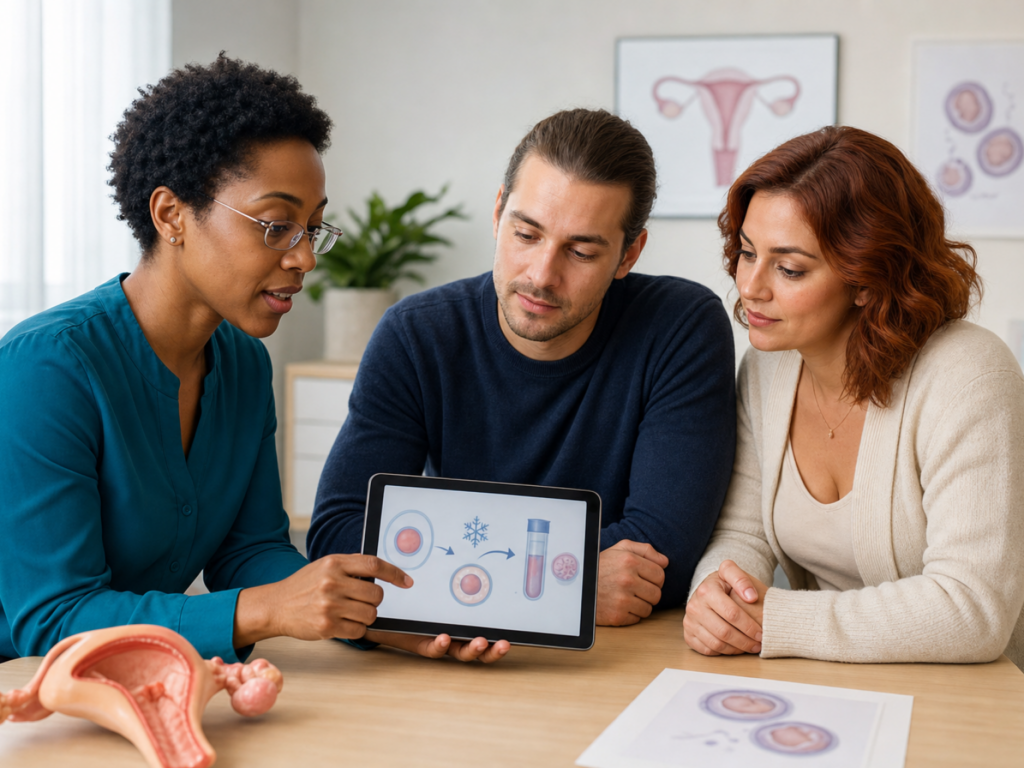
Fertility preservation is the intentional saving of reproductive cells or tissues so they may be used later to try to have a genetically related child. For many people, this conversation begins under pressure: before chemotherapy, radiation, gender-affirming treatment, surgery, or another medical therapy that may reduce future fertility. For others, it is part of planning around age, relationship timing, career or education, or uncertainty about when pregnancy will be possible.
Egg, sperm, and embryo freezing are established fertility preservation methods in reproductive medicine. They can be emotionally complex as well as medically technical: decisions may involve time-sensitive treatment, finances, a partner or donor, future use of stored material, and the reality that freezing improves options but cannot guarantee a baby. A reproductive endocrinologist, urologist, oncologist, genetic counselor, or other specialist can help tailor decisions to your diagnosis, timeline, ovarian reserve, semen parameters, age, and personal goals.
Highlights
Egg freezing, sperm freezing, and embryo freezing are established options for preserving future reproductive potential, especially before gonadotoxic medical treatment.
Timing matters: sperm banking can often be completed quickly, while egg or embryo freezing usually requires ovarian stimulation and egg retrieval over roughly 1–2 weeks.
Embryo freezing requires eggs and sperm now, while egg freezing preserves reproductive autonomy when there is no current sperm source or partner.
Frozen eggs, sperm, and embryos may remain viable for many years when stored correctly, but future pregnancy depends on age at freezing, egg or sperm quality, number stored, uterine factors, and later treatment outcomes.
What fertility preservation means
Fertility preservation refers to medical techniques used to store reproductive cells, embryos, or tissue for potential future use. The most established approaches are mature oocyte cryopreservation, commonly called egg freezing; sperm cryopreservation, often called sperm banking; and embryo cryopreservation, in which eggs are fertilized with sperm and resulting embryos are frozen.
These methods are used in several situations. A person may be facing cancer treatment that can damage ovaries, testes, or sperm production. Others may need pelvic radiation, ovarian or testicular surgery, stem cell transplantation, treatment for autoimmune disease, or medications with gonadotoxic effects. Fertility preservation may also be considered before gender-affirming hormone therapy or surgery. Some people pursue planned fertility preservation because fertility, especially egg quantity and egg quality, changes with age.
The best option depends on anatomy, puberty status, urgency, medical safety, whether sperm or eggs are available, and future family-building preferences. Even when decisions feel rushed, a prompt referral to a fertility preservation program can often clarify what is feasible before treatment begins.
Egg freezing: preserving mature oocytes
Egg freezing stores unfertilized mature eggs for future use. It is often chosen by people with ovaries who do not currently want to create embryos, do not have a partner or chosen sperm source, or prefer not to make embryo-related decisions at the time of preservation.
Most egg freezing cycles involve controlled ovarian stimulation. Injectable gonadotropins stimulate multiple follicles to mature at the same time. Monitoring usually includes transvaginal ultrasound and blood hormone testing. When follicles are ready, a trigger injection helps final egg maturation, and egg retrieval is performed with ultrasound guidance, typically through the vagina under sedation or anesthesia. The eggs are assessed for maturity and frozen, most commonly by vitrification, a rapid freezing technique that reduces ice crystal formation.
The overall timeline is commonly around 10–14 days, though emergency-start protocols may allow stimulation to begin at different points in the menstrual cycle. This can be important for people who need to start chemotherapy or radiation soon. In some hormone-sensitive cancers, clinicians may use modified stimulation protocols, such as adding medications that reduce estrogen exposure, but decisions must be individualized with oncology and reproductive specialists.
Future use requires thawing eggs, fertilizing them with sperm, usually by intracytoplasmic sperm injection, culturing embryos, and transferring an embryo to a uterus. Because eggs are single cells and not all survive thawing, fertilize, develop into embryos, implant, or lead to live birth, the number of eggs frozen matters. Age at freezing is one of the strongest predictors of future success because egg quality declines with reproductive age.
Sperm freezing: banking sperm before risk to fertility
Sperm cryopreservation is typically the fastest and least invasive established fertility preservation method for people who produce sperm. It is often recommended before chemotherapy, pelvic or testicular radiation, some surgeries, or medications that may impair sperm production. When possible, sperm should be collected before gonadotoxic treatment begins.
Collection is usually by masturbation into a sterile container after a recommended abstinence interval, although urgent medical situations may not allow ideal timing. A semen analysis assesses volume, concentration, motility, and other parameters. The sample is mixed with cryoprotectant, divided into vials, frozen, and stored in liquid nitrogen. Multiple samples may be helpful when time permits, but even one sample can be valuable.
If ejaculation is not possible, clinicians may discuss assisted collection methods or surgical sperm retrieval, depending on the situation. For some prepubertal patients, experimental or tissue-based approaches may be considered only in specialized settings with detailed counseling.
Frozen sperm can later be used for intrauterine insemination if post-thaw counts and motility are adequate, or for IVF with ICSI when sperm numbers are low or quality is limited. People banking sperm should also discuss future decision-making: who may use the sperm, what happens in the event of death or incapacity, storage duration, consent forms, and whether donor sperm might ever be considered if the stored sample is insufficient.
Embryo freezing: creating embryos for later transfer
Embryo cryopreservation is one of the longest-established fertility preservation techniques. It involves ovarian stimulation and egg retrieval, followed by fertilization with sperm from a partner or donor. Embryos are cultured in the laboratory and then frozen for possible transfer in a later cycle.
This option may be appropriate when a person or couple is ready to decide on a sperm source and feels comfortable creating embryos now. Compared with egg freezing, embryo freezing provides information about fertilization and early embryo development before storage. However, it also introduces decisions about embryo ownership, future use, disposition if plans change, and legal or ethical considerations if a relationship ends.
Later use involves thawing an embryo and transferring it into the uterus in a frozen embryo transfer cycle. The uterine preparation may be natural, modified natural, or medicated, depending on ovulation patterns, medical history, and clinic practice. Embryo freezing does not eliminate age-related pregnancy risks later in life, and it does not guarantee implantation or live birth, but it can preserve embryos created from eggs at the age they were retrieved.
Some patients also consider preimplantation genetic testing when embryos are created, particularly if there is a known genetic condition or recurrent reproductive history. Testing decisions are nuanced and should be discussed with a reproductive endocrinologist and, when relevant, a genetic counselor.
Choosing among eggs, sperm, and embryos
The choice is not simply technical; it is personal, medical, and sometimes urgent. Sperm freezing is usually preferred when sperm preservation is the goal because it is quick and effective. Egg freezing may suit those who want to preserve fertility without choosing a sperm source. Embryo freezing may suit those who have a partner or donor sperm and want embryos available for future transfer.
- Time available: Sperm banking can often happen within days. Egg or embryo freezing usually requires ovarian stimulation and egg retrieval, often around 1–2 weeks.
- Need for a sperm source: Egg freezing does not require sperm now. Embryo freezing does.
- Age and ovarian reserve: Anti-Müllerian hormone, antral follicle count, and prior response to stimulation can inform expected egg yield, but they do not perfectly predict pregnancy.
- Medical safety: Cancer type, estrogen sensitivity, anesthesia risk, blood counts, infection risk, and urgency of treatment can affect the plan.
- Future autonomy and consent: Embryos may require decisions involving more than one person, depending on consent agreements and local law.
Some people combine approaches, such as freezing both eggs and embryos, when time, medical safety, and finances allow. Others preserve what is feasible and revisit family-building options later, including donor eggs, donor sperm, gestational surrogacy where legal, or adoption.
Success rates and realistic expectations
Fertility preservation increases future options, but it is not an insurance policy. Outcomes depend on many variables: age at the time eggs or embryos are frozen, number of mature eggs stored, sperm quality, embryo development, the health of the uterus, medical history, and the quality of the laboratory and storage program. For sperm, post-thaw motility and total motile sperm count affect whether samples are suitable for insemination or IVF/ICSI.
For egg and embryo freezing, age at retrieval is central. Eggs frozen at a younger reproductive age generally have a higher chance of producing chromosomally typical embryos than eggs frozen later. Still, there is no exact number of eggs that guarantees success. A clinician may estimate probabilities using age, ovarian reserve testing, and expected egg yield, but these estimates are not diagnoses or promises.
It is also important to separate preservation from later pregnancy safety. A person may freeze eggs or embryos at one age and use them years later, but pregnancy at an older age can carry higher risks, such as hypertensive disorders, gestational diabetes, cesarean birth, and complications related to underlying medical conditions. Preconception assessment before using stored material is therefore essential.
Emotional, ethical, and practical considerations
Fertility preservation can bring hope, but it may also arrive at a frightening time. People facing cancer or another serious illness may be asked to make reproductive decisions while absorbing a new diagnosis. Others may feel grief, pressure, uncertainty, or concern about cost. These feelings are valid. Psychological support, fertility counseling, social work, and peer support can be as important as the medical procedure itself.
Before freezing, ask about storage fees, annual renewal, what happens if the clinic closes or transfers storage, and how long material can legally be stored in your jurisdiction. Consent forms should be read carefully. They often cover future use, disposal, donation for research or to others if permitted, and instructions in case of death, separation, or loss of contact.
For people using donor sperm or donor eggs later, additional screening, legal, and counseling steps may apply. For transgender and gender-diverse patients, affirming counseling should include the potential effects of hormones and surgery, options before and after treatment, and future ways to use preserved gametes or embryos.
Questions to bring to a fertility preservation appointment
A focused appointment can help you make decisions quickly without feeling alone. Consider asking:
- How might my diagnosis or treatment affect eggs, sperm, hormones, pregnancy, or sexual function?
- How much time is safely available before chemotherapy, radiation, surgery, or another treatment?
- Am I a candidate for egg freezing, sperm freezing, embryo freezing, or more than one option?
- How many eggs, embryos, or sperm vials might be recommended, and what are realistic expectations?
- What are the procedure risks, including ovarian hyperstimulation, bleeding, infection, anesthesia, or treatment delay?
- How will stored material be used in the future, and what legal consents are required?
- What costs are immediate, what costs recur yearly, and are grants, insurance coverage, or oncology fertility programs available?
If medical treatment is urgent, ask your treating specialist to communicate directly with the fertility team. Coordinated care can reduce delays and help ensure that preservation decisions align with the primary treatment plan.
When to seek urgent specialist guidance
- Do not delay cancer treatment or other urgent therapy without explicit guidance from your treating specialist.
- Seek prompt fertility consultation before chemotherapy, pelvic radiation, testicular surgery, ovarian surgery, or stem cell transplantation when possible.
- Report severe abdominal pain, shortness of breath, rapid weight gain, heavy bleeding, or fever after ovarian stimulation or egg retrieval.
- Clarify legal consent and future use instructions before freezing embryos or sperm with a partner or donor.
- Ask about pregnancy safety before using stored eggs, sperm, or embryos if you have a serious medical condition or are older at the time of use.
Tools & Assistance
- Referral to a reproductive endocrinologist or fertility preservation clinic
- Semen analysis and sperm cryopreservation appointment
- Ovarian reserve testing with AMH, antral follicle count, and cycle history
- Oncofertility consultation coordinated with oncology or surgical care
- Fertility counseling, genetic counseling, or reproductive legal consultation
FAQ
How long can eggs, sperm, or embryos stay frozen?
When stored properly in liquid nitrogen, eggs, sperm, and embryos can remain viable for many years. Practical limits may relate to clinic policy, consent renewal, cost, and local regulations.
Does freezing eggs or embryos guarantee a future baby?
No. Freezing preserves an opportunity, not a guarantee. Success depends on age at freezing, number and quality of eggs or embryos, sperm factors, uterine health, and future treatment outcomes.
Can fertility preservation be done before chemotherapy?
Often, yes, but timing is critical. Sperm banking may be completed quickly, while egg or embryo freezing usually takes about 1–2 weeks. The oncology and fertility teams should coordinate to avoid unsafe treatment delays.
Is embryo freezing better than egg freezing?
Neither is universally better. Embryo freezing provides information about fertilization and embryo development but requires a sperm source and embryo consent decisions. Egg freezing avoids choosing sperm now and may preserve more personal autonomy.
What if sperm counts are very low before treatment?
Even low-count samples may be useful, especially for IVF with ICSI. A reproductive urologist or fertility laboratory can advise whether additional collections or surgical sperm retrieval should be considered.
Sources
- American Society for Reproductive Medicine — Fertility preservation in patients with medical indications: a committee opinion (2026)
- ReproductiveFacts.org, American Society for Reproductive Medicine — Fertility Preservation Journey
- Cleveland Clinic — Fertility Preservation: Purpose, Procedure Options & Benefits
Disclaimer
This article is for informational purposes only and is not a substitute for medical diagnosis, treatment, or individualized fertility counseling. Consult qualified healthcare professionals about your specific risks, timing, and options.















Please log in to leave a comment.