
Intro
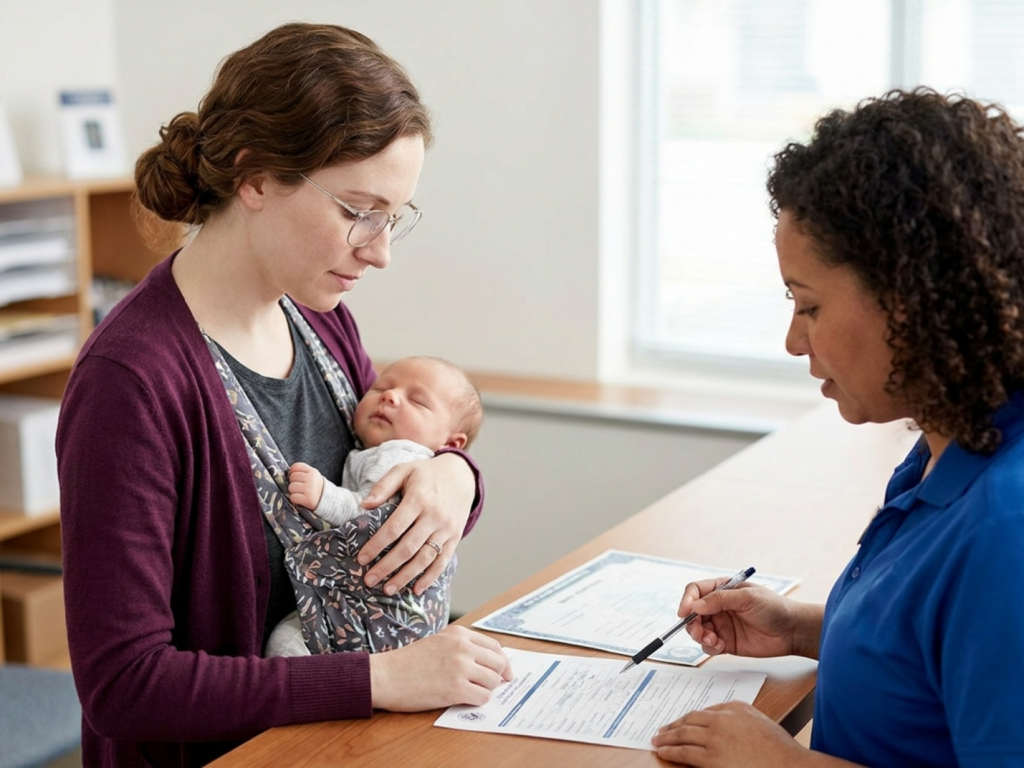
Applying for a baby passport in the United States can feel like a lot to organize during an already demanding period of feeding, sleep disruption, recovery, and newborn care. The process is manageable when you separate it into a few practical tasks: proving the baby’s U.S. citizenship, documenting the parental relationship, obtaining parental consent, gathering identification, and attending the appointment in person.
This guide explains the main documents and steps for a child under age 16, with additional context for teenagers ages 16 and 17. Requirements can depend on the family’s circumstances, so review the current instructions from the U.S. Department of State before submitting an application.
Highlights
A baby passport application requires evidence of U.S. citizenship and evidence of the parent-child relationship.
For children under 16, the child and both parents or guardians generally appear in person unless an exception or alternative consent document applies.
A passport issued to a child under 16 is valid for five years and cannot be renewed by mail.
A certified birth certificate is commonly used, but families should verify that every document is original or an accepted certified copy.
Careful preparation can prevent delays caused by missing signatures, incomplete forms, unacceptable identification, or inconsistent names.
What a Baby Passport Does
A U.S. passport is an internationally recognized identity and citizenship document that allows a U.S. citizen infant or child to travel internationally. A baby needs a passport in the baby’s own name; a parent’s passport does not substitute for the child’s travel document. The passport application is submitted for the child even when the baby is too young to sign or understand the process.
For a child under 16, the passport is generally valid for five years. This shorter validity period reflects the fact that a young child’s appearance can change substantially. A child passport issued before age 16 cannot be renewed by mail. When it expires, the family must generally submit a new application in person and provide updated documentation and a new photograph.
Start early if travel is planned. Processing times, appointment availability, document replacement, and corrections to vital records can all take time. Do not assume that an imminent trip automatically guarantees expedited service. Check the current Department of State instructions for processing options and eligibility.
Proof of the Baby’s U.S. Citizenship
The application must include evidence that the baby is a U.S. citizen. For many babies born in the United States, the principal document is a certified U.S. birth certificate issued by the relevant vital records authority. The document should be an official certified copy rather than a hospital keepsake, birth record worksheet, or informal notification of birth.
Review the birth certificate before the passport appointment. Check the baby’s full legal name, date and place of birth, and the names of the parents. Differences between the birth certificate, application form, and parental identification can lead to questions or delays. If the record contains an error, contact the issuing vital records office to ask about the correction procedure before relying on it for travel documentation.
Children born outside the United States may establish citizenship through different documents, such as a Consular Report of Birth Abroad or other citizenship evidence recognized by the Department of State. The appropriate evidence depends on the child’s circumstances. Families should use the official document list rather than assuming that a hospital record, foreign birth certificate, or parent’s citizenship document alone will satisfy the requirement.
Bring the required citizenship evidence to the appointment and expect the application authority to retain it temporarily for processing or return it according to its procedures. Make copies for your household records when permitted, but do not submit photocopies in place of an original or certified document unless the instructions specifically allow that format.
Proof of Parental Relationship
The application also needs documentation connecting the baby to the adults applying for the passport. A certified birth certificate listing the parent or parents often serves both as evidence of citizenship and as evidence of the parental relationship. Other accepted documents may apply in situations involving adoption, court-ordered custody, guardianship, or a parent’s legal relationship established outside a standard birth certificate.
Bring the complete document requested by the passport authority. A page that omits the parent’s name, an uncertified hospital record, or a court document without the relevant custody provisions may not be sufficient. If the family’s legal situation is complex, gather all documents that explain who has legal authority to apply for the child’s passport.
Names deserve particular attention. A parent may have changed a surname after marriage or divorce, or the child may have a hyphenated or recently changed name. If the names do not align, additional evidence of the legal name change may be needed. The goal is to create a clear documentary chain showing the child’s identity and the applicant’s legal relationship to the child.
Families who are also arranging coverage after delivery may need separate newborn records for insurers or public programs. A special enrollment period after birth is an insurance issue rather than a passport requirement, but keeping the baby’s certified records organized can make both administrative tasks easier.
Parental Consent and In-Person Appearance
For a child under 16, the child generally appears in person with both parents or guardians. The child’s presence is required even if the baby is a newborn and cannot participate in a meaningful way. Both parents or guardians usually provide consent by appearing and signing the application as directed by the acceptance facility.
If one parent cannot attend, the family may need a specific consent form, a notarized statement, evidence of sole legal authority, or another document described by the Department of State. A parent’s absence because of travel, work, military service, incarceration, or an unknown location can involve different supporting evidence. Do not use a general letter or informal explanation unless the official instructions identify it as acceptable.
Bring identification for each appearing parent or guardian. Acceptable identification may include a valid government-issued photo identification document, subject to the current requirements. The acceptance facility generally reviews the identification and receives the application materials. A photocopy of the identification may also be required, including the front and back when applicable.
Custody and guardianship cases require special care. A court order may establish that one adult has authority to apply, but the wording matters. Read the current guidance and consider obtaining legal advice when parental rights, protective orders, international relocation, or disputed custody are involved. Passport staff can explain document requirements, but they do not provide individualized legal representation.
Application Form, Photograph, and Fees
Use the application form specified for a child under 16 and complete it according to the official instructions. Avoid signing until the acceptance agent tells the parent or guardian when and where to sign. An incorrect signature, missing section, or inconsistent information can require correction at the appointment or slow processing.
The baby also needs a passport photograph that meets U.S. passport standards. Infant photographs can be difficult because newborns do not reliably control head position or facial expression. Follow the technical requirements for image size, background, lighting, focus, and visibility of the face. A parent or caregiver should not appear in the image, and supports used to position the baby should not be visible. Some infants may be photographed lying on a plain surface, provided the final image meets the official specifications.
Do not assume that a hospital photograph or an ordinary snapshot will be accepted. Many pharmacies, photography businesses, and other services offer passport photographs, but families remain responsible for checking that the result follows the current government standard. If a photograph is rejected, the application may be delayed until a compliant replacement is provided.
Prepare the application fee and any separate acceptance or execution fee required at the location where the application is submitted. Payment methods vary by agency. Confirm the current fee amounts and payment rules before the appointment, especially if applying through a post office, clerk of court, library, or local government acceptance facility.
How to Prepare for the Appointment
Make one organized packet for the appointment and one separate household copy set. The packet commonly includes the completed application, the baby’s citizenship evidence, proof of parental relationship, identification and copies for the adults, the passport photograph, and the required payments. Include any consent forms, custody orders, guardianship papers, or name-change documents that apply.
Confirm whether the chosen facility requires an appointment and whether it accepts infants. Appointment systems and hours differ by location. Plan for time to feed, change, and soothe the baby, and bring practical supplies so the infant can remain comfortable while staff review the documents. The baby’s distress does not invalidate the application, but a calm, prepared caregiver can make the visit less stressful.
Before leaving, check that the application information matches the citizenship and relationship documents. Confirm that the baby’s name is spelled consistently, both required parents or guardians will attend or have supplied the correct consent evidence, and the photograph is ready. A short checklist can be useful:
- Baby present at the appointment
- Application form completed but unsigned unless instructed otherwise
- Certified citizenship document
- Proof of parental relationship
- Identification and required copies for each adult
- Compliant passport photograph
- Current fees and accepted payment method
- Additional custody, guardianship, consent, or name-change documents when relevant
After submission, track the application through the official status service if available. Keep the receipt and copies of all submitted materials. When the passport arrives, inspect the spelling, date of birth, and other personal details immediately and store the document securely.
Requirements for Ages 16 and 17
The rules change when the applicant is 16 or 17. The teenager generally applies in person and must demonstrate awareness of the application. The Department of State explains that parental awareness may be shown in several ways, including a parent or guardian appearing with the applicant or providing other acceptable evidence of awareness.
Identification and citizenship documentation remain central, but the application is treated differently from an application for a child under 16. A passport issued to an applicant age 16 or older is generally valid for ten years, and the applicant may have different renewal options later. These distinctions are important when a family is planning travel for an older teenager rather than an infant.
For a baby, the under-16 process is the relevant framework. Families should not rely on instructions designed for adult applicants or assume that a child’s passport can be renewed using an adult renewal pathway. Review the age-specific Department of State page each time a new application or renewal is needed because forms, fees, processing times, and procedures may change.
Other Records to Organize for a Baby
A passport is only one part of a baby’s administrative record. Families may also need a Social Security record, health insurance enrollment information, vaccination documentation, discharge paperwork, and medical records from the birth hospital and pediatric provider. These documents serve different purposes and should not be substituted for one another in a passport application.
Keep the passport, birth certificate, and other identity records in a secure location. For travel, carry the passport according to the destination’s entry requirements and consider keeping a secure copy separately from the original. Do not publish images of the passport or birth certificate online, because these documents contain sensitive personal information.
Health records should remain accessible to the baby’s pediatric team. Bring the relevant records to a well-child visit when requested, particularly if care is being transferred between practices. The pediatric clinician can explain which medical documents are clinically useful; passport staff determine which identity documents are legally acceptable.
If an international trip is planned, confirm destination-specific entry rules, transit requirements, visa requirements, and any additional consent expectations for traveling with a minor. A passport establishes identity and nationality for travel, but it does not by itself guarantee admission to another country or resolve a custody dispute.
Documents That Commonly Cause Delays
- Do not submit a hospital souvenir birth record when a certified vital record is required.
- Do not assume one parent can apply alone without the prescribed consent form or evidence of sole authority.
- Do not sign the application before the acceptance agent gives instructions.
- Do not use an ordinary baby photograph that fails official passport-photo standards.
- Do not send original custody or citizenship documents without retaining permitted copies and the submission receipt.
- Do not wait until the week of travel to discover that a vital record, consent document, or appointment is unavailable.
Tools & Assistance
- U.S. Department of State child passport checklist
- Local passport acceptance facility appointment service
- State or territorial vital records office
- Certified passport photo service
- Secure household document folder with copies and receipts
FAQ
Does a newborn need a passport for international travel?
Yes. A baby generally needs an individual passport for international travel. A parent’s passport does not serve as the baby’s passport.
Can one parent apply for a baby’s passport?
Both parents or guardians generally appear for a child under 16. If one cannot attend, the applying parent may need the specific consent evidence or legal-authority documentation described in the official instructions.
Can a baby sign the passport application?
The application is submitted for the baby, but a parent or guardian signs as instructed by the acceptance agent. Do not sign before the appointment instructions are provided.
How long is a baby passport valid?
A passport issued to a child under 16 is generally valid for five years. It cannot be renewed by mail, so a new in-person application is generally required when it expires.
Is a hospital birth certificate enough for a passport?
Usually, the application requires an official certified birth certificate or another citizenship document accepted by the Department of State. A hospital keepsake or informal birth record may not meet that requirement.
Sources
- U.S. Department of State — Apply for a Child's Passport Under 16
- U.S. Department of State — Apply for a Child's Passport Under Age 18
- USA.gov — Get a passport for a minor under 18
Disclaimer
This article provides general administrative information and is not legal, medical, or immigration advice. Confirm current passport requirements with the U.S. Department of State and consult a qualified professional for individual custody, citizenship, or health-record questions.














Please log in to leave a comment.