
Intro
A teething rash around the mouth is common and can be upsetting to see, especially when your baby is already unsettled by drooling, chewing, or sore gums. In most cases, it is an irritant skin reaction caused by saliva sitting on delicate facial skin rather than a dangerous consequence of tooth eruption itself.
Careful skin protection can often help, but it is equally important not to assume every facial rash is related to teething. Understanding the usual pattern, practical care measures, and warning signs can help you decide when a pediatric clinician should assess your baby.
Highlights
Teething rash is usually a saliva-related irritant dermatitis affecting the skin around the lips, chin, cheeks, and sometimes the neck.
Frequent gentle drying and a clinician-approved barrier product may reduce continued moisture exposure without over-cleansing the skin.
A rash with fever, blisters, crusting, marked swelling, spreading redness, or a baby who appears unwell needs medical assessment rather than attribution to teething.
Why teething can lead to a rash
Teething often coincides with increased saliva production and more frequent mouthing, chewing, and rubbing of the face. Saliva repeatedly wets the skin around the lips and chin. As it evaporates or is wiped away, the outermost skin barrier can become dry and disrupted. This is commonly described as irritant contact dermatitis or drool rash.
Infant facial skin is thin and relatively vulnerable to friction, wetness, food residue, and repeated cleansing. Saliva also contains digestive enzymes that may contribute to irritation when it remains in prolonged contact with the skin. A wet bib, damp bedding, pacifier use, and rubbing the mouth against clothing can maintain this moisture-and-friction cycle.
Teething does not directly cause a contagious rash, and it should not be used as an explanation for every new skin change. Rather, tooth eruption may increase drooling and chewing behaviors, which creates conditions that make irritation more likely. This distinction matters because an unrelated infection, eczema flare, food-related reaction, or other dermatologic condition may need different care.
The timing can still be helpful. A mild rash that develops during a period of increased drooling and localized gum tenderness during teething, while the baby otherwise seems well, is more consistent with saliva-related irritation. However, timing alone cannot establish the cause.
What teething rash around the mouth usually looks like
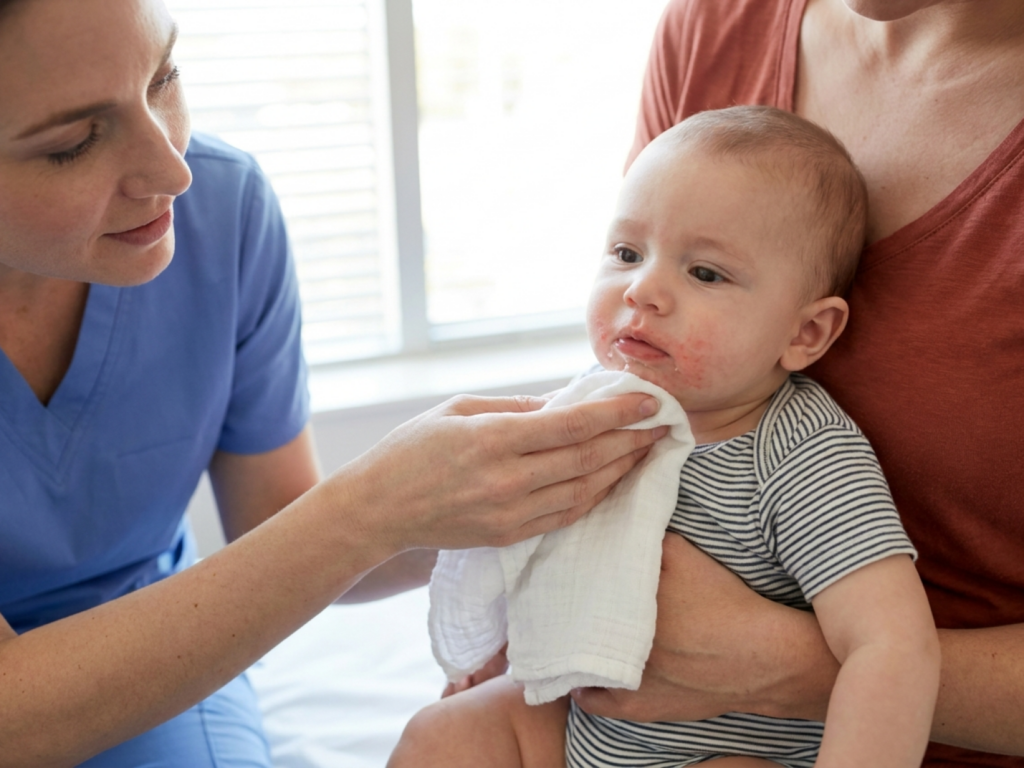
A typical teething rash around the mouth often appears as red or pink patches on the chin, around the lips, and on the lower cheeks. It may extend onto the neck or upper chest where drool collects under the chin or against a bib. The affected skin can look dry, chapped, slightly rough, or shiny from moisture. Small red bumps may also occur.
The rash is generally limited to areas exposed to saliva and friction. It may fluctuate through the day, becoming more noticeable after naps, feeds, heavy drooling, or time spent with a wet bib. Some babies rub the area because it feels uncomfortable, which can add further irritation.
It is less typical for simple drool irritation to cause fluid-filled blisters, honey-colored crusts, rapidly spreading redness, substantial swelling, open sores, or a rash far from saliva-exposed areas. These features do not prove a serious condition, but they warrant a clinical review. Similarly, a baby with fever, poor feeding, lethargy, or signs of pain should not have those symptoms presumed to be part of teething.
Photos online can be useful for general orientation, but they cannot replace an examination. Skin tone, eczema, infection, lighting, and prior use of creams can all alter how a rash appears. A pediatric clinician can assess the distribution, texture, associated symptoms, and whether the skin barrier is intact.
Gentle daily care for irritated skin
The aim of home care is to reduce ongoing saliva contact while preserving the skin barrier. Gentle measures are generally preferable to frequent scrubbing, scented wipes, or multiple new products, which can worsen inflammation. Use clean, soft cloths and pat rather than rub the skin dry.
- Blot saliva from the mouth and chin whenever practical, especially after feeds and before sleep.
- Replace wet bibs, clothing, and bedding promptly so damp fabric does not keep contact with the skin.
- Clean visible milk, food, or saliva residue with lukewarm water and a soft cloth. Avoid harsh soaps unless a healthcare professional recommends one.
- Pat the area dry thoroughly, including skin folds under the chin.
- Ask a pharmacist, pediatrician, or dermatologist whether a simple fragrance-free barrier cream or ointment is appropriate for your baby. A thin protective layer can help limit contact between saliva and the skin.
Apply any barrier product only to clean, dry external skin and follow the product label and clinician guidance. Avoid putting creams inside the mouth or using products with ingredients that have not been recommended for infants. Because damaged skin can be more sensitive, stop a new product and seek advice if it causes more redness, burning, swelling, or a new widespread rash.
Pacifiers can be useful for some babies, but trapped saliva and friction around the mouth may aggravate irritation. Keeping pacifiers clean and allowing the skin to dry during breaks may help. These measures can be part of safe teething comfort measures, alongside supportive care for gum discomfort.
Avoiding common skin-care pitfalls
It is understandable to want a fast solution when your baby has a visible rash, but intensive cleaning can strip already irritated skin. Alcohol-containing products, fragranced wipes, perfumed lotions, essential oils, and exfoliating products are not appropriate approaches for infant drool rash. Scrubbing with a washcloth may also create microtrauma and prolong redness.
Do not use medicated creams, including topical corticosteroids, antifungals, antibiotics, or topical anesthetics, unless they have been specifically recommended for the baby and the affected area by a qualified clinician. Facial skin is particularly sensitive, and the diagnosis may not be straightforward. A medication that is appropriate for one rash can be ineffective or unsuitable for another.
Be cautious about assuming that a new facial rash represents a food allergy simply because it appears after a meal. Food residue, acidic foods, drooling, and rubbing can create localized irritation around the mouth without an allergy. In contrast, hives, facial swelling, vomiting, wheezing, repetitive coughing, or sudden behavioral change after eating require urgent medical guidance. For suspected food reactions, discuss the pattern with the baby’s clinician instead of repeatedly eliminating foods without advice.
Keeping a brief record can be useful if the rash persists. Note when it began, whether drooling has increased, skin-care products used, new foods, distribution of the rash, fever, and changes in feeding or sleep. This information can make a professional evaluation more efficient.
When a rash may be something other than drool irritation
Several common conditions can resemble a teething rash around the mouth. Atopic dermatitis, often called eczema, can produce dry, itchy, inflamed patches on the cheeks and elsewhere. It may be recurrent and associated with a personal or family tendency toward eczema, asthma, or allergic disease. Contact dermatitis may result from a wipe, lotion, detergent, food residue, or another substance touching the skin.
Infection should also be considered when the skin becomes increasingly painful, warm, swollen, oozing, or crusted. Bacterial skin infection may cause yellow or honey-colored crusting. Viral illnesses can cause mouth sores, blisters, or rashes involving hands, feet, or other body areas. Yeast-related rashes are more likely in persistently moist folds and may have a distinctive bright-red appearance with small nearby spots.
The overall condition of the baby is as important as the rash. Teething may coexist with ordinary childhood illnesses, so parents should not dismiss fever, reduced urine output, poor feeding, vomiting, diarrhea, breathing concerns, or unusual sleepiness as teething symptoms versus illness. These concerns deserve assessment based on their severity and the baby’s age.
Contact a pediatric healthcare professional promptly if the diagnosis is uncertain, the rash is worsening despite basic skin protection, or it does not improve over several days. Babies younger than three months with a fever need urgent medical evaluation. Seek emergency care for breathing difficulty, swelling of the lips or tongue, a rapidly spreading rash with illness, or a baby who is difficult to wake.
Supporting your baby through the teething period
Skin irritation can add to the discomfort of tooth eruption, but a calm, consistent routine can reduce both moisture exposure and distress. Keep a soft cloth nearby for gentle blotting, change damp fabrics, and use age-appropriate soothing approaches recommended by your pediatric clinician. The broader pattern of common teething symptoms in babies may include drooling, chewing, temporary fussiness, and localized gum tenderness, but significant illness should always be assessed on its own merits.
For gum discomfort, avoid unapproved numbing gels or products that may be unsafe for infants. Discuss medication questions, including weight-based dosing of pain relievers, directly with a clinician or pharmacist. Supporting a baby through teething does not require treating every symptom as a dental problem; attentive observation and medical advice when something feels different are appropriate.
Caregivers do not need to achieve perfectly dry skin at every moment. The practical goal is to reduce prolonged wetness and friction while allowing the skin barrier time to recover. If your baby’s rash is mild and they are otherwise comfortable and well, simple protective care may be enough. If you are concerned, asking for professional guidance is always reasonable.
Seek medical advice promptly for
- Fever, poor feeding, marked sleepiness, dehydration signs, or a baby who appears generally unwell.
- Blisters, open sores, pus, yellow crusting, rapidly spreading redness, warmth, or significant facial swelling.
- Hives, swelling of the lips or tongue, wheezing, vomiting, or breathing difficulty after food or product exposure.
- A rash that persists, repeatedly returns, worsens with home care, or has an uncertain cause.
- Any fever in a baby younger than three months.
Tools & Assistance
- Pediatrician or family clinician assessment
- Pediatric dermatology consultation for persistent or recurrent facial rash
- Pharmacist guidance on age-appropriate fragrance-free barrier products
- Symptom and skin-care diary with photos for a healthcare appointment
FAQ
How long does a teething rash around the mouth last?
Mild saliva-related irritation may improve within a few days when moisture and friction are reduced. It can recur while drooling remains heavy. Persistent or worsening rash should be assessed by a clinician.
Can I use petroleum jelly for drool rash?
A simple barrier ointment may be appropriate for some babies, but check with a pediatric clinician or pharmacist first, especially if the skin is broken, infected-looking, or your baby has reacted to skin products before.
Does teething rash cause fever?
A drool rash itself does not cause fever. Fever or a baby who seems unwell may indicate an illness occurring at the same time and should be evaluated appropriately.
Should I stop using a pacifier if my baby has a rash?
A pacifier can trap moisture and increase friction in some babies. Keep it clean, offer dry-skin breaks when possible, and discuss persistent irritation with a healthcare professional.
Sources
- Stony Brook Medicine — What's a Teething Rash?
- Medical News Today — What does teething rash look like? Pictures and treatments
- Teething Organisation UK — What is 'drool rash?'
Disclaimer
This article provides general health information and is not a diagnosis or substitute for medical care. Consult a qualified healthcare professional for concerns about your baby's rash or overall condition.

















Please log in to leave a comment.