
Intro
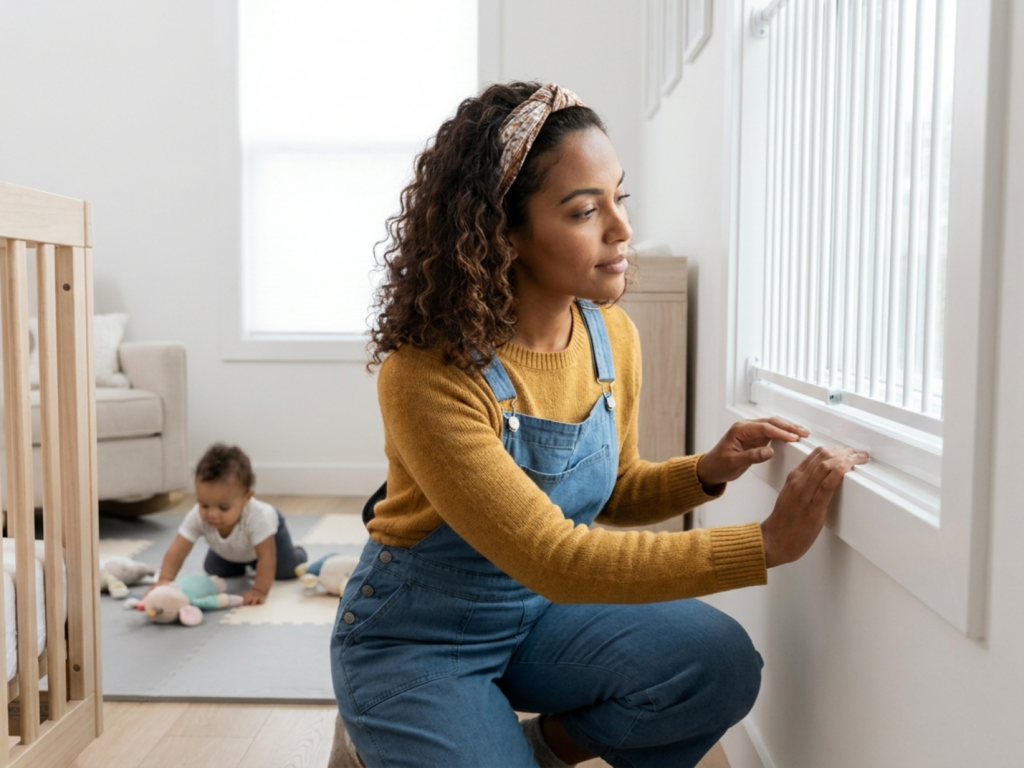
Windows become a significant injury-prevention concern when a baby begins crawling, pulling to stand, cruising, or climbing. A baby who could not reach a windowsill yesterday may be able to move across a room, use a nearby chair for leverage, and lean against a screen today. Because these developmental changes can occur quickly, window safety works best when caregivers anticipate new abilities rather than responding after a near miss.
Most window falls are preventable through environmental controls, careful furniture placement, and active supervision. Screens are not fall-prevention devices, and a closed window is not necessarily secure if it can be opened by a child. The goal is to create a home environment in which a mobile baby cannot reach, open, or climb through a window, while preserving an appropriate emergency exit route for adults.
Highlights
Window screens are designed for ventilation and insect control, not to support a child’s weight.
Keep furniture and other climbable objects at least several feet away from windows whenever possible.
Use window locks, stops, or operable guards that limit openings to no more than four inches and can be released by an adult during an emergency.
Reassess every room when a baby begins crawling, pulling to stand, or climbing because a previously safe arrangement may no longer be safe.
If a baby falls from a window, seek urgent medical evaluation even when the child initially appears well.
Why Mobility Changes the Risk
Infants develop new mobility in uneven and sometimes surprising ways. Crawling may begin with backward scooting, pivoting, rolling, or an army crawl before a conventional hands-and-knees crawl appears. A baby who is not yet walking may still travel efficiently across a room. Once the infant can pull to stand, a low sofa, storage bin, toy chest, or windowsill can become a platform for climbing.
Standing also changes the height at which a baby can interact with the environment. A child may grasp a window handle, push against a screen, lean over a sill, or climb onto furniture without understanding the danger of height. Infants have immature balance reactions and limited judgment, and their center of mass can shift quickly when they reach forward. These factors make a fall from even a relatively low window potentially serious.
Window hazards should therefore be included in developmental anticipation in infancy. Before a baby begins a new movement, inspect the rooms where the child spends time and identify what that movement will make accessible. This approach is part of broader Common baby safety risks prevention: reducing reliance on a baby’s caution and increasing the reliability of the physical environment.
Screens Do Not Prevent Falls
A window screen can look like a barrier, but ordinary screens are not engineered to hold the force of a child leaning, pushing, or falling against them. The screen frame may separate from the window, the mesh may tear, or the entire assembly may give way. A screen that appears intact is not evidence that the window is safe for a crawling or standing baby.
Caregivers should treat a screen as an insect-control component only. Do not allow a baby to lean against it, and do not use a screen as the sole protective measure. This remains true whether the window is on the ground floor or an upper level. A fall from a lower window can still cause traumatic injury, while an upper-floor fall can be life-threatening.
Inspect screens for loose frames, damaged mesh, gaps, and incomplete installation, but understand that repairing a screen does not convert it into a fall-protection device. The National Safety Council advises using child-resistant window safety devices or guards designed for this purpose, including products that meet relevant ASTM F2090 requirements. Follow the product instructions and verify that the device is compatible with the specific window type.
Control How Far Windows Open
Windows in rooms accessible to a mobile infant should remain closed and locked whenever they are not being used by an adult. A lock is important because an unlocked window may be opened by a curious child, but a lock alone may not be sufficient if the child can reach the handle or if the window can be opened wide after the lock is released.
Window stops, opening-control devices, and operable window guards can limit the opening to a narrow gap. Public-health guidance commonly specifies a maximum opening of four inches for windows above the first floor. The purpose is to prevent a child’s head and body from passing through the opening while still allowing ventilation where appropriate.
Installation requires attention to the window’s design and the manufacturer’s instructions. Test the device after installation by applying gentle pressure and checking whether the window opens farther than intended. Recheck it periodically because screws can loosen, hardware can wear, and household members may unintentionally disengage the control. Renters should ask the landlord or property manager about approved devices and should not install hardware that violates the building’s emergency-egress requirements.
Window guards should be removable or have an approved quick-release mechanism when emergency removal is necessary. Adults in the household should know how the release works, and the mechanism should not require a key, special tool, or complicated sequence during an emergency unless local safety requirements specifically permit it.
Remove Climbing Routes
Furniture placement is one of the most effective ways to reduce window access. Move cribs, beds, sofas, chairs, ottomans, benches, shelving units, toy boxes, and other climbable objects away from windows. A baby does not need to be able to climb independently for furniture to create risk; pulling up, kneeling, or leaning can be enough to reach a sill or handle.
Keep cords, drapery hardware, and loose window coverings out of the child’s reach. Although the primary concern in this article is a fall, accessible cords can create additional strangulation hazards, and loose objects on a sill may encourage a baby to approach the window. Avoid placing large toys, activity centers, or boxes beside a window because they can function as steps.
Secure tall or unstable furniture to the wall according to the manufacturer’s instructions. This addresses both window access and furniture tip-over risks. A child who climbs onto a dresser or bookcase may be exposed to two hazards at once: the furniture can tip, and the child may then reach the window. Inspect the entire route from the floor to the sill rather than focusing only on the window hardware.
When possible, create a floor-level play area away from windows. A defined play space can make supervision easier and gives the baby an appropriate location for practicing crawling, standing, and cruising. It should still be checked for cords, unstable objects, small parts, and other hazards.
Use Supervision as a Secondary Layer
Active supervision matters, but it should supplement physical safeguards rather than replace them. Babies can move quickly and silently, especially when a caregiver is cooking, using the bathroom, answering a phone call, or helping another child. A brief lapse in visual attention may be enough for an infant to reach a window or climb onto furniture.
When a window is open for ventilation, keep the baby in another area or within continuous adult reach, depending on the window configuration and the effectiveness of the installed safety device. Do not assume that a baby is safe because the child has not previously shown interest in windows. Curiosity and motor skills can change from one day to the next.
Communicate the household rules to every caregiver, including grandparents, babysitters, and visitors. Explain that screens are not barriers and identify which windows must remain locked or restricted. During moves, renovations, or furniture rearrangements, repeat the inspection because temporary placements can create new climbing routes.
Supervision is especially important in unfamiliar settings such as hotels, relatives’ homes, vacation rentals, and childcare environments. Before placing a baby on the floor, check window height, opening size, screen condition, furniture placement, and the availability of locks or guards. A familiar room at home may be childproofed, while a temporary room may not be.
Balance Fall Prevention With Emergency Egress
Window safety devices must be selected and installed so they protect the child without creating an unsafe obstacle for adults during a fire or other emergency. A window that serves as an emergency exit must remain usable by the people who may need to escape. This is why some window guards are designed with quick-release mechanisms and why local building and fire-safety requirements matter.
Identify which windows are designated emergency exits before installing guards, stops, or locks. Check that an adult can release or open the device promptly and that the opening provides the required clearance. Do not block the exterior access point with bulky objects, and make sure household members know where keys or release points are located if they are part of the system.
Child-resistant window devices should not be modified in a way that defeats their safety function. If a device is difficult to operate, damaged, missing parts, or incompatible with the window, contact the manufacturer, a qualified installer, the landlord, or the local fire department for guidance. In multi-unit housing, building-specific rules may apply.
Emergency planning should also include a working smoke alarm plan and a family evacuation route. Window guards are only one part of household preparedness. The correct balance is a reliably restricted window during ordinary use and an accessible emergency exit when an adult needs to release it.
What to Do After a Window Fall
A fall from a window can cause traumatic brain injury, spinal injury, fractures, internal bleeding, or other trauma. Some serious injuries are not immediately obvious, and a child may appear alert shortly after an impact. If a baby falls from a window or strikes the head, call emergency services or seek urgent medical care according to the severity of the event and local emergency guidance.
Do not move the baby unnecessarily if a neck, back, or spinal injury is possible, unless movement is needed to remove the child from immediate danger or to provide basic life support. Keep the baby as still and calm as possible while waiting for professional help. Do not give food, drink, or medication unless directed by a healthcare professional.
Emergency warning signs can include loss of consciousness, seizure, repeated vomiting, unusual sleepiness, confusion, difficulty waking, abnormal behavior, weakness, unequal pupils, breathing problems, persistent inconsolable crying, bleeding, or fluid from the nose or ears. These signs require immediate emergency attention. Even without these symptoms, a healthcare professional should assess a significant fall because infants cannot describe headache, dizziness, or visual changes reliably.
After the child has received appropriate care, review the environment promptly. Identify how access occurred, replace or repair failed hardware, move furniture, and reassess every window in the home. The purpose is not blame; it is to understand the pathway and remove the conditions that could permit another fall.
Urgent Safety Warnings
- Never rely on a window screen to prevent a baby from falling.
- Keep furniture, toys, and other climbable objects away from windows.
- Limit accessible window openings to no more than four inches where recommended by safety guidance.
- Do not disable a window guard or stop without confirming how emergency escape will remain possible.
- Seek urgent medical evaluation after a significant window fall, even if the baby initially appears normal.
Tools & Assistance
- Inspect every window and screen at the start of crawling and again when the baby begins pulling to stand.
- Measure the maximum window opening and verify that installed stops or guards remain secure.
- Create a furniture-free zone around accessible windows.
- Ask a landlord, qualified installer, or local fire department about compatible quick-release guards and emergency egress.
- Discuss injury evaluation with a pediatric healthcare professional after any suspected fall or head impact.
FAQ
Are window screens safe if they are firmly attached?
No. Screens are not designed to support a child’s weight or prevent a fall. Use appropriate window locks, stops, or guards in addition to keeping the screen in good condition.
How far should a window open around a crawling or standing baby?
For windows above the first floor, cited safety guidance recommends limiting the opening to no more than four inches. Use a device designed for the specific window and confirm local requirements.
Should a crib be placed near a window if the window is locked?
It is safer to place the crib and other furniture away from windows. A baby’s abilities change quickly, and a locked window may still be reachable or become accessible if hardware fails or is disengaged.
What should I do if my baby falls from a window but seems fine?
Contact emergency services or seek urgent medical care based on the fall and local emergency guidance. Serious injuries may not be immediately apparent, particularly in infants.
Can window guards be installed on emergency-exit windows?
Some products are designed for emergency removal, including quick-release models. Confirm compatibility, local fire and building requirements, and adult operation before installation.
Sources
- New York State Department of Health — Home Fall Prevention, Infants Ages Birth to One Year
- National Safety Council — Window Safety
- Mary Bridge Children's — Protect your kids from accidental window falls
Disclaimer
This article provides general educational information and does not diagnose or treat injuries or replace advice from a pediatrician, emergency clinician, fire-safety professional, landlord, or qualified installer. Seek urgent medical care after a significant fall or suspected head, neck, or spinal injury.
















Please log in to leave a comment.