
Intro
Caring for a baby alone can feel demanding even when everything is going well. One adult may need to interpret feeding cues, change diapers, prepare supplies, soothe crying, monitor safety, and manage basic household needs without another person immediately available. The goal is not perfect efficiency. It is to create a safe environment, simplify decisions, and recognize when support is needed.
Planning a few reliable routines before the other parent leaves can reduce cognitive load. A prepared safe area, accessible supplies, clear emergency contacts, and realistic expectations help one parent respond calmly while preserving the baby's essential needs and the caregiver's wellbeing.
Highlights
Prepare the baby's safe zone, feeding supplies, and emergency contacts before the other parent leaves.
Keep the baby within sight or hearing during routine tasks, and use a safe sleep space when you must step away.
Use responsive feeding and soothing while maintaining safe positioning and supervision.
A crying baby can be placed safely in the crib for a brief break when the caregiver feels overwhelmed.
Accepting practical help is a safety strategy, not a failure of independence.
Prepare the Environment Before You Are Alone
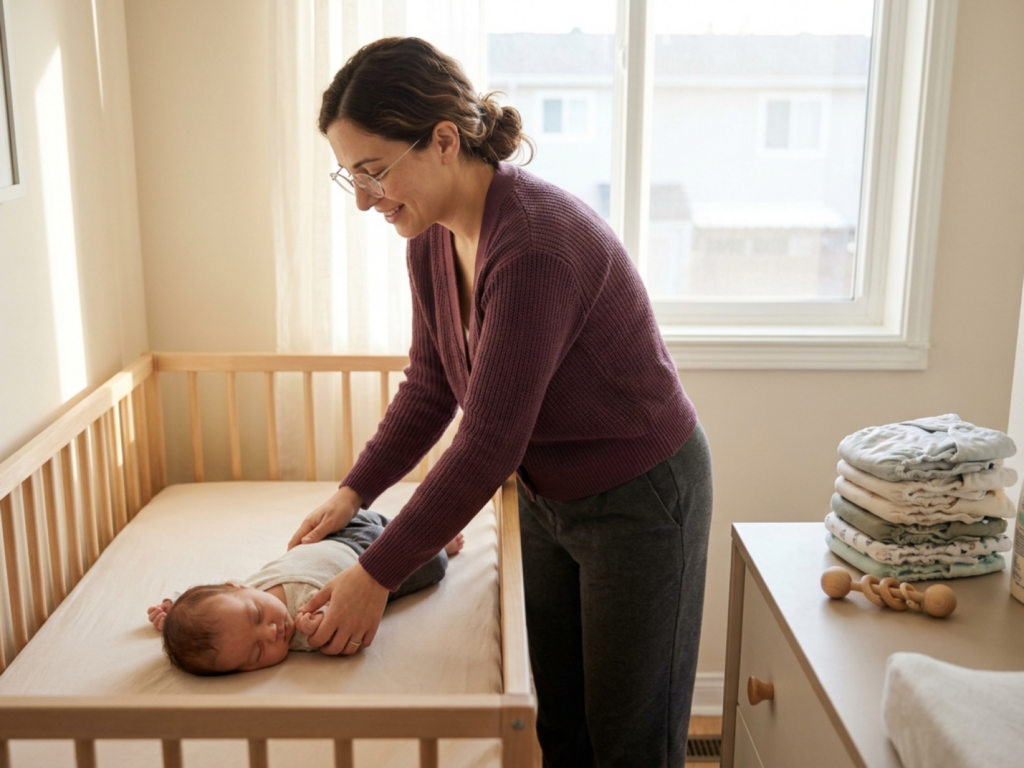
Preparation is most useful when it reduces the number of times you must leave the baby or make a complex decision. Choose a primary care area where you can safely place the baby while using both hands. Depending on developmental stage, this may be a crib, bassinet, play yard, or floor-based space that is free of small objects, cords, loose bedding, and unstable furniture. Keep diapers, wipes, spare clothing, burp cloths, feeding equipment, and water for the caregiver within reach.
Scan the room from the baby’s perspective. Medicines, cleaning products, cosmetics, batteries, plastic bags, and other potentially toxic or choking hazards should be secured out of reach, preferably in locked storage. Window cords, electrical cables, tablecloths, and furniture that could be pulled over require particular attention as the infant becomes mobile. Use stair gates and window guards where appropriate, but remember that barriers do not replace supervision.
Make a short written reference for the day. Include the baby’s usual feeding pattern, allergies or feeding restrictions if applicable, current medications prescribed by a clinician, healthcare contacts, insurance information, and the other parent’s location. A written handoff plan can also record the last feed, diaper change, sleep period, and any unusual behavior. This prevents guesswork when fatigue or interruptions make memory less reliable.
Protect Safe Sleep and Prevent Falls
Every sleep period should begin in a safe sleep environment. Place the baby on the back, on a firm, flat sleep surface designed for infants, with no pillows, quilts, bumper pads, stuffed toys, or loose blankets. Keep the crib or bassinet free of objects that could obstruct breathing. Room-sharing without bed-sharing can make supervision easier while preserving a separate sleep surface.
Never rely on a sofa, adult bed, recliner, changing table, or other elevated surface as a temporary place to put the baby. A caregiver who is holding an infant can fall asleep unexpectedly, especially after nighttime care or prolonged crying. If you feel drowsy, transfer the baby to the designated sleep space before resting. A few extra minutes of crying are safer than an unplanned sleep on an unsafe surface.
Falls become more likely when one parent is carrying supplies, answering a call, or trying to complete several tasks at once. Keep one hand available on stairs and use a secure infant carrier or crib for transitions rather than placing the baby on a counter or table. Fasten the baby correctly in a stroller, carrier, or high chair according to the manufacturer’s instructions. As soon as rolling begins, never leave the baby unattended on an elevated changing surface, even for a moment.
Feed With Supervision and a Simple Plan
When feeding alone, arrange the area before starting so that you do not need to reach for a phone, drink, burp cloth, or bottle while holding the baby. Use the feeding method recommended for your infant and follow the instructions provided by your pediatric clinician or lactation professional. Responsive feeding means observing hunger and satiety cues rather than treating a clock as the only guide. Early hunger cues can include rooting, hand-to-mouth movements, and increased alertness; crying is often a later cue.
Hold the baby in a stable position and keep the airway visible. Never prop a bottle, leave a baby alone with a bottle, or feed while the infant is lying flat. Bottle-feeding should be supervised because poor positioning, rapid flow, or fatigue can increase choking risk. Test warmed milk on the caregiver’s skin rather than relying on a microwave, which can create hot spots. Follow safe preparation, storage, and discard instructions for breast milk or formula, and ask a healthcare professional about any uncertainty.
Keep feeding equipment clean and organized. If the baby coughs, gags, turns blue, becomes limp, or cannot breathe effectively, treat the situation as an emergency and follow infant first-aid or CPR training instructions while calling emergency services. Choking first aid differs from ordinary coughing, so every primary caregiver benefits from current certification through a recognized provider.
Handle Bathing, Diapering, and Routine Tasks Safely
Bathing requires continuous, close supervision. Keep one hand on the baby when the infant is in or near water, and prepare towels, clothing, cleanser, and diapers before placing the baby in the bath. Do not leave to answer the door, retrieve a forgotten item, or attend to another child. If you must leave, take the baby with you. Infant bath seats and rings do not prevent drowning and should not be treated as safety devices.
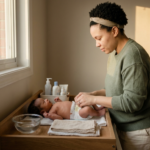
For diaper changes, use a floor-level arrangement when possible. If using a changing table, keep supplies within reach and maintain physical contact with the baby. Babies can roll or wriggle unexpectedly before a caregiver anticipates it. Dispose of wipes, diaper fasteners, plastic packaging, and creams safely; small objects can become choking hazards.
Household chores can wait when supervision is required. Avoid carrying hot liquids while holding the baby, cooking over an open flame with the infant in your arms, or placing a car seat on a countertop or table. Keep hot food, beverages, iron cords, and bath water away from the infant. When using a sling or soft carrier, check that the baby’s face and airway remain visible and that the position follows evidence-based carrier guidance.
Respond to Crying Without Losing Safety
Crying is a normal form of infant communication, but it can become physiologically and emotionally exhausting. Start with basic possibilities: hunger, a wet diaper, temperature discomfort, need for contact, overstimulation, or fatigue. Use calm, repetitive measures such as holding, gentle rocking, speaking softly, reducing noise and light, or offering feeding when hunger cues are present. Avoid vigorous bouncing or shaking, which can cause catastrophic injury.
If your frustration is rising, place the baby on the back in an empty crib or bassinet and step into a nearby room for a brief reset. Make sure the environment is secure, and check the baby frequently. Slow breathing, drinking water, calling a trusted person, or sending a direct message such as “I need you to stay on the phone while I calm down” can help interrupt escalation. The baby may continue crying while you recover; temporary crying in a safe sleep space is acceptable.
Sleep deprivation can impair reaction time, judgment, and attention in ways similar to other forms of impairment. Avoid driving if you are too fatigued to remain alert. If possible, arrange protected sleep before the solo-care period, shorten nonessential tasks, and accept meals, laundry help, or a supervised break from someone trustworthy. Persistent sadness, panic, intrusive thoughts, hopelessness, or thoughts of harming yourself or the baby require prompt professional help. If there is immediate danger, contact emergency services.
Know When to Escalate and Build Backup Support
A parent at home alone should know how to obtain help before an urgent situation occurs. Keep a charged phone nearby, but do not place it inside the crib or within the baby’s reach. Know the local emergency number, the baby’s clinician, the nearest emergency department, and a trusted person who can come to the home. If an infant has severe breathing difficulty, persistent blue or gray color, unresponsiveness, a seizure, major bleeding, or sudden limpness, call emergency services immediately. Do not delay emergency assessment because the other parent is unavailable.
For less urgent concerns, contact the baby’s healthcare professional for individualized advice, especially about fever in a young infant, poor feeding, repeated vomiting, dehydration concerns, unusual sleepiness, a new rash, or behavior that differs significantly from the baby’s baseline. Do not diagnose from an article or give medication unless it has been specifically recommended for that infant by an appropriate clinician.
Support can be organized in layers. Ask a trusted relative, friend, neighbor, or paid caregiver to be an identified backup rather than waiting until a crisis. Agree on when they may call, visit, bring food, supervise while you shower, or accompany you to an appointment. A broader support network and trusted babysitting arrangements can make solo parenting periods more sustainable. The other parent can contribute by preparing supplies, updating the written handoff, arranging appointments, and checking in at agreed times.
Review the plan after developmental changes, illness, travel, or a move. As babies begin rolling, crawling, pulling to stand, and reaching, the hazards in the home change. A short weekly safety scan and a realistic conversation about caregiver fatigue can prevent small problems from becoming emergencies.
Safety Warnings
- Never leave a baby unattended in or near bath water, on an elevated surface, or in a vehicle.
- Do not shake, jerk, or vigorously bounce a crying infant.
- Use a firm, flat, uncluttered sleep surface and place the baby on the back for sleep.
- Call emergency services for severe breathing difficulty, unresponsiveness, blue or gray color, seizure, or sudden limpness.
- Seek urgent support if you fear you may harm yourself or the baby.
Tools & Assistance
- A written baby care handoff and emergency contact sheet
- A stocked, floor-level diaper and feeding station
- Current infant CPR and choking-response training
- A trusted backup caregiver or neighbor who can respond quickly
- A charged phone and a list of the baby's healthcare contacts
FAQ
Can I leave my baby in the crib while I take a short break?
Yes. If you are becoming overwhelmed, place the baby on the back in an empty, safe crib or bassinet and step away briefly to regain control. Never shake the baby, and return to check regularly.
How can I manage a shower when I am home alone with my baby?
Place the baby in a secure crib or play yard outside the bathroom if the space is safe, or arrange for another trusted adult to supervise. Never take the baby into a bath or shower as a substitute for supervision, and never leave an infant near water.
What should I do if my baby chokes during feeding?
If the baby cannot cough, breathe, cry, or becomes unresponsive, call emergency services and use current infant choking first-aid or CPR training. If the baby is coughing effectively, keep watching closely and seek professional advice if symptoms persist.
Is it reasonable to ask someone to help during a solo-parenting period?
Yes. Practical help with meals, laundry, errands, or supervised infant care can reduce fatigue and improve safety. Establish specific expectations with people you trust before help is urgently needed.
Sources
- Nationwide Children's Hospital — Home Safety for Infants and Toddlers
- MedlinePlus — Home safety - children
- NHS — Advice for single parents
Disclaimer
This article provides general educational information and is not a diagnosis or a substitute for individualized medical advice. Contact your baby's healthcare professional or emergency services when concerns are urgent or unclear.













Please log in to leave a comment.