
Intro
Most babies do not need their ears “cleaned” in the sense of removing wax from the ear canal. In healthy ears, cerumen, or earwax, is a protective substance that traps debris, helps keep the skin of the ear canal moisturized, and usually migrates outward on its own.
The practical question for parents is usually not whether to clean inside the ear, but how to keep the outer ear and the area around it clean without causing injury. That means using gentle routine care and knowing when earwax, discharge, pain, or hearing concerns deserve medical review.
Highlights
In most babies, earwax is normal and self-clearing, so routine removal is usually unnecessary.
The safest home care is to clean only the outside of the ear with a soft cloth and warm water.
Cotton buds, fingers, and other objects can push wax deeper and injure the ear canal.
If wax seems to block the ear or your baby has pain, discharge, or hearing concerns, medical assessment is more appropriate than home probing.
Why earwax is usually not a problem
Earwax is part of normal ear physiology, not dirt. It is produced by glands in the ear canal and serves as a barrier against moisture, dust, and microorganisms. In babies, as in older children and adults, the ear canal has a natural outward migration of skin cells and wax. That movement helps carry old wax toward the opening of the ear, where it can fall away without any special cleaning.
This is why routine earwax removal is usually unnecessary. In many babies, the amount of wax you can see near the outer opening is simply the visible part of a normal process. Trying to remove wax from deeper in the ear often does more harm than good. It can irritate the canal skin, pack wax more tightly, or create a small abrasion that becomes inflamed.
If you are used to seeing wax, the key is to remember that visible wax does not automatically mean a problem. The ear only needs attention when the wax is causing symptoms, interfering with hearing, or hiding a possible infection or foreign body. That distinction matters because the safest course is often observation rather than intervention.
What you can clean safely at home
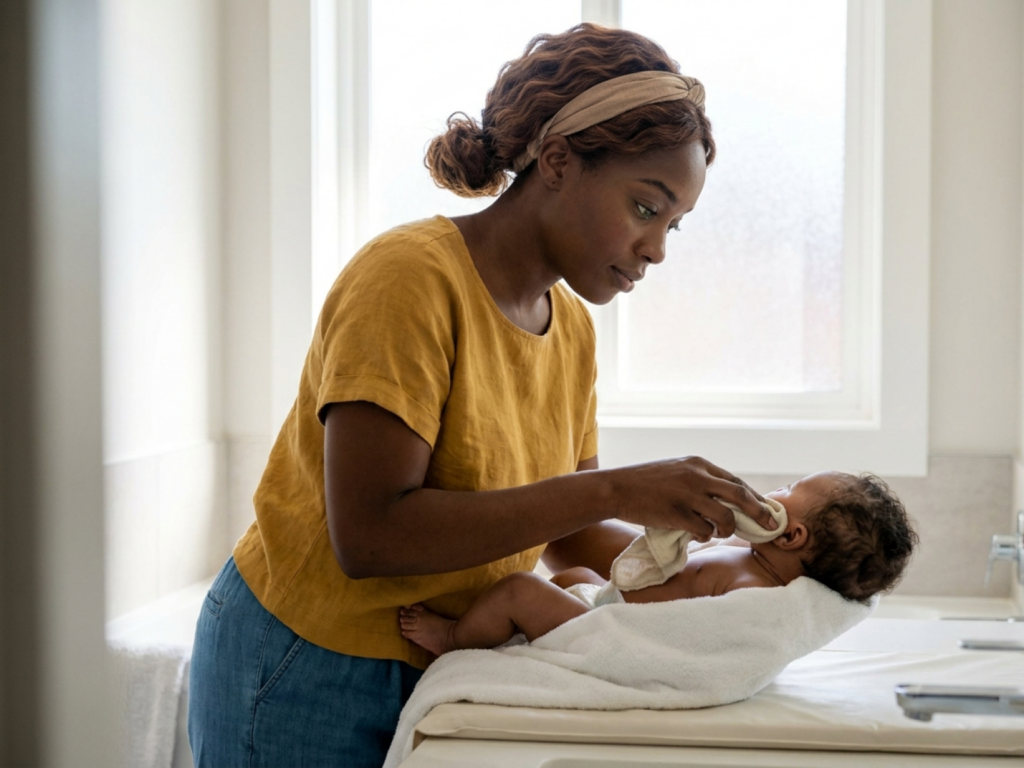
The safest approach is simple: clean the outside of the ear, not the canal. During bath time or after a feed, wipe the pinna, the folds of the outer ear, and the skin just behind the ear with a soft, damp cloth or washcloth. A little warm water is enough for most babies. Dry the area gently afterward so moisture does not sit in the folds of the skin.
This kind of safe outer-ear cleaning is about hygiene, not wax removal. If you can see a bit of wax at the opening, leave it alone unless a clinician has advised otherwise. The ear canal is self-maintaining, and anything inserted inside can interfere with that process. Parents often worry when wax looks thick or sticky, but in the absence of symptoms, visible wax is usually just a normal finding.
It also helps to pay attention to the skin around the ear. Milk residue, spit-up, and bath water can collect there and cause irritation if they are not gently wiped away. A calm, consistent routine is enough for most infants. If the ear is very sensitive to touch, red, swollen, or draining fluid, stop home cleaning and seek advice instead.
What not to put in a baby's ear
Do not insert cotton buds, cotton swabs, rolled tissue, tweezers, hairpins, or any other object into the ear canal. Even when an object looks small or soft, it can push wax deeper, scratch the canal, or accidentally perforate the eardrum. Babies move suddenly, which makes this risk higher than many people expect.
Home wax removal products are also not something to use casually in infants. Drops, oils, and irrigation methods may be appropriate in some older children or under clinical advice, but babies need a more cautious approach because the canal is smaller and symptoms can be harder to interpret. If you are thinking about using a product because the wax looks visible, that is a good moment to pause and ask a clinician first.
This is where baby ear canal safety matters more than the appearance of the wax itself. The canal is delicate tissue, and repeated cleaning attempts can create inflammation that makes the problem look worse. If the goal is comfort and hygiene, keep the intervention external. If the goal is to address blockage, pain, or discharge, the right next step is professional evaluation rather than more home manipulation.
When earwax becomes a real concern
Sometimes wax does matter, but usually because it is causing a functional problem rather than because it is simply present. Symptoms of possible wax impaction include reduced response to sound, fussiness when one ear is touched, apparent fullness, or wax that completely blocks the ear opening. In older infants, you might also notice that the baby turns more toward one side to hear or reacts less to quiet sounds.
Wax is also worth evaluating if it obscures the ear canal and you cannot tell whether there is another issue underneath. That can matter when a child has a fever, recent upper respiratory infection, or new ear pain, because wax can hide signs of infection. The ear should not be repeatedly probed in an attempt to “check” what is going on.
If your baby has a known pattern of heavy wax production, a clinician can advise whether observation is enough or whether periodic treatment is appropriate. That is where pediatrician earwax guidance is useful. The important point is that treatment decisions depend on symptoms, age, and examination findings, not on a rule that every visible wax deposit must be removed.
Signs that need medical review
Home care is not appropriate when there is ear pain, fever, bad-smelling discharge, bleeding, or concern that something has been placed in the ear. These findings can point to infection, injury, or a foreign body. If a baby seems distressed when lying down, feeding poorly, or repeatedly waking and rubbing one ear, the cause may be something other than wax.
Call a clinician promptly if you notice swelling behind the ear, redness that spreads, or the ear sticking out more than usual. Those features can suggest a more significant ear infection or inflammation around the ear structures and should not be managed by cleaning alone. A baby with reduced feeding, unusual sleep disruption, or persistent inconsolable crying also deserves a lower threshold for assessment, especially when the ear findings are unclear.
Do not keep trying to remove wax if the baby resists, cries, or if you see any fluid other than normal wax. Even a small amount of trauma can make the canal more inflamed and harder to examine. When in doubt, a clinician can look in the ear safely and decide whether wax removal, observation, or treatment of another condition is needed.
A practical ear-care routine for parents
For most families, a simple routine is enough. During the bath, wash the outside of the ear with water and a soft cloth, then gently dry the folds of skin. Leave any visible wax in place unless a clinician has told you otherwise. Check the ears as part of normal care, but do not make ear cleaning a separate task unless there is a clear reason.
It helps to think of ear care as observation plus gentle external hygiene. Observation means noticing whether your baby hears as expected, tolerates touch, and has no drainage, redness, or swelling. Gentle hygiene means cleaning the outer ear and the skin around it, not the canal. This approach fits with how the ear is designed to maintain itself.
If you have already tried to clean inside the ear, stop now and monitor for irritation, bleeding, or change in behavior. If your baby remains comfortable and the ear looks normal, there is usually nothing more to do. If something seems off, a health professional can assess the ear directly. For most babies, restraint is the safest and most effective form of ear care.
Seek medical advice promptly if you notice
- Ear pain, fever, or persistent fussiness that suggests discomfort.
- Fluid, pus, blood, or a bad smell coming from the ear.
- Swelling behind the ear or redness spreading around the ear.
- Reduced response to sound or concern about hearing.
- A foreign body, injury, or repeated attempts to clean inside the ear.
Tools & Assistance
- Your baby's pediatrician or family doctor
- A nurse advice line or pediatric triage service
- A soft, damp washcloth for cleaning the outer ear only
- A follow-up visit for ear symptoms, hearing concerns, or suspected blockage
FAQ
Do babies need regular earwax removal?
Usually no. Earwax normally protects the ear and moves outward on its own.
How should I clean my baby's ears after a bath?
Wipe only the outside of the ear and the skin behind it with a soft, damp cloth, then dry gently.
Are cotton buds safe for babies' ears?
No. They can push wax deeper and injure the ear canal or eardrum.
When should I ask a clinician to look at my baby's ear?
If there is pain, discharge, fever, swelling, hearing concern, or wax that seems to block the ear.
Sources
- Pregnancy, Birth and Baby — Cleaning your baby's ears, eyes and nose
- University Hospitals Southampton NHS Foundation Trust — Managing your child's earwax at home
- Connecticut Children's — How Do I Safely Clean My Child's Ears?
Disclaimer
This article is for general information only and does not replace medical advice, diagnosis, or treatment. If you are worried about your baby's ears, hearing, or comfort, speak with a qualified healthcare professional.















Please log in to leave a comment.