
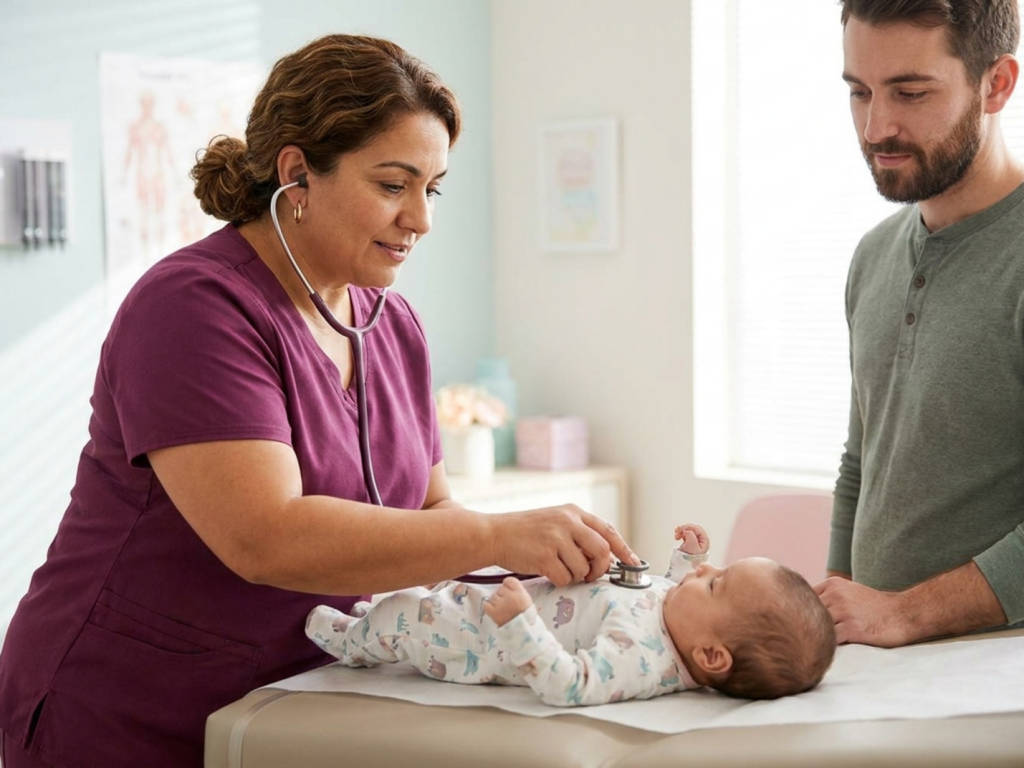
Intro
Respiratory syncytial virus, or RSV, is a very common virus that can infect the nose, throat, and lower airways. In many babies it starts like a mild cold, but in infants the illness can sometimes move quickly into bronchiolitis, which is inflammation and mucus buildup in the small airways.
That shift is why parents and caregivers are often asked to watch closely for changes in breathing, feeding, and alertness. The goal is not to panic over every cough, but to recognize when a baby’s symptoms are becoming more than an ordinary viral illness and when medical assessment is needed.
Highlights
RSV often begins with cold-like symptoms, but babies can worsen faster than older children or adults.
Poor feeding, irritability, and unusual tiredness may be early clues that a baby is struggling.
Rapid breathing, chest retractions, wheezing, nostril flaring, or blue lips are warning signs that need urgent attention.
Babies younger than 6 months and infants with certain medical conditions are at higher risk for severe disease.
What RSV is and why it can affect babies so strongly
RSV is a contagious respiratory virus that spreads easily through droplets and contaminated surfaces. In adults and older children it often causes a self-limited upper respiratory infection, but in babies the same infection can affect the smaller airways more significantly because those passages are narrow to begin with. Even modest swelling, mucus, and inflammation can make breathing harder.
In infants, RSV is a major cause of bronchiolitis, a condition in which the bronchioles become inflamed and filled with secretions. That can lead to noisy breathing, wheezing, and increased work of breathing. The concern is not just the virus itself, but how much effort the baby must use to breathe, feed, and rest at the same time.
This is one reason RSV deserves close attention in the first year of life, especially in very young infants. A baby may look only mildly unwell at first and then seem to tire more easily, feed less, or breathe faster as the illness evolves.
Common early RSV symptoms in babies
Early RSV symptoms can resemble a routine cold. A baby may have a runny nose, mild cough, sneezing, fussiness, or a low-grade fever. Some babies simply seem more irritable than usual or more sleepy than expected. Others show reduced interest in feeding before any obvious breathing change appears.
According to Mayo Clinic and MedlinePlus, common infant symptoms include cough, poor feeding, irritability, and unusual tiredness. Those details matter because babies cannot tell you that their chest feels tight or that they are working harder to breathe. Instead, the clues show up in behavior, appetite, and how they look while breathing.
It helps to think of early symptoms as a pattern rather than a single sign. A cough alone may be mild, but cough plus poor feeding, reduced energy, and a stuffy nose can make the baby harder to monitor. If symptoms are getting worse over hours or a day or two, that trend is more important than the first symptom by itself.
Breathing changes that are warning signs
The most important RSV warning signs are related to breathing. A baby may begin breathing faster than usual, taking shallow breaths, or using extra muscles in the chest and neck. Chest retractions, where the skin pulls in between the ribs or under the ribcage, can mean the baby is working hard to move air. MedlinePlus also highlights nostril flaring and wheezing as common breathing-related signs in bronchiolitis.
Other concerning signs include grunting, pauses in breathing, or a baby who seems to struggle to catch a breath between feeds or during sleep. In some infants, the chest can look visibly pulled in with each breath. That is not something to watch casually at home if it is persistent or worsening.
Blue, gray, or dusky lips, tongue, or skin can indicate low oxygen and should be treated as an emergency. This is especially true if the color change appears with breathing difficulty, lethargy, or difficulty waking the baby. When breathing looks effortful, the safest approach is prompt medical evaluation rather than waiting to see whether the baby improves on its own.
Feeding, hydration, and behavior changes to watch closely
Many babies with RSV struggle to feed because sucking, swallowing, and breathing all require coordination. A congested nose can make feeding exhausting, and a baby may stop early, take smaller volumes, or refuse feeds altogether. Poor feeding is one of the most practical early warning signs for caregivers because it often shows up before obvious distress.
Reduced intake can lead to signs of dehydration, such as fewer wet diapers, a dry mouth, or a baby who is too tired to feed effectively. Babies may also become less responsive, harder to wake for feeds, or unusually floppy and lethargic. These changes are not specific to RSV, but they are always important in an infant with a respiratory illness.
If you are trying to judge whether the baby is maintaining hydration, it can help to keep a feeding and symptom diary. Write down how often the baby feeds, how long feeds last, how many wet diapers occur, and whether coughing, wheezing, or fast breathing seems worse before or after feeds. That record can be very useful if you need to call the pediatrician or go in for assessment.
Which babies are at higher risk for severe RSV
Any infant can get RSV, but some are more likely to develop severe illness. The youngest babies, especially those under 6 months, have less reserve if breathing becomes labored. Premature infants can also be at higher risk because their lungs and airways may be less mature. Babies with chronic lung disease, congenital heart disease, or weakened immune systems can have a harder time recovering.
Risk does not mean a baby will definitely become seriously ill, and it does not mean every symptom is an emergency. It does mean caregivers should have a lower threshold for checking in with a clinician if feeding drops, breathing changes, or tiredness increases. A baby who is already medically fragile may need earlier evaluation than a healthy older infant with the same symptoms.
Families sometimes assume that because RSV is common, it is always mild. That is not the case in every infant. The pattern of symptoms, the baby’s age, and the presence of underlying conditions all help determine how cautious you need to be.
When to call the pediatrician and when to seek emergency care
Call your pediatrician promptly if your baby’s cough is worsening, feeds are dropping off, breathing is faster than usual, or the baby seems more tired or irritable than expected. A clinician may want to assess breathing effort, oxygen saturation, hydration, and whether the illness is staying in the upper airways or moving into the lungs. If you are unsure whether the symptoms are severe enough, it is reasonable to ask rather than guess.
Emergency care is needed if your baby has blue lips or a bluish color around the mouth, pauses in breathing, severe chest retractions, marked lethargy, or obvious difficulty breathing. Those are not symptoms to monitor passively at home. The same is true if a baby is too weak to feed or shows clear signs of dehydration and worsening respiratory distress at the same time.
When in doubt, trust the overall picture. A single mild symptom is common in viral illness; a combination of poor feeding, rising work of breathing, and unusual sleepiness deserves faster attention. If you notice a pattern that feels off, reach out early.
Get urgent help now if you notice:
- Blue, gray, or dusky lips, tongue, or skin
- Rapid breathing with chest retractions or nostril flaring
- A pause in breathing or very labored breathing
- A baby who is too sleepy or weak to feed
- Clear signs of dehydration or a sharp drop in wet diapers
Tools & Assistance
- Your pediatrician’s advice line or after-hours nurse service
- A feeding and symptom diary
- A thermometer and a count of wet diapers
- Emergency services or the nearest emergency department if breathing becomes hard or color changes appear
FAQ
Can RSV start like an ordinary cold?
Yes. RSV often begins with runny nose, cough, fussiness, or mild fever, then may progress to feeding problems or breathing changes in babies.
Is wheezing always a sign of severe illness?
Not always, but in a baby with RSV it is a breathing-related sign that should be discussed with a clinician, especially if it is getting worse.
What is the most important red flag to watch for?
Difficulty breathing, especially chest retractions, fast breathing, or blue lips, is one of the most important warning signs.
Can a baby have RSV without a fever?
Yes. Fever may be absent, so feeding changes, tiredness, and breathing effort can be just as important as temperature.
When should I call emergency services?
Call immediately if your baby has blue lips, a pause in breathing, severe breathing effort, or is too weak to feed.
Sources
- Mayo Clinic — Respiratory syncytial virus (RSV) - Symptoms & causes
- MedlinePlus — Bronchiolitis: MedlinePlus Medical Encyclopedia
- Mayo Clinic Press — Babies, kids and RSV — What are the risk factors for severe illness?
Disclaimer
This article is for general information only and is not a substitute for medical advice, diagnosis, or emergency care. If you are worried about a baby’s breathing, feeding, or color, contact a healthcare professional right away.

















Please log in to leave a comment.