
Intro
A baby refusing a food can feel like a clear verdict, especially when you have prepared it carefully or hoped it would become part of a varied diet. In practice, a first refusal often reflects unfamiliar taste, smell, texture, temperature, appetite, fatigue, teething discomfort, or the normal variability of infant feeding rather than a permanent dislike.
Repeated, low-pressure exposure can help some infants become more accepting of a food over time. The goal is not to make a baby eat a particular item, but to provide safe opportunities to see, smell, touch, taste, and eventually choose it while respecting hunger and satiety cues.
Highlights
A single refusal does not reliably predict a lasting food preference.
Research suggests that offering a food repeatedly, often across 8 to 10 or more exposures, can improve acceptance, particularly for fruits and vegetables.
Keep portions small and exposure pressure low; looking at, touching, licking, or tasting the food can all be meaningful steps.
Stop and seek medical advice if refusal follows a possible food reaction, persistent pain, swallowing difficulty, or concerning growth or hydration changes.
A refusal is information, not a final decision
Infant food acceptance is influenced by more than flavor. Babies are learning how to manage new oral sensations, coordinate chewing or gum-based mashing, move food through the mouth, and swallow. A food that seems simple to an adult may be difficult because it is fibrous, sticky, grainy, slippery, lumpy, or presented at an unfamiliar temperature.
Appetite also changes from meal to meal. A baby may refuse a food after breastfeeding or formula, during a growth-related appetite shift, when tired, or when distracted. Teething, minor illness, constipation, reflux-like discomfort, and changes in routine can temporarily alter eating behavior. These possibilities do not establish a cause, but they explain why a food may be accepted one day and rejected the next.
It is useful to interpret refusal as communication: the baby may be saying, “I am not ready for this right now,” rather than “I will never eat this.” Avoiding pressure helps preserve trust. If a baby turns away, closes the mouth, pushes food away, cries, or becomes distressed, pause the attempt and end the meal calmly.
What the evidence says about repeated exposure
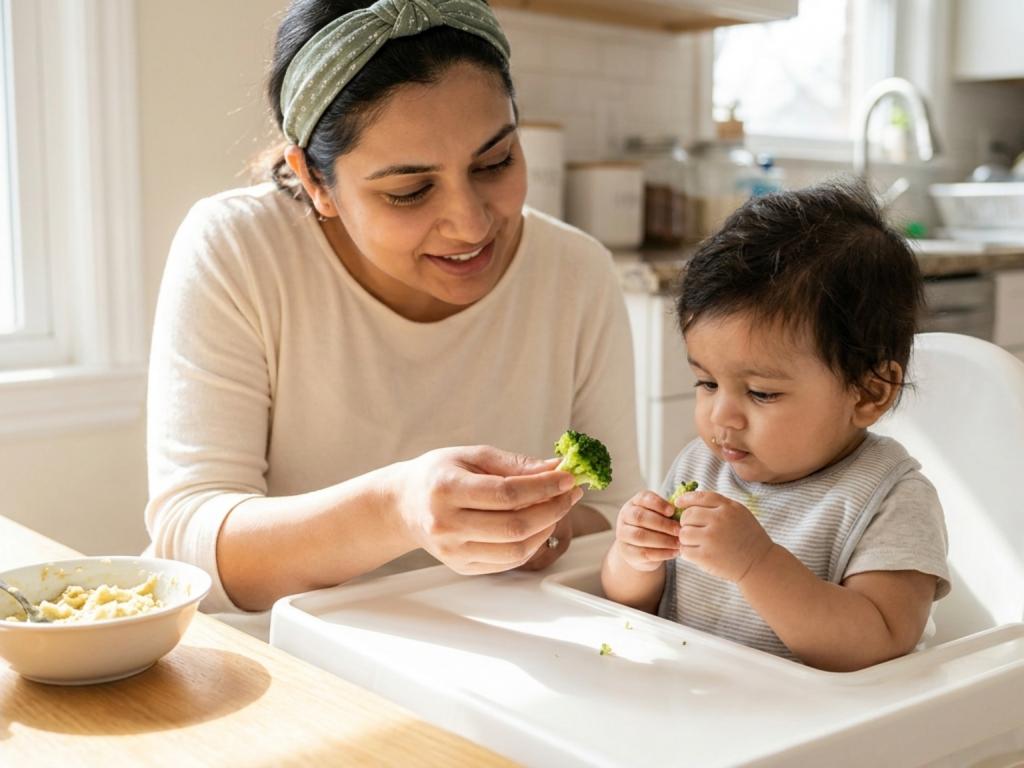
Systematic reviews of studies in infants and toddlers approximately 4 to 24 months old found that repeated exposure to foods can increase acceptability. The clearest evidence concerns fruits and vegetables, with benefits commonly observed after about 8 to 10 or more exposures. “Exposure” does not necessarily mean consuming a full serving. Seeing the food, tolerating it on the tray, touching it, bringing it to the mouth, or taking a small taste may all contribute to familiarity.
Repeated exposure is not a guarantee. Some children need fewer attempts, while others need substantially more; preferences also vary by food, texture, temperament, and developmental stage. The evidence supports continuing to offer an appropriate food over multiple occasions, not insisting that a child finish it. Reviews have not identified harm from repeated exposure when it is conducted in a responsive, non-coercive way.
A practical interpretation is to avoid treating the first few refusals as evidence that the food should disappear permanently. Offer it again at a later meal, alongside foods the baby already accepts. Maintain realistic expectations: the immediate objective is familiarity and participation, while intake may increase gradually.
How to reoffer a refused food without pressure
Start with a very small amount. A single soft piece, a teaspoon of puree, or a thin spread appropriate to the baby’s developmental feeding skills can make the food feel manageable and reduce waste. Present it on the same plate as familiar foods, but do not use the preferred food as a reward for eating the refused one.
Use neutral language and a calm demeanor. You might say, “The avocado is here if you want it,” then allow the baby to decide. Avoid pleading, bargaining, distracting with screens, forcing a spoon into the mouth, or repeatedly replacing the food immediately after refusal. These strategies can increase tension and make mealtimes less predictable.
Let the baby control the pace. If the baby explores the food with fingers, smears it, smells it, or licks it without swallowing, respond neutrally. Exploration is part of sensory learning. If the baby accepts a taste, do not pressure them to take another. A calm ending after refusal communicates that food is available and that stopping is allowed.
Keep offering the food periodically rather than at every meal. Repeated exposure works best as part of ordinary family eating, not as a test that the baby must pass. Continue breast milk or formula as the primary source of nutrition when developmentally appropriate, while complementary foods are introduced according to professional guidance.
Change the presentation while keeping the experience familiar
Some babies reject a food in one form but accept it in another. A cooked vegetable may be easier than a raw piece; a smooth puree may be tolerated before a lumpier mash; a soft finger-sized piece may be more engaging than a spoon-fed portion. Changes in texture should match the baby’s developmental abilities and local choking-prevention guidance.
Consider varying one feature at a time. You might offer a vegetable roasted until soft, steamed and mashed, or mixed with a familiar food. For a baby who dislikes a strong flavor, a small amount alongside a milder food may be more acceptable. Avoid masking every refused food in a preferred food, because the baby may not learn the food’s independent taste and may become wary if the presentation changes.
Temperature, utensil, timing, and seating position can also matter. Some babies prefer food at room temperature; others accept it warm. Sit the baby upright and well supported, allow enough time to eat, and minimize major distractions. Observe whether refusal is linked to a particular texture or skill demand. A feeding therapist, pediatrician, or other qualified clinician can help if texture progression is consistently difficult.
Responsive feeding protects trust and nutrition
Responsive feeding divides responsibility in a practical way: the caregiver decides what food is offered, when it is offered, and where the meal occurs; the child decides whether to eat and how much. This approach respects internal hunger and satiety cues while maintaining regular opportunities to learn about food.
Offer a balanced selection that includes at least one familiar item when possible. A baby does not need to eat every food at every meal to have a nutritionally adequate pattern. Across days and weeks, variety matters more than the success of one sitting. Continue to follow guidance about breast milk or formula, iron-rich complementary foods, safe textures, and age-appropriate portions.
Caregivers may feel pressure when a baby refuses vegetables or appears to eat very little. Try to separate the emotional meaning of refusal from the nutritional plan. Record patterns briefly if useful, but avoid turning every bite into a measurement. Excessive monitoring can increase anxiety for both caregiver and child. If intake, growth, stooling, or feeding behavior is concerning, discuss the overall pattern with a healthcare professional rather than responding with force.
When refusal needs medical or feeding assessment
Repeated refusal is usually managed as a feeding-learning issue when the baby is otherwise comfortable, hydrated, developing, and growing as expected. A clinician should assess persistent or broad food refusal, however, especially when it is accompanied by coughing or choking during meals, wet or gurgly breathing, recurrent vomiting, significant distress, prolonged meals, fatigue with feeding, or difficulty progressing beyond a narrow range of textures.
A suspected food allergy requires particular caution. Hives, facial or lip swelling, repeated vomiting, wheezing, breathing difficulty, pallor, unusual sleepiness, or sudden widespread symptoms after eating may indicate a potentially serious reaction. Stop offering the suspected food and seek urgent medical care for severe or rapidly progressing symptoms. Do not repeatedly reintroduce a food that caused a possible reaction without professional advice. Guidance about common allergenic foods should be individualized when there is a reaction history, significant eczema, or other risk factor.
Contact the baby’s clinician if there are signs of dehydration, markedly fewer wet diapers, poor weight gain, persistent pain, blood in stool, forceful or recurrent vomiting, or a sudden major change in feeding. A pediatrician may coordinate evaluation with a registered dietitian, speech-language pathologist, occupational therapist, allergist, or gastroenterologist depending on the presentation.
Seek prompt medical advice when
- A baby develops breathing difficulty, facial swelling, widespread hives, collapse, or unusual limpness after eating.
- The baby repeatedly coughs, chokes, gags excessively, or has wet-sounding breathing during or after meals.
- Food refusal is associated with persistent vomiting, marked pain, blood in stool, or signs of dehydration.
- The baby is losing weight, not gaining as expected, tiring during feeds, or eating an increasingly narrow range of foods.
- A previously tolerated food is suddenly refused alongside illness or a possible allergic reaction.
Tools & Assistance
- A simple exposure log recording the food, texture, date, and the baby’s response
- A regular mealtime routine with an upright, well-supported seating position
- Small portions of a new or refused food served beside a familiar food
- A pediatrician, registered dietitian, or feeding therapist for persistent concerns
- Local emergency services or an established food allergy emergency plan for severe reactions
FAQ
How many times should I offer a refused food?
Research commonly identifies benefits after about 8 to 10 or more exposures, particularly for fruits and vegetables. This is a general research finding, not a required quota. Offer the food periodically and stop if the baby becomes distressed.
Should I make my baby take one bite?
No. Coercion can increase distress and undermine trust. You can offer the food neutrally, allow sensory exploration, and respect signs that the baby has had enough or does not want it.
What if my baby refuses every texture of a food?
Continue offering developmentally appropriate forms alongside familiar foods, but consider professional advice if refusal is broad, persistent, associated with distress, or accompanied by coughing, choking, vomiting, poor growth, or feeding fatigue.
Is refusing a food a sign of food allergy?
Refusal alone is not a reliable sign of food allergy. Concern is higher when refusal occurs with immediate or delayed symptoms such as hives, swelling, repeated vomiting, breathing changes, marked pallor, or unusual lethargy. Seek medical advice for a suspected reaction.
Should I hide vegetables in other foods?
Combining a food with a familiar food can be one option, but also offer the ingredient in an identifiable form when safe. This gives the baby opportunities to learn its taste and texture without making every meal dependent on concealment.
Sources
- PubMed — Repeated exposure to food and food acceptability in infants and toddlers: a systematic review
- NCBI Bookshelf — Repeated Exposure to Foods and Early Food Acceptance: A Systematic Review
- USDA Nutrition Evidence Systematic Review — Repeated exposure to foods and food acceptance
Disclaimer
This article provides general educational information and is not a diagnosis or a substitute for individualized medical advice. Consult your baby’s pediatrician or another qualified healthcare professional about feeding concerns, suspected reactions, growth, or development.














Please log in to leave a comment.