
Intro
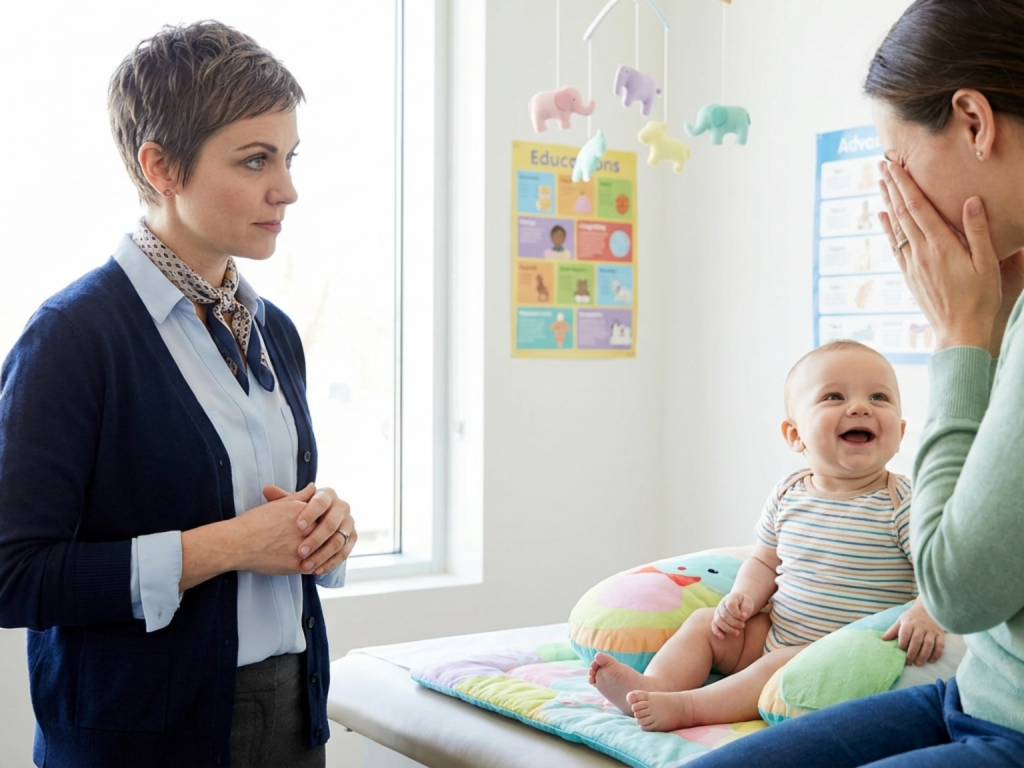
A baby's first laugh can feel like a small but unforgettable milestone. Laughter reflects emerging social communication, attention, sensory processing, and the ability to recognize playful patterns. Yet babies do not all laugh on the same schedule, and a quiet temperament or different style of expression does not automatically signal a problem.
This month-by-month guide describes common patterns from birth through the first year. Use it to understand development and enjoy responsive interactions, while remembering that chronological age is only one part of assessment. Babies born prematurely may be evaluated using corrected age, and individual variation is substantial.
Highlights
Many infants begin laughing aloud around 3 to 4 months, although some laugh earlier and others take longer.
Smiling generally appears before laughter, often around 6 weeks, as social attention and recognition develop.
Early laughter may arise from touch and movement; later, babies increasingly laugh during social games, surprising visual events, and playful routines.
Laughter is a useful developmental observation, but it should be considered alongside communication, hearing, vision, motor skills, and social responsiveness.
Birth to 1 month: reflexive expressions and early regulation
Newborns may make brief facial movements that resemble smiles, particularly during sleep, after feeding, or while settling. These early expressions are often reflexive or related to neurological state rather than deliberate social communication. A newborn may also produce squeaks, coos, grunts, and other vocalizations, but a true laugh is not generally expected at this stage.
During the first month, the most meaningful foundation for later laughter is regulation and interaction. Babies gradually spend more time alert, orient toward a caregiver’s voice, and attend briefly to faces at close range. Calm talking, gentle singing, skin-to-skin contact, and predictable responses help build the social reciprocity that later supports smiling and laughter. The goal is not to make a newborn laugh; it is to provide comfortable opportunities for connection without overstimulation.
Some babies appear more expressive than others from the beginning. Sleep, hunger, illness, medication exposure, sensory input, and temperament can all influence how much a baby vocalizes or changes facial expression on a particular day.
2 months: social smiling becomes more reliable
At approximately 6 weeks and onward, many infants begin to smile in response to faces, voices, or social engagement. By 2 months, a baby may show a clearer social smile, sustain eye contact for a short period, and become visibly animated when a familiar caregiver approaches. These behaviors are precursors to laughter, but most babies are still not laughing consistently.
Interactions may include open-mouth smiles, excited arm movements, soft vowel-like sounds, and brief squeals. A baby may respond to a caregiver’s exaggerated facial expression or warm tone, then look away when the interaction becomes intense. Looking away, yawning, hiccupping, or fussing can be signs that the baby needs a pause rather than more stimulation.
Supportive play at this age is simple. Hold the baby securely, position your face within a comfortable visual distance, copy their sounds, and pause to allow a response. This back-and-forth pattern, sometimes called serve-and-return interaction, gives the infant practice with turn-taking and contingent social communication.
3 months: first chuckles may appear
Between 3 and 4 months, many babies begin producing their first recognizable laughs. Some may laugh at about 3 and a half months, while others show only occasional chuckles or breathy vocal play until later. The first laugh may be triggered by gentle physical stimulation, such as a light belly kiss, bouncing while well supported, or a playful change in voice. A baby may also laugh when a caregiver smiles broadly, leans close, or repeats a familiar routine.
At this point, laughter is often brief and inconsistent. One day a baby may laugh several times; another day they may respond with a smile, squeal, or focused stare instead. The sound may begin as a short exhalation rather than the sustained, rhythmic laugh adults expect. This variability is normal because respiratory control, vocal coordination, attention, and emotional regulation are still maturing.
Research on infant humor describes a developmental sequence in which physical stimulation and basic social engagement are early sources of amusement. As babies become more alert and socially organized, they can begin to anticipate the next part of a routine. Repetition matters: a familiar pause before a playful sound may become funny because the baby recognizes the pattern and expects something interesting.
4 months: laughter becomes more social and interactive
At 4 months, laughter may become easier to elicit and more clearly directed toward a person or event. Babies often enjoy animated voices, exaggerated expressions, gentle rhythmic movement, and repeated social games. They may smile to regain a caregiver’s attention, laugh when a familiar person reappears, or vocalize in response to another person’s laughter.
Visual events can also become entertaining. A toy that moves unexpectedly, a caregiver briefly changing position, or a face appearing from behind a nearby object may produce a smile or laugh. The infant is not necessarily understanding humor in an adult sense. Instead, the response may reflect detection of novelty, anticipation, contrast, social safety, and the pleasure of shared attention.
Keep physical play gentle and developmentally appropriate. Avoid shaking, tossing, sudden loud noises, or rough handling, even if a baby seems to laugh. Laughter does not prove that an activity is safe or comfortable; infants can vocalize during intense arousal as well as enjoyment. Stop when the baby turns away, stiffens, cries, becomes pale or flushed, or shows other signs of distress.
5 months: recognizing absurdity and playful surprise
By about 5 months, some infants laugh at behavior that is unusual or mildly absurd, even when the caregiver is not displaying obvious emotional cues. For example, a baby may find an exaggerated movement, an unexpected sound, or a deliberately unusual use of a familiar object amusing. This does not mean that every 5-month-old will show the same response. It indicates that some infants can detect a mismatch between expectation and what happens next.
Laughter during this period may increase in frequency and variety. Babies may use squeals, breathy giggles, vocal bursts, and full-bodied movements. They may also repeat an action that previously produced laughter, suggesting an emerging understanding of cause and effect. A caregiver’s pause can be particularly engaging because it creates anticipation, followed by a predictable but surprising event.
Responsive caregivers can follow the infant’s lead. Repeat a game while it remains enjoyable, vary it slightly, and allow the baby to initiate or end the exchange. Shared laughter is valuable not because it is a performance milestone, but because it strengthens reciprocal communication and gives the infant practice reading social timing.
6 months: laughter during games and shared attention
At 6 months, many babies laugh more openly during interactive games such as peekaboo, gentle imitation, playful singing, and turn-taking vocal exchanges. The infant may watch a caregiver’s face, anticipate a familiar event, then laugh when it occurs. They may also look between a person and an object, showing the beginnings of coordinated shared attention.
Humor perception is still closely connected to sensory and social experience. Studies of infants from approximately 3 to 6 months describe laughter in response to physical stimulation, social games, and visual events, with different stimuli becoming amusing as development progresses. Some babies prefer movement and sound; others respond more strongly to faces, voices, or the reappearance of a familiar person.
Do not compare a baby’s laugh with another infant’s laugh as though it were a standardized test. A baby who smiles, makes eye contact, vocalizes, engages in turn-taking, and shows pleasure in interaction may be communicating robustly even if laughter is infrequent. Conversely, laughter should be interpreted alongside the broader developmental picture rather than treated as an isolated measure.
7 to 9 months: anticipation, imitation, and social humor
From 7 to 9 months, laughter often becomes more intentional and context-sensitive. Babies may laugh before a favorite game reaches its most enjoyable moment, imitate a caregiver’s laugh, or repeat an action because it reliably produces a social response. They may enjoy playful mistakes, exaggerated surprise, hiding and reappearing, or an object being placed in an unexpected location.
At this stage, many infants are becoming more selective about familiar and unfamiliar people. Laughter may be frequent with trusted caregivers but less evident during a new examination or unfamiliar social setting. Separation anxiety, teething discomfort, fatigue, and changes in routine can also temporarily reduce playful behavior.
Simple household routines can support communication: pause during a song, wait for a vocal response, copy a baby’s sound, and respond to their gestures. These interactions promote reciprocal attention without requiring special toys. Always supervise play, keep small objects away from the baby, and avoid games that restrict breathing or involve forceful movement.
10 to 12 months: purposeful social communication
During the later months of the first year, laughter may function as a deliberate social signal. A baby may laugh to invite repetition, draw attention to an event, share amusement, or maintain interaction. They may combine laughter with pointing, gestures, vocal imitation, facial expressions, and movement toward a caregiver.
Humor remains highly individual. A baby may find an ordinary household event funny one week and lose interest the next. The important developmental context is whether the infant is increasingly engaged with people and the environment through multiple communication channels. Enjoyment may be expressed through smiles, squeals, eye contact, gestures, babbling, or enthusiastic movement rather than a conventional giggle.
By the end of the first year, caregivers can continue supporting development through responsive conversation, shared books, songs, imitation, and safe social games. Follow the baby’s attention and allow them to set the pace. A calm, predictable relationship provides the emotional security that makes exploration and playful communication easier.
When laughter varies or seems delayed
There is no single deadline by which every baby must laugh. Prematurity, corrected age, temperament, hearing or vision differences, medical conditions, fatigue, and the opportunity for social interaction can affect observable laughter. A baby may also laugh at home but not in a clinic, or may communicate pleasure primarily through smiles, squeals, eye contact, or body movement.
Discuss concerns with a pediatrician, family physician, health visitor, or other qualified healthcare professional if your baby has lost previously acquired social or communication skills, rarely responds to sound or faces, shows little interest in interaction, or has broader concerns about feeding, movement, vision, hearing, or behavior. A clinician can review the baby’s medical history, assess development across domains, and arrange appropriate hearing, vision, or developmental evaluation when indicated.
Seek prompt medical advice for acute changes such as unusual lethargy, breathing difficulty, persistent inconsolable crying, seizure-like activity, or a sudden alteration in responsiveness. Laughter itself is not a diagnostic test, and its absence alone cannot establish a diagnosis. The most useful approach is ongoing developmental surveillance with attention to the whole child.
When to seek professional guidance
- A baby loses a social, vocal, or motor skill they previously had.
- The baby rarely responds to faces, voices, or social interaction across settings.
- There are concerns about hearing, vision, feeding, movement, or overall responsiveness.
- Laughter or vocal behavior changes suddenly together with illness, lethargy, breathing difficulty, or seizure-like activity.
- A premature baby's milestones are being judged without considering corrected age.
Tools & Assistance
- Keep a brief developmental journal noting smiles, vocalizations, laughter, gestures, and social responses.
- Record a short home video to share with a healthcare professional when behavior is difficult to describe.
- Use routine pediatric visits for developmental surveillance and screening.
- Ask about hearing or vision assessment when responses to sound, faces, or visual events are inconsistent.
- Contact local early intervention services when a clinician recommends additional developmental support.
FAQ
When do babies usually laugh for the first time?
Many babies begin laughing aloud around 3 to 4 months. Some laugh earlier, while others take longer and show smiles, squeals, or excited movements first.
Is it concerning if a 4-month-old is not laughing yet?
Not necessarily. Laughter varies widely. Consider the broader pattern, including social smiling, eye contact, response to voices, vocalization, and interest in interaction, and discuss concerns at a routine visit.
What makes babies laugh?
Early laughter may follow gentle touch, movement, familiar voices, exaggerated expressions, social games, surprising visual events, and predictable routines with an unexpected element.
Can premature babies laugh later than other babies?
Premature babies may reach milestones according to corrected age, especially during early infancy. Ask the baby's healthcare professional how corrected age should be used for developmental monitoring.
Should I try to make my baby laugh?
Focus on responsive, enjoyable interaction rather than a specific performance. Follow the baby's cues, pause when they seem overstimulated, and avoid rough movement, shaking, or startling games.
Sources
- PubMed Central — Laughing Matters: Infant Humor in the Context of Parental Affect
- PubMed Central — Infant Humor Perception from 3- to 6-months and Attachment to Mother
- BBC Tiny Happy People — When do babies start laughing and what do they laugh at?
Disclaimer
This article provides general educational information and is not a diagnosis or a substitute for individualized medical advice. Consult a qualified healthcare professional about your baby's development or any urgent concerns.















Please log in to leave a comment.