
Intro
Home birth can evoke strong opinions because it sits at the intersection of physiology, autonomy, safety, family values, and clinical risk. Some people hear that it is reckless; others hear that it is the only truly natural or respectful way to give birth. The evidence is more nuanced than either claim.
A planned home birth is not simply “giving birth at home.” It is a birth planned in advance for a carefully selected, low-risk pregnancy, attended by a qualified maternity professional, with equipment, newborn assessment skills, and a clear pathway for transfer if complications arise.
Highlights
Home birth is not universally safe or unsafe; outcomes depend heavily on risk selection, the attendant’s qualifications, emergency planning, and access to timely transfer.
Planned home birth is associated with fewer maternal interventions, but some studies and professional guidance report higher neonatal risk in certain settings or circumstances.
A person can value physiologic birth and still choose hospital care, birth center care, or transfer when medical conditions change.
The safest conversations about home birth are individualized, nonjudgmental, and grounded in transparent discussion of maternal and neonatal risks.
Myth 1: Home birth is always unsafe
The most common myth is that any birth outside a hospital is inherently dangerous. That framing is too broad. A planned home birth for a low-risk pregnancy, attended by a qualified midwife or clinician within an integrated maternity system, is not the same as an unplanned birth without skilled support. Risk depends on who is giving birth, the pregnancy history, fetal presentation, gestational age, distance from emergency care, and the ability to transfer smoothly.
Evidence reviews generally show that planned home birth is associated with fewer interventions such as induction, epidural analgesia, operative vaginal birth, and cesarean birth. For some families, avoiding unnecessary intervention is a meaningful benefit. At the same time, professional guidance, including from obstetric organizations, cautions that planned home birth may be associated with increased neonatal morbidity or mortality in some settings, especially when systems for candidate selection, trained attendance, and transfer are weak.
A medically careful approach avoids both extremes. Home birth should not be dismissed automatically, but it should not be presented as risk-free. The central question is not whether home birth is good or bad in the abstract. The better question is whether a particular person, pregnancy, attendant, location, and transfer system make home birth a reasonable option.
Myth 2: Home birth is automatically safer because it has fewer interventions
Lower intervention rates are one reason many people consider home birth, but fewer interventions are not automatically the same as better safety. An intervention can be unnecessary, excessive, or poorly timed; it can also be clinically important. Oxytocin augmentation, continuous fetal assessment, antibiotics, assisted birth, cesarean delivery, uterotonic medication, neonatal resuscitation, and blood products all exist because certain complications require prompt treatment.
The appeal of physiologic labor is understandable. Mobility, privacy, continuous support, intermittent auscultation when appropriate, eating and drinking according to local guidance, and nonpharmacologic pain coping strategies may help labor feel less medicalized. Many of these preferences can also be discussed in a hospital or birth center through a clinically realistic birth plan. The setting matters, but so does the model of care.
The real safety issue is proportional care: using fewer procedures when risk is low, while recognizing quickly when the clinical picture has changed. A person with preeclampsia, insulin-treated diabetes, placenta previa, significant fetal growth restriction, breech presentation, multiple gestation, prior classical cesarean incision, or a need for continuous high-acuity monitoring may not be an appropriate candidate for home birth. For these situations, hospital resources can be protective rather than intrusive.
Myth 3: Emergencies can always be handled at home
Skilled home birth attendants prepare for emergencies, but preparation has limits. They may bring equipment for maternal vital signs, fetal heart rate assessment, sterile birth supplies, oxygen, medications to reduce postpartum bleeding where legally permitted, intravenous supplies depending on scope of practice, and neonatal resuscitation equipment. They should also have protocols for consultation and transfer.
However, some emergencies are time-sensitive in a way that home care cannot fully neutralize. Severe postpartum hemorrhage management may require rapid laboratory testing, blood transfusion, surgical treatment, or interventional radiology. Shoulder dystocia requires immediate maneuvers and skilled response. Fetal bradycardia, cord prolapse, placental abruption, uterine rupture, eclampsia, sepsis, or a newborn who does not respond to initial resuscitation may require hospital-level resources quickly.
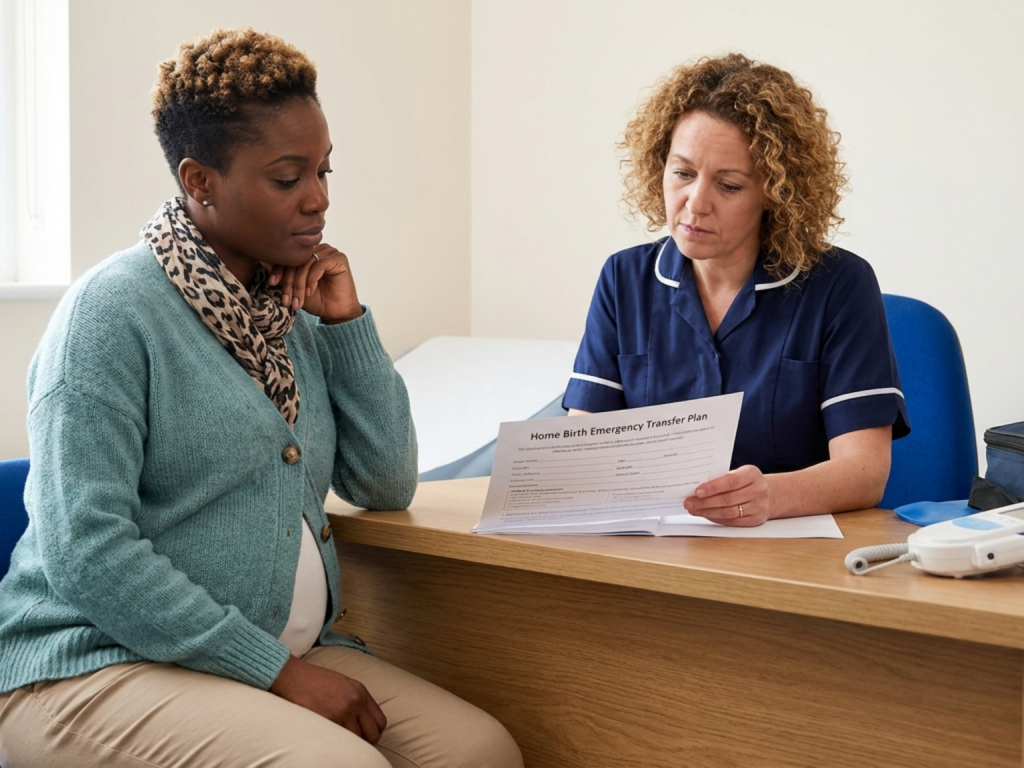
This is why a home birth emergency transfer plan is not a formality. It should include the nearest appropriate hospital, estimated travel time, ambulance access, weather or traffic considerations, medical records ready for handoff, and a plan for communication between the midwife and receiving facility. Transfer is not a failure. It is part of responsible home birth care when labor stops progressing, pain relief needs change, fetal heart rate findings become concerning, bleeding increases, blood pressure rises, fever develops, meconium is present with other concerns, or the newborn needs additional evaluation.
Myth 4: Only first-time parents need to worry about transfer
Parity matters, but it does not erase risk. People who have previously had an uncomplicated vaginal birth often have a higher chance of another uncomplicated vaginal birth and may have lower transfer rates than first-time parents. First labors are more likely to be longer and more likely to involve transfer for exhaustion, slow progress, request for analgesia, or concern about fetal status.
Still, repeat birth is not a guarantee of an uncomplicated course. Postpartum hemorrhage, hypertensive disease, infection, fetal malposition, shoulder dystocia, retained placenta, and newborn transition problems can occur even after previous smooth births. A prior uncomplicated birth is reassuring information, not a safety certificate.
For people planning a vaginal birth after cesarean, the discussion becomes more complex. Uterine rupture is uncommon, but it is a high-acuity emergency when it occurs. Some guidelines and clinicians advise hospital birth for trial of labor after cesarean because immediate surgical and neonatal care may be needed. Anyone with a uterine scar should review individualized risks with an obstetric clinician and a qualified midwife before deciding on birth setting.
The myth that experience alone makes home birth safe can pressure people to ignore new information in the current pregnancy. Each pregnancy deserves its own risk assessment, even when earlier births were straightforward.
Myth 5: Home birth means refusing medicine
Some people choose home birth because they want minimal intervention, but home birth does not have to mean rejecting medical care. A well-planned home birth is a medical and midwifery care pathway with prenatal screening, risk review, labor assessment, newborn evaluation, postpartum monitoring, and referral when needed. It should include informed consent, informed refusal, and documentation of changing circumstances.
Likewise, choosing home birth does not mean someone must tolerate suffering to prove commitment. Home settings emphasize comfort measures such as water immersion, movement, massage, counterpressure, breathing techniques, heat, cold, position changes, and continuous support. These can be effective for many people. But epidural analgesia and operative anesthesia are not available at home. If a person wants neuraxial analgesia preferences available as an option, a hospital is usually the setting where that can be provided.
It is also a myth that hospital care and respectful physiologic birth are mutually exclusive. Many hospitals support intermittent monitoring for eligible patients, mobility-compatible monitoring, doulas, delayed cord clamping when appropriate, skin-to-skin contact, lactation support, and shared decision-making. Conversely, not every home birth practice is equally evidence-based. The philosophy of a setting should never replace clinical competence.
Myth 6: The baby is not really monitored at home
In planned home birth, fetal and newborn assessment should be active and structured. During labor, many qualified attendants use intermittent auscultation for low-risk pregnancies, meaning the fetal heart rate is checked at defined intervals and in relation to contractions. This differs from continuous electronic fetal monitoring, which is more common in hospital settings and may be recommended when risk factors arise.
Intermittent auscultation can be appropriate for selected low-risk labors, but it requires training, attention, and a plan for escalation. Concerning fetal heart rate patterns, thick meconium with other risk signs, maternal fever, abnormal bleeding, severe hypertension, or prolonged labor may change the risk profile and prompt transfer. Monitoring is not only about collecting data; it is about responding to it.
After birth, the newborn should be assessed for breathing, tone, color, heart rate, temperature, feeding, and signs of distress. Newborn prophylaxis, screening tests, vitamin K, eye prophylaxis, congenital heart disease screening, bilirubin assessment, and metabolic screening vary by jurisdiction and care model, but they should be discussed before labor. Parents should know what is offered at home, what requires a clinic or hospital visit, and what signs require urgent care.
Myth 7: Choosing home birth is either selfish or superior
Birth setting decisions can become morally loaded, which is rarely helpful. Some people are told that planning home birth is selfish because it accepts avoidable neonatal risk. Others are told that choosing hospital birth means giving up autonomy or inviting unnecessary intervention. Both judgments flatten complicated decisions.
Most families are trying to balance safety, dignity, previous experiences, cultural needs, trauma history, access to care, financial realities, and trust in clinicians. For one person, the safest and most emotionally sustainable choice may be a hospital with an obstetric team and regional anesthesia available. For another carefully screened person living close to a hospital, with an experienced licensed midwife and strong transfer relationships, planned home birth may feel consistent with both values and risk tolerance.
Good counseling should make space for values without hiding data. It should include absolute risks when available, not only relative risks; the possibility of transfer; the attendant’s training and credentialing; emergency equipment; newborn resuscitation skills; and the relationship with nearby hospitals. It should also respect that a person can change plans. Moving from home to hospital, or from a low-intervention plan to a medically intensive birth, is not a personal failure. It is clinical adaptation.
Seek urgent medical help
- Heavy vaginal bleeding, fainting, chest pain, seizure, or severe headache needs emergency assessment.
- A sustained decrease in fetal movement before labor should be discussed urgently with a maternity clinician.
- Fever, foul-smelling fluid, severe abdominal pain, or green fluid with other concerns warrants prompt clinical advice.
- A newborn with poor breathing, blue or pale color, limp tone, persistent low temperature, or poor feeding needs urgent care.
- Any plan for home birth should be reviewed with qualified maternity professionals who understand your individual risk profile.
Tools & Assistance
- Prebirth consultation with a licensed midwife and obstetric clinician
- Written home birth emergency transfer plan
- Hospital tour or preregistration in case transfer is needed
- Prenatal review of newborn medications, screening, and follow-up
- Postpartum contact plan for bleeding, blood pressure, feeding, and newborn concerns
FAQ
Who is usually considered a better candidate for planned home birth?
Typically, candidates are people with a singleton, head-down fetus at term, no major medical or obstetric complications, and access to a qualified attendant and timely transfer. Individual assessment is essential.
Can I plan a home birth and still transfer for pain relief?
Yes. Transfer for analgesia, exhaustion, prolonged labor, or changing preference can be appropriate. This possibility should be included in planning before labor begins.
Is a home birth emergency transfer plan enough to make home birth safe?
It is necessary but not sufficient. Safety also depends on risk selection, attendant training, equipment, communication with receiving facilities, distance, and the nature of the emergency.
Does planned home birth reduce cesarean birth?
Studies often report lower cesarean rates among planned home births, partly because candidates are selected as low risk and care models differ. This benefit must be weighed against neonatal risk data and individual circumstances.
Should I discuss home birth with an obstetrician even if I have a midwife?
Yes. A collaborative review can clarify medical risk factors, transfer pathways, and contingency planning without requiring you to abandon your values or preferences.
Sources
- American College of Obstetricians and Gynecologists — Planned Home Birth
- National Center for Biotechnology Information — Planned home birth: benefits, risks, and opportunities
- World Health Organization — Childbirth: myths and medicalization
Disclaimer
This article is for general educational purposes and does not replace individualized medical advice. Discuss birth setting, risk factors, and emergency planning with qualified maternity healthcare professionals.














Please log in to leave a comment.