
Intro
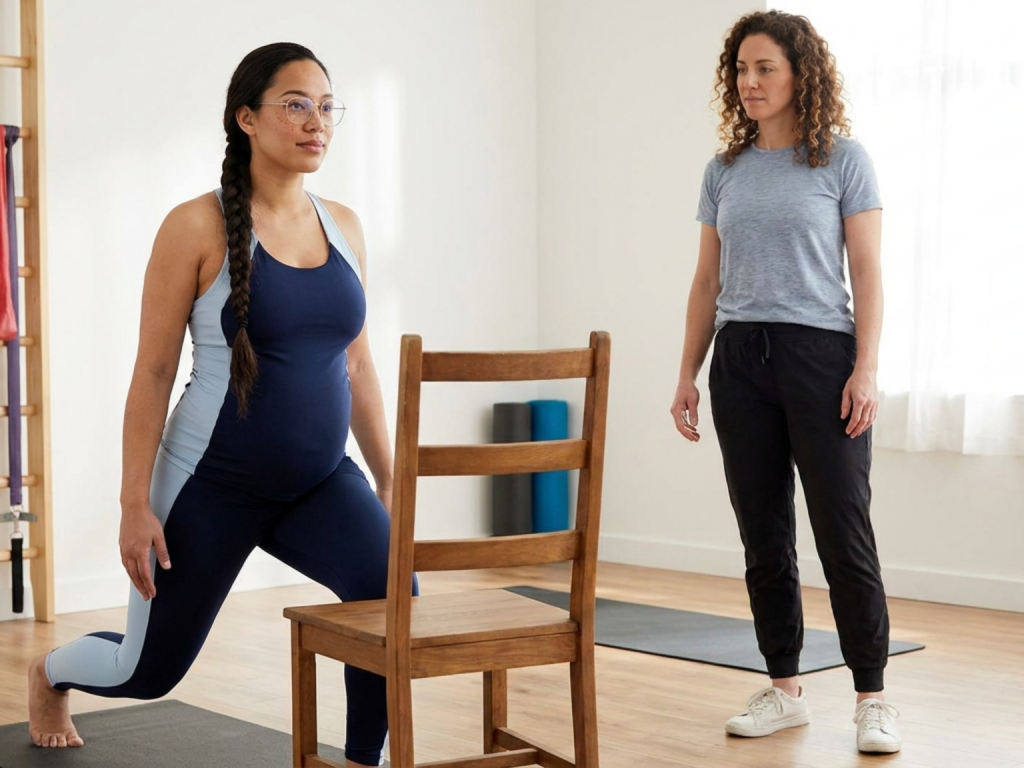
Labor is physically demanding, so it is understandable to wonder whether staying active in pregnancy can make birth easier or faster. Research suggests that regular physical activity may support endurance and is associated with a shorter first stage of labor, but fitness cannot determine exactly how an individual birth will unfold.
The safest approach is flexible and personalized. Your obstetric clinician, midwife, or physiotherapist can help you adapt activity to your pregnancy, medical history, symptoms, and usual fitness level.
Highlights
Regular prenatal activity may shorten the first stage and total duration of labor, although it cannot guarantee a particular birth experience.
Aerobic capacity, muscular endurance, mobility, and confidence can all help with the physical demands of labor.
Pregnancy is usually a time to maintain or gradually build appropriate activity, not to pursue peak performance.
Symptoms, obstetric complications, and recovery needs may require modification or temporary cessation of exercise.
What the evidence says about activity and labor
Physical activity cannot control cervical dilation, fetal position, placental function, or the need for obstetric intervention. Nevertheless, research indicates that staying active may favorably influence some measurable labor outcomes. A prospective cohort analysis found that higher physical activity during pregnancy was associated with a shorter active stage of labor and a lower likelihood of a prolonged first stage. Because this was an observational analysis, it demonstrates an association rather than proving that activity caused the difference.
A randomized clinical trial provides complementary evidence. Participants assigned to a structured exercise program had a shorter first stage and shorter total labor than controls. Randomization strengthens the inference that exercise contributed to the result, although findings from one program do not apply identically to every person, pregnancy, or exercise pattern.
These studies support activity as one potentially helpful component of prenatal care, not as a method for guaranteeing spontaneous labor, avoiding analgesia, or preventing cesarean birth. Labor duration is also affected by parity, induction, fetal presentation and size, uterine contractility, cervical readiness, analgesia, maternal health, and clinical decision-making.
How fitness may help with the work of childbirth
Labor involves repeated uterine contractions alongside sustained maternal physical and emotional effort. Cardiovascular fitness may improve tolerance of prolonged exertion and make it easier to recover between contractions. Muscular endurance can support walking, standing, kneeling, squatting, or side-lying for extended periods, while balance and mobility may make position changes feel more manageable.
Fitness may also affect how effort is perceived. Familiarity with exertion, paced breathing, and changes in heart rate can help some people remain oriented when labor becomes intense. This does not mean labor pain is caused by poor conditioning or that a fit person should need less analgesia. Pain is multidimensional, and requesting medical pain relief is not a failure of preparation.
The uterus does not require voluntary strengthening to contract effectively. Prenatal exercise primarily conditions the pregnant person rather than directly training uterine muscle. Similarly, pelvic-floor fitness is not simply maximum strength. The pelvic floor must generate support but also lengthen and coordinate during birth. Persistent gripping or difficulty relaxing may warrant assessment by a pelvic-health physiotherapist rather than more unsupervised strengthening.
Building useful fitness without overtraining
A balanced prenatal routine may include aerobic activity, resistance work, mobility, and recovery. Walking, swimming, stationary cycling, low-impact classes, and appropriately modified strength training are common options. The right intensity depends on previous activity, current symptoms, gestational stage, and medical guidance. A conversational effort level can be a practical check for moderate activity, but individualized clinical advice takes priority over any general rule.
Pregnancy is usually not the ideal time to chase personal records, train through pain, or rapidly introduce technically demanding exercise. Someone who was highly active before pregnancy may be able to continue many activities with modifications, whereas a previously inactive person generally benefits from a gradual start. Hydration, adequate energy intake, temperature control, supportive equipment, and recovery are part of safe training.
Exercise choices often need to evolve as the center of mass shifts and ligaments become more compliant. Activities with a substantial risk of falling, abdominal impact, collision, overheating, or environmental hypoxia require particular caution. Scuba diving is generally avoided because of fetal decompression risk. Ask your maternity clinician about sport-specific concerns and any pregnancy-related contraindications.
Adapting activity through each stage of pregnancy
In early pregnancy, nausea, fatigue, dizziness, or breast tenderness may make an established routine temporarily unrealistic. Shorter sessions and lower intensity can preserve consistency without treating exhaustion as something to overcome. In the second trimester, many people find activity more comfortable, but balance and abdominal loading may require modifications.
Later in pregnancy, pelvic pressure, back discomfort, urinary leakage, pubic symphysis pain, reflux, or breathlessness may limit certain movements. These symptoms deserve attention rather than being dismissed as an unavoidable price of fitness. A clinician or pelvic-health physiotherapist can assess technique, loading, support garments, and alternative activities without assuming that complete rest is necessary.
Occupational demands also count as physical load. Long periods of standing, repetitive lifting, heat exposure, night work, and limited access to hydration or toilets can create fatigue that recreational exercise plans should account for. Workplace accommodations in late pregnancy may include more frequent breaks, task rotation, lifting modifications, seating, or schedule adjustments. Occupational exertion is not automatically equivalent to beneficial training because it may lack recovery, progressive dosing, and control over intensity.
Using movement and fitness during labor
Being active prenatally may make mobility feel more familiar, but movement in labor should remain responsive rather than performative. Walking, swaying, supported kneeling, hands-and-knees, side-lying, or upright positions during labor may improve comfort for some people. Maternal position changes in labor can alter pressure sensations and may assist fetal rotation or descent, but no single position is universally best.
During active labor, conserve energy as well as using it. Resting between contractions, eating or drinking when permitted, emptying the bladder, and accepting hands-on support can be as valuable as continuous movement. Fatigue does not mean that prenatal training failed. Long inductions, sleep deprivation, pain, nausea, and medication can substantially change physical capacity.
Monitoring, intravenous lines, ruptured membranes, fetal concerns, or regional analgesia may affect mobility. Position changes after epidural analgesia usually require staff assistance because leg strength, sensation, balance, and blood pressure may be altered. Side-lying positions, supported sitting, and a peanut ball may remain possible if the clinical team considers them safe. Mobility-compatible fetal monitoring may also be available in some settings, but it depends on equipment and clinical circumstances.
When exercise should pause and be assessed
Some discomfort from muscular effort can be expected, but exercise should not be used to test whether concerning symptoms will disappear. Stop activity and contact a healthcare professional promptly for vaginal bleeding, suspected rupture of membranes, regular painful contractions before term, chest pain, fainting, severe or persistent shortness of breath, marked muscle weakness affecting balance, or significant calf pain or swelling. Decreased fetal movement requires timely assessment according to the instructions provided by your maternity team.
Severe headache, visual disturbance, sudden swelling, right upper abdominal or epigastric pain, or new significant breathlessness may accompany hypertensive or other pregnancy complications and should not be attributed to being out of shape. Emergency symptoms warrant urgent local maternity or emergency care.
Exercise recommendations may need substantial modification for placenta previa later in pregnancy, cervical insufficiency, significant cardiopulmonary disease, severe anemia, ruptured membranes, preterm labor risk, fetal growth concerns, or other obstetric complications. This list is not exhaustive. Decisions about restriction, continuation, or supervised rehabilitation should be made with the clinician who knows the pregnancy.
Preparing for labor without judging your body
Fitness is only one influence on birth, and it is not a measure of worth, discipline, or readiness for parenthood. A person who exercises consistently may still experience prolonged labor, induction, instrumental birth, or cesarean delivery. Someone who cannot exercise because of hyperemesis, pelvic pain, disability, bed rest, or an obstetric complication has not failed to prepare.
A practical plan can focus on adaptable capacities: comfortable daily movement when medically appropriate, a few supported labor positions, relaxation of the jaw and pelvic floor, rest, hydration, and communication preferences. Discuss active labor comfort measures, monitoring options, analgesia, and mobility with your birth team before labor when possible. Shared decision-making in labor remains important because maternal condition, fetal status, and personal priorities can change.
Ask for an individualized review if you are beginning exercise, returning after a period of inactivity, experiencing pain, or managing a high-risk pregnancy. The goal is not maximum fitness. It is sustainable activity that supports physical function, emotional well-being, and confidence while respecting the limits and unpredictability of pregnancy and birth.
Seek medical advice promptly
- Stop exercising and seek assessment for vaginal bleeding, fluid leakage, fainting, chest pain, or severe breathlessness.
- Contact maternity services for painful regular contractions before term or decreased fetal movement.
- Urgent assessment is needed for severe headache, visual disturbance, significant upper abdominal pain, or sudden swelling.
- Do not continue through severe pelvic pain, unilateral calf swelling, or weakness that compromises balance.
- Follow individualized restrictions if your clinician has identified an obstetric or cardiopulmonary complication.
Tools & Assistance
- Ask your obstetric clinician or midwife for an individualized activity review.
- Consult a pelvic-health physiotherapist for pelvic-floor symptoms, pelvic girdle pain, or movement modifications.
- Keep your maternity triage phone number readily available.
- Use a simple activity and symptom log to identify patterns worth discussing with your care team.
- Discuss workplace adjustments with occupational health, your clinician, or your employer when needed.
FAQ
Can exercise make labor shorter?
Research suggests that regular or structured prenatal activity may shorten the first stage and total labor, but it cannot predict an individual labor or guarantee a particular mode of birth.
Is it too late to start exercising in the third trimester?
Not necessarily, but beginning gradually and obtaining individualized guidance is especially important. The appropriate plan depends on your health, pregnancy, symptoms, and previous activity.
Does being very fit mean I will not need pain relief?
No. Fitness and analgesia needs are not directly equivalent. Labor pain is influenced by many physiologic, psychological, and clinical factors, and using pain relief is a valid choice.
Should I strengthen my pelvic floor every day before birth?
Pelvic-floor function includes both contraction and relaxation. If you have pain, pressure, leakage, or difficulty relaxing, seek individualized assessment rather than repeatedly adding strengthening exercises.
Can I move during labor if I have an epidural?
Position changes may still be possible, but assistance is usually required because sensation, strength, balance, and blood pressure can be affected. Follow the guidance of the bedside team.
Sources
- PubMed Central — The impact of physical activity during pregnancy on labor and delivery outcomes: a secondary analysis of a prospective cohort study
- PubMed — Exercise during pregnancy is associated with a shorter duration of labor. A randomized clinical trial
- PubMed Central — Effectiveness of worksite wellness programs based on physical activity to improve workers’ health and productivity: a systematic review
Disclaimer
This article provides general medical information and is not a substitute for individualized advice from your obstetric clinician, midwife, physiotherapist, or emergency service.


















Please log in to leave a comment.