
Intro
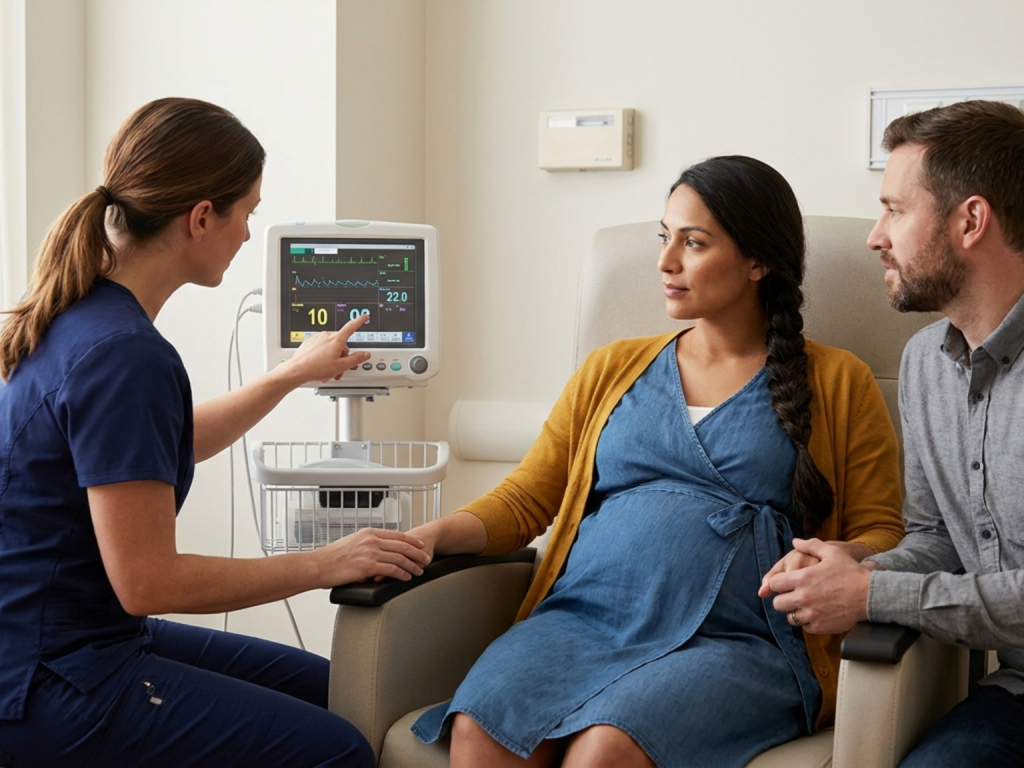
Expecting labor pain to feel exactly the same the second time can set you up for confusion, because birth pain is shaped by physiology, timing, memory, support, and the clinical situation. A first labor often brings uncertainty and a longer path through cervical change, while a second labor may feel more familiar but sometimes more compressed and intense.
This article compares pain expectations in first-time labor and second labor with a practical, medically informed lens. It is not meant to predict your individual birth, but to help you prepare flexible questions for your midwife, obstetrician, anesthetist, or maternity team.
Highlights
First labor pain is often intensified by uncertainty, longer duration, and the mental work of interpreting unfamiliar labor contractions.
Second labor is often shorter, but faster does not always mean easier; rapid escalation can make contractions feel more abrupt.
Prior birth experiences, including perineal tears, epidural timing, induction, assisted birth, or trauma, can strongly shape pain expectations.
The most useful plan is flexible: prepare coping tools, discuss analgesia early, and know when to call for clinical guidance.
Why expectations change between births
Pain expectations are not only predictions about nerve signals. They are a mix of physiology, memory, fear, confidence, prior care, and social stories about birth. In first labor, many people are trying to decide whether sensations are normal, whether they are coping well, and when to seek help. That uncertainty can amplify threat perception, especially during irregular early labor contractions that do not yet feel purposeful.
In second labor, the body has been through birth before, and the mind has a reference point. That can reduce fear for some people: the rhythm of contractions, vaginal examinations, monitoring, and pushing may feel less mysterious. For others, the reference point is distressing. A previous long induction, severe back labor, emergency intervention, painful repair, or feeling unheard can make the next labor feel emotionally loaded before it begins. Both responses are valid. The goal is not to be fearless, but to separate what happened last time from what is likely, what is uncertain, and what can be planned.
First labor pain: novelty, time, and stamina
First labor is commonly longer than later labors, particularly from established labor to full cervical dilation. A longer active first stage can mean more hours of contracting, more time without sleep, and more opportunities for anxiety or exhaustion to build. This is one reason first-time labor duration matters so much for pain expectations: even moderate pain can become harder to tolerate when it continues for many hours.
First-time parents may also have less embodied knowledge of what productive labor feels like. Early contractions can be irregular, then gradually become stronger, longer, and closer together. The discomfort of cervical dilation is usually visceral pain from uterine contractions and stretching of the cervix, often felt across the lower abdomen, back, hips, or thighs. As labor progresses, the same pain may feel more meaningful because it is linked with cervical change, but it may also feel more overwhelming because the end point is still hard to judge.
It is reasonable for a first-time patient to ask in advance about early labor coping, hydration, rest, when to contact maternity triage, and what pain relief is available at each stage.
Second labor pain: familiarity and faster escalation
Second labor is often shorter, especially once regular contractions and active first-stage labor are established. The cervix and soft tissues have previously dilated and stretched, and fetal descent may occur more efficiently. That can make second labor feel more reassuring: sensations may be recognizable, pushing may feel more coordinated, and the laboring person may know which positions, breathing patterns, or support behaviors helped before.
However, shorter labor can also feel more intense. Rapid progression in second labor may leave less time to adapt psychologically, arrange childcare, travel to the birth setting, request an epidural, or settle into a coping rhythm. Some people describe second labor as less frightening but more concentrated, with contractions becoming strong very quickly. This is why a contraction timing pattern that seemed appropriate in a first labor may not be the right guide for a second birth, especially if the first birth was already quick.
Second labor should not be treated as a guaranteed repeat. Fetal position, induction or augmentation, rupture of membranes, epidural timing, fatigue, and emotional safety can all change the pain experience from one birth to the next.
How the second stage feels different
The second stage begins at full cervical dilation and continues until the baby is born. Pain often changes quality here. Earlier labor is dominated by uterine and cervical pain; the second stage adds pressure from fetal descent, pelvic floor stretch, rectal pressure, and perineal distension. This is more somatic pain, meaning it is more localized and often described as stretching, burning, pressure, or an urgent need to bear down.
In a first birth, pushing may take longer because the pelvic floor has not stretched around a baby before and the person is learning how to coordinate effort with contractions. In a later birth, pushing may be shorter, but the descent can feel sudden. With an epidural, the urge to push may be reduced or delayed, and the second stage may feel more like pressure than pain. Without an epidural, the intensity may be sharper but easier for some people to interpret because it clearly signals progress.
Position changes, coached versus spontaneous pushing, fetal station, and perineal support can all influence pain, fatigue, and the sense of control during this stage.
Prior perineal pain and recovery memories
Expectations for second labor are often shaped by what happened after the first birth, not only during contractions. Even first- and second-degree perineal tears can cause meaningful postpartum pain, difficulty sitting, stinging with urination, discomfort with walking, anxiety about stitches, and concern about sexual recovery. A person who felt surprised by that recovery may approach the next vaginal birth with specific fear about tearing, crowning, or repair.
This does not mean the same injury will happen again, and it does not mean the next labor will be worse. It means the prior experience deserves attention. A useful prenatal conversation might include perineal support, warm compresses if used in the birth setting, pushing positions, episiotomy policy, local anesthetic for repair, postpartum pain relief options, pelvic floor referral, and what symptoms should prompt review.
It can also help to name the difference between labor pain and recovery pain. Labor pain usually comes in waves and has a physiologic endpoint. Postpartum perineal pain can feel more continuous and can affect daily function. Planning for both may reduce anticipatory anxiety.
Pain relief planning for both scenarios
A flexible pain plan is more useful than a rigid promise to avoid or request a specific intervention. Options may include movement, upright positions, breathing, massage, water, TENS where available, inhaled nitrous oxide, opioid injections in some settings, regional anesthesia such as epidural analgesia, and local anesthesia for perineal procedures. Availability, timing, contraindications, and monitoring requirements vary, so these choices should be discussed with your own maternity team.
For first labor, planning often focuses on endurance: how to rest in latent labor, when to come in, and what to do if labor is prolonged. For second labor, planning may focus on speed: who will watch an older child, how early to call, how quickly to travel, and whether there is enough time for preferred analgesia. If you previously had an epidural that worked well, failed, arrived too late, or caused side effects, ask whether an anesthetic review is appropriate before birth.
It is also reasonable to prepare emotionally. A prior debrief, trauma-informed birth plan, continuity of care where available, and a clear consent conversation can change how safe pain feels, even when the physical intensity is high.
When to seek clinical guidance sooner
Second pregnancy labor signs may be easier to recognize, but they should not be ignored because the pace can change quickly. Contact your maternity unit, midwife, or obstetric team according to your local instructions if contractions are regular, painful, or increasing; if your waters break; if you have bleeding; if fetal movements are reduced; if you are preterm; or if you feel pressure or an urge to push. In a second labor, it is especially important to mention a history of fast birth, significant tearing, postpartum hemorrhage, cesarean birth, shoulder dystocia, severe anxiety, or any medical condition that changes your care plan.
Seek urgent help for heavy bleeding, severe constant abdominal pain between contractions, fever, feeling faint, seizures, chest pain, shortness of breath, reduced fetal movement, or a sense that birth is imminent. Pain expectations can guide preparation, but they should never replace real-time clinical assessment.
Call for urgent advice
- Reduced or absent fetal movement needs prompt clinical assessment.
- Heavy vaginal bleeding, severe constant pain, or feeling faint is urgent.
- Waters breaking before 37 weeks, fever, or foul-smelling fluid needs medical advice.
- A strong urge to push, especially in second labor, can mean birth is close.
- Previous traumatic birth, severe tearing, or cesarean birth should be discussed before labor.
Tools & Assistance
- Birth debrief appointment with a midwife or obstetric clinician
- Written pain relief plan with flexible backup options
- Maternity triage phone number saved and shared with birth partner
- Prenatal anesthesia consultation if epidural concerns or complex history exist
- Pelvic floor physiotherapy referral when recovery pain or symptoms persist
FAQ
Is second labor always less painful than first labor?
No. It is often shorter and more familiar, but it may feel more intense because contractions can strengthen quickly. Pain also depends on fetal position, induction, support, fatigue, and prior experiences.
Why might first labor feel more frightening?
First labor involves unfamiliar sensations, uncertainty about timing, and often a longer active phase. Fear and fatigue can increase how threatening pain feels, even when labor is progressing normally.
Can a previous tear make second labor more painful?
A previous tear does not automatically make the next labor more painful, but the memory of perineal pain or repair can increase anticipatory anxiety. Discuss perineal support and postpartum recovery planning with your clinician.
Should I go to hospital earlier in second labor?
Ask your maternity team for individualized guidance. Many second labors progress faster, so a history of rapid birth, long travel time, or early pressure may justify calling sooner.
Can I plan an epidural for second labor?
Often yes, depending on timing, availability, and your medical situation. Because second labor may move quickly, discuss when to request it and whether a prenatal anesthesia review is useful.
Sources
- PubMed Central / National Library of Medicine — Women's experience with a first- and second-degree perineal tear after vaginal birth: a mixed-methods study
- PubMed / National Library of Medicine — Second stage of labor: a narrative review
- NHS — Birth and delivery: What to expect in labor and delivery
Disclaimer
This article is for general medical education only and does not diagnose, prescribe, or replace care from a qualified clinician. Contact your maternity team for advice tailored to your pregnancy, birth history, and symptoms.
















Please log in to leave a comment.