
Intro
Back labor contractions can feel markedly different from the labor pain many people expect. Instead of pain centered mainly in the abdomen, you may feel intense aching, pressure, or burning across the lower back, sometimes continuously and sometimes in waves that intensify with each uterine contraction. This experience can be exhausting and frightening, particularly when the discomfort makes it difficult to rest or find a comfortable position.
Back labor is a recognized pattern of labor pain, not a sign that you are coping poorly. Understanding why it may occur, how it can differ from other causes of pregnancy-related back pain, and which comfort measures may help can make the experience feel more manageable. Your midwife, obstetrician, family physician, or labor-and-delivery team can assess your individual situation and help you choose appropriate pain-relief options.
Highlights
Back labor usually refers to severe lower-back pain during labor, often associated with pressure from the baby’s head against the sacrum or tailbone.
Some people experience continuous low-back pain between contractions, with rhythmic uterine pain superimposed on that baseline discomfort.
Position changes, counterpressure, heat or cool packs, water immersion, and professional analgesia may provide relief, although no single approach works for everyone.
Back pain in pregnancy is not always labor; contact your maternity team when pain is new, severe, persistent, or accompanied by warning signs.
What back labor contractions feel like
Back labor describes prominent pain in the lower back during labor. The sensation may be deep, aching, throbbing, cramping, or intensely pressured. Some people describe a feeling that the lower back is being squeezed or pushed apart. Pain can radiate around the flanks toward the abdomen, into the hips, or down the upper legs. It may become stronger during contractions, but it does not always disappear completely when the uterus relaxes.
In many labors, uterine contractions produce a tightening or cramping sensation that rises and falls in a predictable pattern. With back labor, a person may instead have a persistent low-back ache between contractions, followed by sharper or more intense waves. Research on low-back pain during labor has distinguished this continuous baseline pain from the rhythmic pain generated by uterine contractions. Having both at once can make labor feel more severe and can reduce the opportunity to recover between contractions.
The timing and intensity vary. Back labor may begin in early labor or become more noticeable as the baby descends. It can occur with spontaneous labor or induced labor, and its presence does not by itself determine how quickly the cervix will dilate or when birth will occur. Pain perception is also influenced by fatigue, anxiety, prior experiences, pelvic anatomy, fetal position, and the availability of physical and emotional support.
Why back labor may happen
A commonly discussed contributor is the baby’s occiput posterior position, sometimes called “sunny-side up.” In this position, the back of the baby’s head is oriented toward the pregnant person’s back. As the baby’s head descends, it may place additional pressure on the sacrum, lower spine, and tailbone. This pressure can be particularly noticeable during contractions and when lying on the back.
Fetal position is dynamic rather than fixed. A baby may rotate during labor, and occiput posterior positioning does not necessarily mean that vaginal birth is impossible or that a complication will occur. The relationship between fetal position, pelvic dimensions, soft tissues, and pain is complex. Some people experience severe back pain without a confirmed posterior position, while others have a posterior-positioned baby without substantial back labor.
Mechanical pressure is only one possible explanation. The uterus, cervix, pelvic floor, ligaments, and surrounding nerves all transmit pain signals during labor. Continuous muscle tension and prolonged positions can add to discomfort, as can exhaustion and reduced mobility. The scientific literature has proposed that continuous low-back pain may have physiologic features distinct from contraction pain, which helps explain why the back can remain painful between waves.
Maternal position can influence how pressure is distributed through the pelvis. Upright, side-lying, kneeling, hands-and-knees, or asymmetrical positions may feel better than lying flat, although comfort and safety should guide the choice. A discussion of maternal position and fetal rotation can help place these changes in the broader context of labor progress.
How back labor differs from ordinary pregnancy back pain
Lower-back discomfort is common in pregnancy because of altered posture, ligament laxity, increased load on the spine, and changes in gait. Ordinary pregnancy-related back pain may be linked to activity, prolonged standing, or a particular movement and may improve with rest or a change in position. Back labor, by contrast, occurs in the setting of labor and often develops a recurrent pattern that becomes longer, stronger, and closer together.
However, the distinction is not always obvious at home. Early labor may begin with a dull backache rather than dramatic abdominal tightening, and some people have irregular contractions for a time before active labor becomes established. Tracking contraction pattern and duration can provide useful information, but timing alone cannot confirm cervical dilation or labor progression. Your maternity team may need to ask about symptoms, examine you, monitor the baby, or assess cervical change.
Back pain can also have causes unrelated to labor, including urinary tract or kidney problems, musculoskeletal injury, or other pregnancy complications. Contact a clinician rather than assuming that severe back pain is simply back labor, especially if it is constant and unusual for you, occurs before term, or is accompanied by fever, painful urination, vaginal bleeding, fluid leakage, abdominal tenderness, weakness, numbness, or reduced fetal movement.
Comfort measures that may help
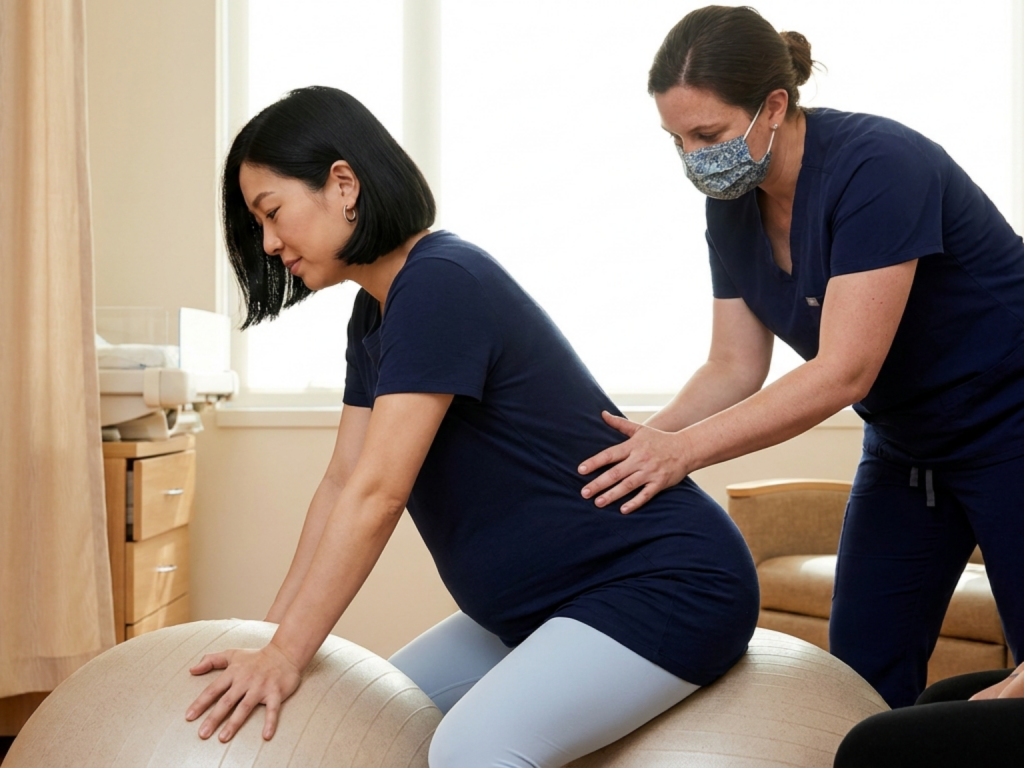
There is no universally effective treatment for back labor, but several nonpharmacologic measures are commonly used. A support person, nurse, midwife, or doula can apply firm counterpressure to the sacrum during a contraction. Some people prefer a steady palm, while others find pressure from a tennis ball, massage tool, or closed fist helpful. Pressure should be adjusted to your preference and stopped if it causes worsening pain, skin injury, or discomfort.
Warmth may relax tense muscles and reduce the perception of pain. Options can include a warm shower, bath when clinically appropriate, or a warm compress placed over the lower back. Some people prefer a cool pack wrapped in cloth. Avoid excessive heat and follow the instructions of your clinical team, particularly if you have reduced sensation, fever, skin problems, or monitoring equipment that limits mobility.
Movement and position changes may reduce pressure on the sacrum. You might try hands-and-knees, kneeling while leaning over a birth ball, standing and leaning forward, side-lying with support pillows, pelvic rocking, or slow hip circles. A birth ball can support an upright posture, but it should be used only when safe and with assistance if balance is limited. Do not force a position that increases pain, dizziness, shortness of breath, or fetal monitoring concerns.
Breathing techniques, vocalization, focused relaxation, water, touch, and a calm environment can complement physical measures. Continuous one-to-one support may improve confidence and help with frequent position changes. These approaches are comfort strategies, not substitutes for assessment or analgesia when pain is severe. Tell the clinical team clearly if you need more support; requesting pain relief is appropriate at any stage of labor.
Medical pain relief and clinical assessment
When back labor is intense, clinicians can discuss pharmacologic and neuraxial options according to your preferences, medical history, labor stage, local protocols, and fetal and maternal status. Options may include systemic medication or regional anesthesia. Epidural analgesia during labor is one form of neuraxial pain relief that can provide substantial analgesia, although its timing, benefits, limitations, and risks should be discussed with the anesthesia and maternity teams.
An epidural does not treat the cause of fetal position, but it may make contractions and persistent back pain more tolerable. The team will explain monitoring requirements and possible effects on movement, sensation, blood pressure, and the ability to feel pushing. Other approaches may be considered when neuraxial analgesia is not desired or is not medically suitable. Do not take unapproved medication or apply topical products during labor without guidance from a healthcare professional.
Assessment may include reviewing contraction frequency and duration, asking about the location and quality of pain, checking vital signs, monitoring fetal heart rate, and performing a cervical examination when indicated and consented to. Clinicians may evaluate whether membranes have ruptured, whether labor is progressing, and whether the baby’s position could be contributing. A normal assessment can be reassuring, but new symptoms should still be reported because labor conditions can change.
If you are unsure whether labor has started, use your maternity service’s instructions for timing contractions at home and calling for advice. A prior birth plan can state preferences for counterpressure, mobility, water, and analgesia, but it should remain flexible because clinical circumstances and pain needs may change.
When to contact your maternity team urgently
Call your obstetric or midwifery team for individualized advice whenever back pain is severe, persistent, rapidly worsening, or different from what you have previously experienced. If you are at or near term, back pain accompanied by regular contractions, pelvic pressure, bloody show, or a change in discharge may indicate labor and warrants guidance about when to come in.
Seek urgent assessment for vaginal bleeding, suspected rupture of membranes, fever or chills, severe abdominal pain, fainting, chest pain, shortness of breath, new weakness or numbness, loss of bladder or bowel control, or markedly reduced fetal movement. Preterm back pain or pressure before 37 weeks should be reported promptly because preterm labor can sometimes begin with pelvic or low-back symptoms rather than obvious contractions.
Emergency services may be appropriate if you feel seriously unwell, have heavy bleeding, severe constant pain, or believe birth is imminent and cannot safely reach your planned maternity setting. Do not drive yourself if you are faint, severely distressed, or experiencing a medical emergency. Follow the emergency plan provided by your pregnancy-care team.
These warnings are not intended to alarm you. Most back pain during labor is not an emergency in itself, but remote descriptions cannot reliably distinguish normal labor discomfort from a complication. Early communication gives clinicians the opportunity to assess you and provide appropriate reassurance or treatment.
Preparing for the possibility of back labor
Before labor, ask your maternity team how to contact them day and night, when they recommend coming to the hospital or birth center, and which comfort measures are safe in your setting. If you plan to use a birth ball, shower, bath, or specific labor positions, learn how these fit with fetal monitoring, intravenous access, induction, or other aspects of your care.
Discuss pain-relief preferences without treating them as a binding promise. You may hope to labor without medication and later choose an epidural, or you may plan analgesia from the beginning. Both choices can be reasonable when made with informed consent and clinical guidance. Include your support person in learning how to offer counterpressure, hydration reminders, calm communication, and help with position changes.
During labor, describe the pain precisely: whether it is continuous or intermittent, where it is located, what makes it better or worse, and whether it is associated with other symptoms. Clear information helps the team distinguish contraction-related pain from other conditions and tailor support. Most importantly, you deserve to be heard. Severe back labor is real pain, and asking for assessment or relief is not a failure of preparation or resilience.
Contact your maternity team promptly if
- Back pain is severe, constant, rapidly worsening, or unlike your usual pregnancy discomfort.
- You have vaginal bleeding, suspected fluid leakage, fever, chills, or severe abdominal pain.
- You notice reduced fetal movement or feel faint, seriously unwell, or short of breath.
- Back pain or pelvic pressure occurs before 37 weeks.
- You develop leg weakness, numbness, or loss of bladder or bowel control.
- You believe birth is imminent or cannot safely travel to your planned birth setting.
Tools & Assistance
- Maternity triage or labor-and-delivery assessment
- A support person trained in sacral counterpressure and safe position changes
- A birth ball, pillows, and approved warm or cool compresses
- A written birth plan that includes flexible pain-relief preferences
- Emergency services for severe symptoms or imminent birth when travel is unsafe
FAQ
Does back labor mean the baby is facing the wrong way?
Not necessarily. Occiput posterior positioning can increase pressure on the sacrum, but back labor can occur in other fetal positions, and babies may rotate during labor. Only a clinical assessment can establish fetal position.
Is back labor pain constant or does it come in contractions?
It can be either or both. Some people have continuous low-back pain with stronger waves during uterine contractions, while others mainly notice rhythmic pain.
Can counterpressure stop back labor?
Counterpressure may reduce pain for some people, especially during contractions, but it does not necessarily stop labor or change fetal position. Use the pressure that feels comfortable and involve your care team.
When should I go to the hospital for back labor?
Follow the individualized instructions from your maternity team. Contact them urgently for severe or unusual pain, bleeding, fluid leakage, reduced fetal movement, preterm symptoms, or other warning signs.
Can an epidural help with back labor?
Neuraxial analgesia such as an epidural can provide substantial pain relief for many people, including those with severe back labor. Discuss suitability, timing, monitoring, benefits, and risks with your obstetric and anesthesia teams.
Sources
- Cleveland Clinic — Back Labor: Signs, How It Feels, Causes & Relief
- PubMed — Low-back pain during labor
- American Pregnancy Association — Back Labor
Disclaimer
This article is for general educational purposes and does not diagnose, treat, or replace advice from your obstetric, midwifery, or emergency-care team. Seek professional assessment for severe, unusual, or urgent symptoms.














Please log in to leave a comment.