
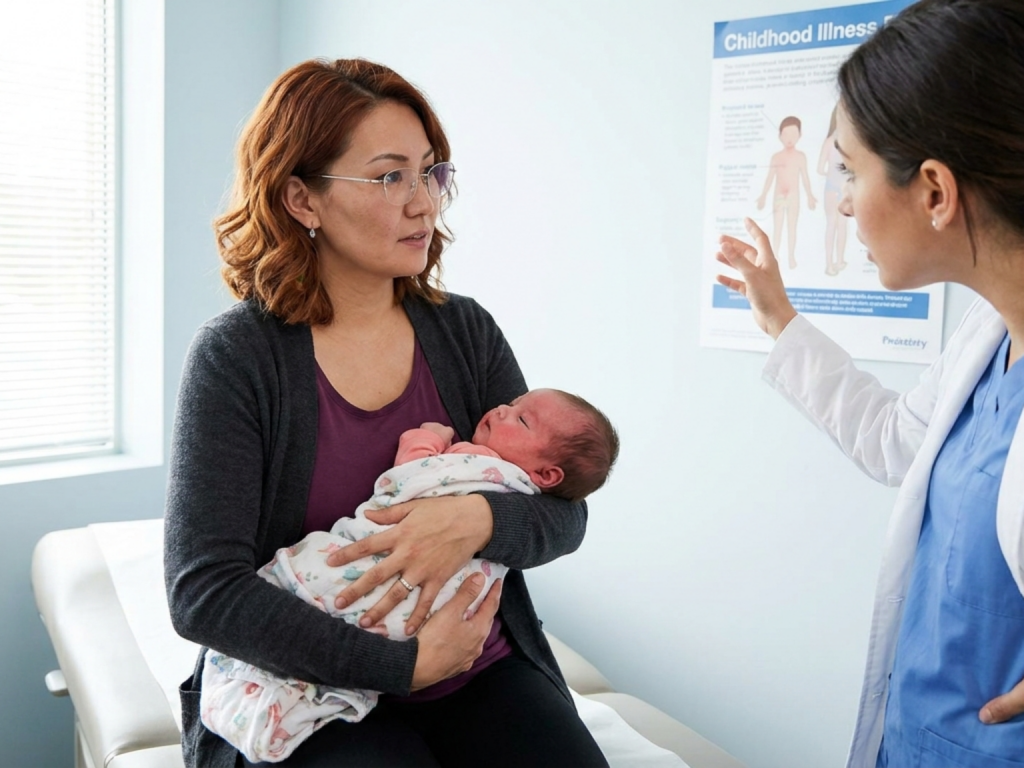
Intro
Age changes what counts as a warning sign. A fever, a behavior change, or a decline in function can mean something very different in a 2-month-old than in a 12-year-old, because development, communication, and physiologic reserve are not the same at each stage.
This article focuses on age-based thresholds for seeking help in children and adolescents. If you are pregnant and also caring for a child, it can help to separate your own pregnancy concerns from your child’s symptoms, then decide whether the issue needs routine follow-up, same-day advice, urgent care, or emergency evaluation.
Highlights
Younger children often need a lower threshold for evaluation because they can worsen quickly and cannot explain what they feel.
In infants under 3 months, fever is treated more cautiously; a temperature over 100.4 F is an emergency-level concern.
For school-age children and teens, persistent anxiety, low mood, sleep disruption, school problems, aggression, self-harm, or substance use deserve professional attention.
If symptoms are severe, rapidly changing, or make breathing, feeding, hydration, or safety a concern, do not wait for a routine visit.
Why age changes the threshold for help
The same symptom can have a very different meaning at different ages. An infant has limited ability to compensate for infection or dehydration, while an older child may be able to describe pain, explain dizziness, or tell you when breathing feels difficult. That is why clinicians use both the symptom itself and the child’s age, size, and developmental stage when judging urgency.
As a general rule, the younger the child, the lower the threshold for medical evaluation. This is especially true in the first months of life, when even a seemingly small change can signal a serious problem. In older children and adolescents, the threshold shifts toward function and behavior as well as physical signs: Is the child eating, sleeping, attending school, and staying safe? If the answer is no, it is reasonable to seek help even if the symptom is not dramatic.
Age also matters in mental health. Children may show distress through behavior rather than words, and teens may minimize symptoms until problems are advanced. Seeking help early is usually better than waiting for a crisis, especially when concerns are persistent, escalating, or affecting daily life.
Infants: when symptoms need urgent attention
In infants, especially those under 3 months of age, fever deserves immediate medical attention. A rectal temperature over 100.4 F is a red flag that should be assessed urgently. In this age group, a fever may be the only visible sign of a significant infection, and waiting at home can be risky.
Other urgent warning signs in young infants include poor feeding, unusual sleepiness or difficulty waking, labored breathing, bluish color around the lips, dehydration, fewer wet diapers, repeated vomiting, a weak cry, or a baby who simply does not seem right to the caregiver. In babies who are still very young, even subtle changes can matter because they have less physiologic reserve than older children.
For many infant concerns, it is reasonable to call the pediatrician or seek same-day evaluation rather than assuming the symptom will resolve on its own. If you are unsure, trust the age-based rule: the younger the infant, the more cautious the response should be. A short delay can be appropriate for minor issues in some older children, but that approach is usually not appropriate for a very young baby with a fever or other concerning signs.
Toddlers and preschoolers: watch behavior and hydration closely
Toddlers and preschoolers can become ill quickly, and they may not be able to describe pain, nausea, shortness of breath, or dizziness in words. In this age range, behavior often carries important information. A child who is much sleepier than usual, inconsolable, unusually irritable, or not interacting in their normal way may need medical assessment sooner than an older child with the same complaint.
Hydration deserves special attention. Reduced drinking, dry mouth, very dark urine, or noticeably fewer wet diapers or bathroom trips can suggest dehydration. Persistent vomiting, breathing difficulty, or a child who cannot keep fluids down should lower the threshold for seeking help. If the child’s symptoms interfere with walking, playing, talking, or normal eating, it is reasonable to ask for medical advice even if the child does not look severely ill at first glance.
Caregivers often know when something feels off long before a child can explain it. That concern is valuable. In younger children, a watch-and-wait approach should be brief and deliberate, not passive. If symptoms are worsening, lasting longer than expected, or causing you to worry about safety or hydration, contact a healthcare professional.
School-age children: persistent symptoms and daily functioning matter
As children grow, they usually become better at describing symptoms, but age still changes how clinicians interpret the problem. In school-age children, the key questions are not only what the symptom is, but whether it is persistent and whether it disrupts daily life. Recurrent pain, fever that does not settle as expected, breathing symptoms that limit activity, or illness that keeps a child out of school can all justify medical review.
School functioning is also a useful signal for emotional or mental health concerns. Problems concentrating, repeated school refusal, falling grades, sleep changes, irritability, social withdrawal, or frequent visits to the school nurse may reflect anxiety, depression, stress, or another concern that deserves attention. The American Academy of Child and Adolescent Psychiatry notes that warning signs can include school problems, anxiety, sleep changes, and aggression, especially when they persist.
If a child’s mood, behavior, or physical symptoms are becoming a pattern rather than an isolated bad day, do not wait indefinitely. A pediatrician, family doctor, or mental health professional can help decide whether the issue is developmental, medical, emotional, or a combination of factors.
Preteens and adolescents: take mental health signs seriously
In preteens and adolescents, age-related help-seeking often centers on safety and mental health. Young people may look physically well while struggling with significant anxiety, depression, trauma reactions, self-harm, substance use, or conflict that is escalating at home or school. The threshold for professional help should stay low when symptoms are persistent, impairing, or linked to safety concerns.
Important warning signs include prolonged low mood, ongoing anxiety, marked sleep disturbance, aggression, sudden withdrawal from friends or activities, substance use, self-harm, suicidal thoughts, or a sharp decline in school performance. A teen who says they cannot cope, feels hopeless, or is acting in a way that suggests they may be unsafe needs prompt evaluation. These are not problems to monitor quietly for weeks in the hope that they will pass.
For adolescents, privacy and trust matter, but so does timely intervention. If you are a parent or caregiver, you do not need to prove that the problem is severe enough before asking for help. A professional assessment can sort out whether the concern is stress, depression, anxiety, substance use, or something else, and it can help you plan the safest next step.
How to decide when help should be same-day, urgent, or routine
A practical way to decide is to ask three questions: How old is the child? How severe is the symptom? Is the child functioning and staying safe? Very young age, breathing trouble, feeding difficulty, dehydration, altered alertness, or self-harm concerns should move the situation toward urgent or emergency care. Persistent but less severe symptoms may still need same-day advice, especially in infants and younger children.
If the symptom is mostly emotional or behavioral, consider duration and impact. Prolonged low mood, anxiety, sleep change, aggression, school problems, substance use, or social withdrawal should not be dismissed as typical growing pains when they are ongoing or getting worse. Early professional support can prevent a crisis and may be easier than waiting until the child is overwhelmed.
When in doubt, call the child’s clinician, an after-hours advice line, or local urgent care for guidance. If you are told to seek emergency care, do so promptly. It is never a failure to ask for help early; in pediatrics, timely evaluation is often the safest choice precisely because age changes the margin for error.
Seek urgent help now if you notice:
- An infant under 3 months with a fever over 100.4 F.
- Breathing difficulty, blue lips, extreme sleepiness, or trouble waking.
- Signs of dehydration, repeated vomiting, or not keeping fluids down.
- Self-harm, suicidal thoughts, substance use, or behavior that makes safety uncertain.
- A rapid decline in function, alertness, or responsiveness.
Tools & Assistance
- Pediatrician or family doctor
- After-hours nurse advice line
- Urgent care clinic or emergency department
- Child and adolescent mental health professional
- School counselor or school nurse
FAQ
Does every fever in a child mean emergency care?
No. But age matters: in infants under 3 months, a fever over 100.4 F is an urgent concern. In older children, the decision depends on the overall picture, including hydration, breathing, behavior, and how the child looks and acts.
When should I seek help for a child’s mood or behavior?
Seek help when low mood, anxiety, sleep changes, school problems, aggression, or withdrawal are prolonged, worsening, or affecting daily life. Do not wait for a crisis if there are self-harm thoughts or substance use.
What if I am not sure whether the symptom is serious enough?
If you are uncertain, contact a healthcare professional. Younger children and infants usually deserve a lower threshold for evaluation than older children.
Can I wait and watch a symptom if my child seems mostly okay?
Sometimes, but only for minor, clearly improving symptoms. If the child is very young, dehydrated, hard to wake, struggling to breathe, or unsafe, seek help promptly rather than waiting.
Sources
- American Medical Association — What doctors want patients to know about when to seek emergency care
- American Academy of Child and Adolescent Psychiatry — When To Seek Help For Your Child
- National Health Service — Supporting a child or young person with mental health needs
Disclaimer
This article is for general information only and does not replace individualized medical advice. If you are worried about a child’s safety or symptoms, contact a qualified healthcare professional promptly or seek emergency care.


















Please log in to leave a comment.