
Intro
Ages 10 to 12 can be a tender in-between stage: a child may still need reminders to brush their teeth, yet also want privacy, personal style, and more control over what goes into a backpack or bathroom cabinet. Choosing essentials for this age is less about buying a long list and more about supporting competence, body literacy, safety, and self-respect.
Highlights
The safest starting point for most preteens is a simple routine: gentle cleanser, lightweight moisturizer, and broad-spectrum SPF 30 sunscreen.
Personal care products should be mild, fragrance-conscious when possible, and appropriate for young, sometimes reactive skin.
Hygiene, school organization, menstrual or body-change preparedness, and digital safety tools are all part of practical preteen essentials.
Preteens benefit when adults frame products as tools for comfort and health, not as requirements for attractiveness.
Start with the real goal: autonomy without overwhelm
Preteen products work best when they are chosen around developmental needs rather than adult marketing. At 10 to 12 years, many children are entering puberty or anticipating it. Sebaceous glands may become more active, sweat odor may increase, hair care needs can change, and peer comparison often becomes more intense. A thoughtful product plan can reduce daily friction while protecting a child’s skin barrier, privacy, and confidence.
A useful principle is “few, familiar, and repeatable.” A drawer crowded with serums, masks, exfoliants, fragrance sprays, and novelty cosmetics can make routines confusing and increase the risk of irritant or allergic contact dermatitis. A short routine, practiced consistently, teaches health literacy: what a product is for, how much to use, when to stop, and when to ask an adult or clinician for help.
This is also a good age to shift from doing everything for the child to coaching. For example, a parent might help set up a preteen hygiene routine, label morning and evening steps, and then gradually step back. This supports supported independence in preteens: the adult remains available, but the child experiences ownership. The tone matters. “Your body is changing, and these tools help you feel comfortable” is usually better than “You smell” or “Your skin looks bad.”
Basic skincare: cleanser, moisturizer, and sunscreen
For most 10- to 12-year-olds, the essential skincare set is simple: a gentle cleanser, a lightweight moisturizer, and broad-spectrum sunscreen. This matches the safest entry point recommended in tween beauty guidance: start with fundamentals before adding acne treatments, exfoliants, or cosmetic layers. Young skin can be resilient, but it can also be easily irritated by harsh surfactants, scrubs, acids, and heavily fragranced products.
A gentle cleanser should remove sweat, sunscreen, and visible dirt without leaving the face tight, stinging, or squeaky. Foaming cleansers are not automatically harmful, but very stripping formulas can worsen dryness or irritation. A non-comedogenic moisturizer can help maintain the epidermal barrier, especially if the child swims, plays sports, uses acne medication under medical guidance, or lives in a dry climate.
Sunscreen is a health essential, not a beauty extra. Choose a broad-spectrum SPF 30 or higher product that the preteen will actually use. Some children prefer mineral sunscreens; others tolerate lightweight lotions, gels, or sticks better. Sunscreen sticks can be helpful for backpacks or sports bags, though they still require adequate coverage. Teach application before outdoor school activities, sports, and long commutes, and remind children that cloudy days still involve ultraviolet exposure.
- Morning basics: cleanse if needed, moisturize if dry, apply sunscreen to exposed skin.
- Evening basics: cleanse away sunscreen, sweat, and grime; moisturize if the skin feels dry or tight.
- Avoid as routine products unless advised: abrasive scrubs, strong peels, retinoids, skin-lightening products, and multiple active ingredients at once.
Body hygiene essentials for puberty transitions
Body odor often appears before other visible pubertal changes because apocrine sweat glands become more active under hormonal influence. A deodorant can be a practical, dignity-preserving essential. Deodorants reduce odor; antiperspirants reduce sweating by using aluminum salts. Either may be appropriate depending on the child’s needs and family preference, but irritation, burning, rash, or persistent odor despite hygiene should prompt a discussion with a healthcare professional.
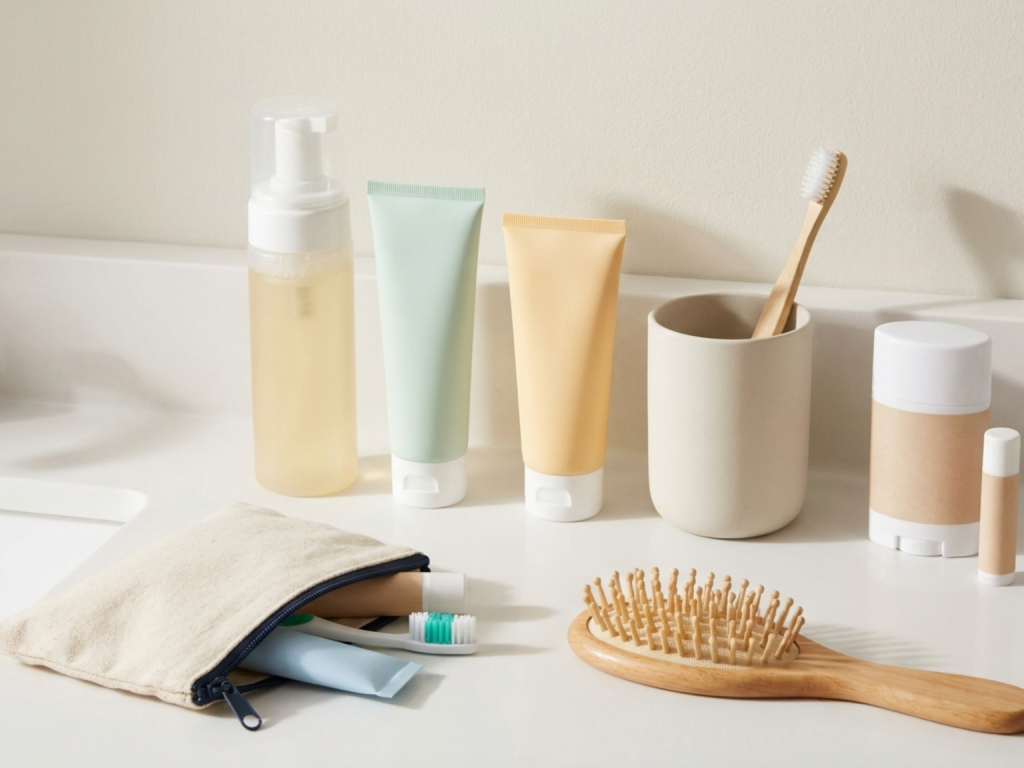
Other daily basics include a soft toothbrush, fluoride toothpaste, floss or floss picks, lip balm, nail clippers, a hairbrush or comb, and gentle body wash. Lip balm with SPF can be useful for children who play outdoor sports. Blotting papers may help a child manage oiliness at school without over-washing the face, which can aggravate barrier disruption.
Hair accessories and hair care should match hair type, activity level, and sensory comfort. Some preteens need detangling products, swim shampoo routines, scalp care, or protective styles; others need only a simple brush and shampoo schedule. The essential is not a universal product but a plan the child can follow without shame or pain.
For children who may menstruate, it is often kindest to prepare before the first period. A small, private kit can include pads in appropriate sizes, period underwear if desired, a sealable pouch, spare underwear, and simple written instructions. Menstrual cups or tampons may be suitable for some adolescents, but a child should never feel pressured to use internal products. Heavy bleeding, severe pain, fainting, cycles that are very disruptive, or distress around puberty deserve medical support.
School and activity products that reduce daily stress
Preteen essentials are not limited to the bathroom. School-age organization tools can make a major difference for children who are juggling homework, activities, changing classrooms, instruments, sports gear, or social plans. A comfortable backpack, labeled water bottle, lunch container, pencil case, planner or checklist, and small hygiene pouch can reduce repeated morning conflict.
Because 10- to 12-year-olds vary widely in executive function, the product should fit the child rather than the other way around. A beautiful planner is not helpful if the child cannot remember to open it. Some children do better with color-coded folders, a whiteboard by the door, or a single “launch pad” basket for items that must leave the house. Others benefit from a backpack insert or separate pouches for sports, music, and personal care.
Activity-related essentials may include a reusable water bottle, properly fitted athletic shoes, sun hat, swim goggles, sports-specific protective gear, and a small post-activity kit with deodorant, wipes for hands or sweat, hair ties or clips, and a clean shirt if needed. For safety, sports equipment should be sized and maintained appropriately. Mouthguards, helmets, and protective pads are not optional fashion items when a sport requires them.
Sleep and recovery are also product-related. A preteen may need an alarm clock that is not a phone, a bedside lamp for reading, blackout curtains, or a charging station outside the bedroom. These choices can protect sleep by reducing late-night scrolling and notifications. Products should serve routines, not compete with them.
Makeup, fragrance, and trend products: how to say yes safely
Interest in beauty products at this age is common and does not automatically mean a child is growing up too fast. Often, it reflects curiosity, play, peer culture, or a wish for control. A supportive approach separates experimentation from pressure. Families can allow age-appropriate items while setting boundaries around skin safety, school rules, cost, and social media influence.
If makeup is allowed, consider starting with low-risk, easy-to-remove options such as tinted lip balm, clear brow gel, or a light, washable product for occasional use. Heavy foundation, long-wear adhesives, glitter near the eyes, lash glues, and shared makeup can increase the risk of irritation, infection, or allergic reactions. Teach the child not to share eye or lip products and to wash hands before application.
Fragrance can be tricky. Many preteens enjoy scented products, but fragrance is a common trigger for irritant or allergic contact dermatitis and may aggravate headaches or respiratory symptoms in sensitive people. A mild body mist used sparingly on clothing may be better tolerated than multiple fragranced layers on skin, but reactions vary. Unscented or fragrance-free basics are often a safer default, especially for eczema-prone skin.
Trend products deserve extra caution. “Natural,” “clean,” or “viral” does not mean medically safer. Essential oils, peel-off masks, pore strips, strong acids, and products marketed for adult anti-aging can be inappropriate for young skin. A good family rule is to introduce one new product at a time and stop if burning, swelling, hives, scaling, or persistent redness occurs.
Acne, eczema, allergies, and when products are not enough
Mild comedonal acne or occasional pimples can begin during the preteen years. However, it is wise not to build an aggressive acne regimen without guidance. Benzoyl peroxide, salicylic acid, adapalene, and other active treatments may be useful in some situations, but they can also cause dryness, irritant dermatitis, photosensitivity concerns depending on the agent, or poor adherence if the routine is too complicated. If acne is painful, scarring, widespread, emotionally distressing, or not improving with gentle care, consult a pediatrician or dermatologist.
Children with atopic dermatitis, asthma, allergic rhinitis, or known contact allergies may need more selective products. Fragrance-free cleansers, bland emollients, and avoidance of harsh exfoliants are often better tolerated, but individualized advice is important. Patch testing may be considered by clinicians when allergic contact dermatitis is suspected. Products that sting on application, even if marketed for sensitive skin, should be reconsidered.
Scalp scaling, hair loss, recurrent boils, fungal-appearing rashes, severe dandruff, or body odor that is sudden and marked can have medical causes. Products may mask symptoms temporarily without addressing the underlying issue. Likewise, early or delayed puberty concerns, distress about body changes, or intense anxiety about appearance should be met with clinical and emotional support rather than more products.
For medically literate caregivers, the core distinction is barrier support versus pharmacologic treatment. Cleansers, moisturizers, and sunscreen support skin function and prevention. Medicated acne or dermatitis therapies should be chosen with attention to diagnosis, severity, age, pregnancy potential in older adolescents when relevant, contraindications, and adherence.
Building a practical essentials kit
A realistic kit for a 10- to 12-year-old should be small enough to maintain and flexible enough to respect personal preferences. Age-based child product choices are most successful when the child helps choose textures, formats, and storage. A child who hates sticky sunscreen may use a gel or lotion more reliably. A child who forgets deodorant may benefit from one at home and one in a sports bag.
Consider dividing products by location. Bathroom basics may include cleanser, moisturizer, sunscreen, toothbrush, toothpaste, floss, deodorant, body wash, shampoo, conditioner if needed, brush or comb, nail care, and lip balm. Backpack basics may include lip balm, menstrual supplies if relevant, a small pack of tissues, hand sanitizer if allowed by school, hair ties or clips, and a water bottle. Activity basics may include sport-specific safety gear, sunscreen, deodorant, and clean socks or shirt.
Storage matters. Clear bins, labeled pouches, or a simple checklist can prevent the common problem of buying good products that are never used. Expiration dates also matter, particularly for sunscreen and some medicated products. Teach preteens to notice changes in smell, color, or texture and to avoid using old or contaminated items.
Finally, budget and values are part of the conversation. Preteens are heavily exposed to advertising. Adults can normalize drugstore options, explain that expensive does not always mean better, and discuss how influencers are paid to promote products. This builds adolescent health literacy without shaming curiosity or style.
Communication: protecting confidence while teaching care
Products can either support a child’s developing identity or quietly teach them that their natural body is a problem. The difference often lies in adult language. Present deodorant, period supplies, sunscreen, and skincare as ordinary health tools, similar to toothpaste or a bike helmet. Avoid teasing, public reminders, or comments that compare the child with siblings or peers.
Privacy becomes increasingly important at this age. A preteen may need a private place to store menstrual products, a robe or towel routine after bathing, or permission to manage grooming without constant observation. At the same time, caregivers still have a safety role: checking ingredient suitability, monitoring skin reactions, ensuring medications are used correctly, and helping with online purchasing boundaries.
It is also helpful to revisit the kit every few months. Seasons change, sports change, puberty progresses, and school expectations shift. A winter routine may need more moisturizer; summer camp may require more sunscreen planning; a new sport may require a mouthguard or different shoes. The best essentials are responsive rather than fixed.
Above all, a product list is not a measure of good parenting. Some children love routines and personal care; others resist them. Progress may look like using sunscreen three days a week, remembering deodorant after gym, or telling an adult that a product burns. Those are meaningful steps toward self-care.
Use extra caution with these situations
- Stop a product and seek advice if it causes swelling, hives, blistering, significant burning, or persistent redness.
- Consult a clinician for painful, scarring, widespread, or emotionally distressing acne.
- Avoid adult-strength peels, retinoids, skin-lightening products, and multiple active ingredients unless recommended by a healthcare professional.
- Do not ignore severe menstrual pain, very heavy bleeding, fainting, or major distress around puberty.
- Use sport-specific protective equipment correctly and replace damaged helmets, mouthguards, or pads.
Tools & Assistance
- Create a small morning-and-evening bathroom checklist with the preteen.
- Ask a pediatrician, dermatologist, dentist, or pharmacist about product concerns.
- Set up a backpack hygiene pouch for school and activities.
- Review sunscreen expiration dates and replace outdated products.
- Use a family charging station outside the bedroom to support sleep.
FAQ
Does every 10- to 12-year-old need a skincare routine?
Most only need simple care: gentle cleansing when needed, moisturizer if dry, and daily broad-spectrum sunscreen. A complex routine is usually unnecessary.
Is deodorant safe for preteens?
Many preteens can use deodorant safely. Choose a well-tolerated product, stop if irritation occurs, and consult a clinician for unusual odor, rash, or excessive sweating.
Should preteens use acne products?
Not automatically. Mild breakouts may improve with gentle care, but persistent, painful, scarring, or distressing acne should be discussed with a healthcare professional.
What makeup is most appropriate at this age?
If makeup is allowed, low-risk items such as tinted lip balm or easy-to-remove products are usually preferable to heavy foundation, adhesives, or shared eye makeup.
How can parents reduce battles over hygiene?
Use neutral language, offer limited choices, keep routines short, and connect products to comfort and health rather than appearance or criticism.
Sources
- Allure — So Your Tween Wants to Use Beauty Products—Here's What to Get Them
- Ulta Beauty — Tween Makeup & Skincare Essentials for Junior High
- PreReq Care — Which Are the Best Beauty Gifts for Tweens and Teens?
Disclaimer
This article is for general educational purposes and does not diagnose, treat, or prescribe. Consult a qualified healthcare professional for personal medical concerns, skin conditions, puberty concerns, or product reactions.













Please log in to leave a comment.