
Intro
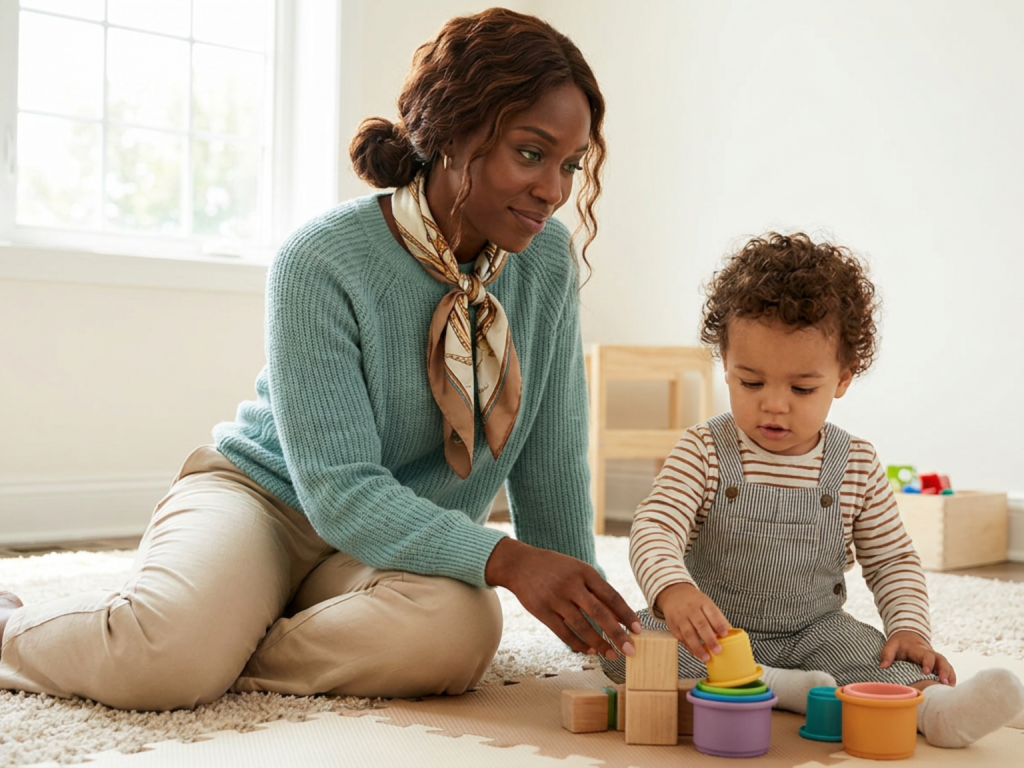
For toddlers, play is not a break from learning; it is one of the main ways learning happens. A child who stacks blocks, feeds a doll, bangs a spoon, chases bubbles, or repeatedly asks for the same game is actively building neural pathways, testing cause and effect, practicing language, and learning how relationships work.
This can be reassuring for caregivers who feel pressure to make every moment educational. Toddlers do not need elaborate lessons to grow. They need safe spaces, responsive adults, time to explore, and a balance of child-led play and gentle guidance that matches their developmental stage.
Highlights
Play supports motor, cognitive, language, and social-emotional development during a period of rapid brain growth.
Child-led free play builds curiosity and initiative, while guided play can help toddlers learn specific concepts more effectively.
Simple toys and everyday objects often stimulate more flexible thinking than highly structured toys.
A responsive adult strengthens play by observing, following the child’s lead, naming experiences, and adding gentle challenges.
Play should feel safe and connected; persistent developmental, sensory, behavioral, or communication concerns deserve professional guidance.
Play is the toddler brain at work
Toddlerhood is a period of extraordinary neurodevelopment. By around age three, a large proportion of early brain development has already occurred, including rapid synaptogenesis, myelination, and refinement of neural networks through repeated experience. In practical terms, this means that a toddler’s brain is constantly using sensory input, movement, emotion, and social interaction to organize itself.
Play gives toddlers the type of experience their brains are built to use. When a child drops a cup again and again, they are not simply being difficult; they are studying gravity, sound, caregiver reaction, and their own motor control. When they pretend a block is a phone, they are using symbolic thought, an important cognitive milestone that supports later language, imagination, and problem-solving.
Because toddlers learn through the body as well as the mind, play often looks active, messy, repetitive, and emotionally intense. Repetition helps consolidate memory and skill. Movement supports vestibular and proprioceptive processing, which are involved in balance, body awareness, and coordination. Social play activates systems involved in attachment, attention, imitation, and emotional regulation. This is why play can look simple from the outside while being neurologically rich on the inside.
Free play, guided play, and direct instruction
Not all play serves the same purpose, and toddlers benefit from more than one kind. Free play is child-led, spontaneous, and open-ended. The toddler chooses the activity, changes the rules, and explores without a fixed adult outcome. This kind of play supports initiative, autonomy, creativity, intrinsic motivation, and problem-solving.
Guided play keeps the child’s curiosity at the center while an adult gently shapes the environment or adds prompts. For example, instead of saying, “Put the red block on the blue block,” a caregiver might ask, “Which block could make the tower taller?” Research in early childhood education suggests that guided play can be especially effective for academic or concept-based learning because it combines discovery with adult scaffolding. Scaffolding means providing just enough support to help the child do something they could not quite do alone.
Direct instruction also has a place, particularly for safety and clear routines: “Hot stove. Hands stay away.” But toddlers usually learn best when direct teaching is brief and embedded in warm interaction. A balanced day might include unstructured pretend play, outdoor movement, shared book reading, simple household participation, and moments of guided discovery. The goal is not to turn play into a lesson plan, but to recognize when gentle adult involvement can deepen learning.
How play builds motor and sensory skills
Toddlers are learning what their bodies can do. Climbing, pushing, carrying, dancing, scribbling, pouring, scooping, and stacking all contribute to motor development. Gross motor play strengthens large muscle groups and balance. Fine motor play supports hand strength, bilateral coordination, and early pre-writing skills. Sensory play, such as water play, sand, dough, finger painting, or exploring textures, helps toddlers integrate information from touch, sight, sound, movement, and body position.
Caregivers can support this safely by offering varied movement opportunities: crawling through a tunnel, stepping over cushions, tossing soft balls, stirring batter, or transferring large beads into a container under close supervision. These activities build motor planning, which is the ability to imagine, organize, and execute a movement sequence.
Some toddlers seek intense sensory input, while others are easily overwhelmed by noise, texture, crowds, or bright environments. Occasional preferences are common. However, if sensory responses consistently interfere with eating, sleep, hygiene, play, or family routines, it is reasonable to discuss sensory overload in toddlers with a pediatrician, occupational therapist, or early intervention team. The aim is not to label a child based on preferences, but to understand whether extra support would make daily life easier.
How play supports language and thinking
Language grows in responsive relationships, and play creates many opportunities for communication before and after words emerge. A toddler may point, gesture, vocalize, imitate, bring an object, or look back at a caregiver to share attention. These are important foundations for later expressive language. During play, adults can support language by narrating what the child is doing, using short phrases, pausing for a response, and expanding the child’s words without pressure.
For example, if a toddler says “car,” the caregiver might say, “Yes, big car. The car goes fast.” If the toddler stacks two blocks, the adult might comment, “One more block. Tall tower.” This type of language modeling is often more useful than quizzing. Questions such as “What color is this?” can be fine occasionally, but too many test-like prompts may reduce natural conversation.
Play also builds executive function, the group of cognitive processes involved in attention, working memory, cognitive flexibility, and inhibitory control. A child who waits for a turn with a toy train is practicing impulse control. A child who changes a pretend banana into a phone is using cognitive flexibility. A child who remembers that the toy animal is “sleeping” and whispers nearby is holding an idea in working memory. These skills are immature in toddlerhood, so adult expectations should stay realistic and compassionate.
Pretend play and social-emotional growth
Pretend play often appears in the second year of life and becomes more complex over time. A toddler may feed a stuffed animal, tuck a doll into bed, stir an empty pot, or pretend to talk on a phone. These small scenes are powerful. They help children process routines, relationships, fears, and wishes in a manageable form.
Through pretend play, toddlers experiment with roles and emotions. They may act out being the doctor, the baby, the parent, or the pet. They may repeat a stressful event, such as a vaccination visit or a goodbye at childcare, in a way that gives them more control. This can support toddler emotional regulation, because play gives feelings a symbolic outlet before a child can fully explain them verbally.
Social play also teaches turn-taking, imitation, empathy, and repair. Toddlers are still egocentric in a normal developmental sense; they are not yet skilled at seeing another person’s perspective. A caregiver can gently coach: “You both want the truck. Maya is using it now. Let’s find another truck while you wait.” These moments build social development without expecting adult-like sharing. For many toddlers, parallel play, playing near another child rather than directly with them, is developmentally appropriate and still valuable.
The caregiver’s role: follow, notice, and gently extend
One of the most helpful things an adult can do is follow the toddler’s lead. This does not mean letting the child do anything unsafe. It means noticing what has captured the child’s attention and joining respectfully. If the toddler is lining up animals, the adult might sit nearby and say, “The animals are in a long line.” If the child invites interaction, the adult can add a small idea: “The cow is waiting behind the horse.”
Useful caregiver strategies include:
- Observe first. Watch what the child is trying to understand before adding instructions.
- Use simple language. Short, clear phrases match toddler processing capacity.
- Offer choices. “Blocks or crayons?” supports autonomy while keeping boundaries clear.
- Add one small challenge. If the child can stack three blocks, invite a fourth rather than demanding a tower of ten.
- Celebrate effort. Comments such as “You kept trying” support persistence more than constant praise for being “smart.”
This approach is a form of controlled autonomy for toddlers: the adult provides safety, rhythm, and limits, while the child experiences meaningful choice. It is especially helpful during transitions, frustration, or early problem-solving because it reduces power struggles and supports confidence.
Choosing toys and play environments
Toddlers do not need expensive materials to learn. In many cases, open-ended toys are more useful than toys with a single correct use. Blocks, nesting cups, balls, scarves, cardboard boxes, chunky crayons, toy animals, simple vehicles, dolls, pretend kitchen items, and sturdy books invite flexible thinking. Everyday household objects, when safe and supervised, can be equally engaging: wooden spoons, plastic containers, laundry baskets, and measuring cups.
A good play environment is safe enough for exploration but not so controlled that curiosity disappears. This may mean anchoring furniture, removing choking hazards, using age-appropriate materials, supervising water play closely, and rotating a small number of toys rather than presenting everything at once. Too many toys can fragment attention; fewer choices often lead to deeper play.
Screen-based activities are not equivalent to hands-on play for toddlers. High-quality video chat with a responsive adult is different from passive viewing, but toddlers still need abundant real-world interaction, movement, touch, and shared attention. If screens are used, caregivers can make them more meaningful by watching together, naming what is happening, and connecting it to real life afterward. Families with concerns about screen use, sleep, behavior, or attention should discuss them with a pediatric professional rather than relying on generic rules alone.
When play raises concerns
Toddlers vary widely in temperament, interests, language timing, and social confidence. A child who prefers trucks, avoids finger paint, or repeats the same pretend sequence is not automatically showing a problem. Development is best understood through patterns over time, not a single behavior.
Still, play can offer useful clues. Consider seeking guidance from a pediatrician, early intervention program, speech-language pathologist, occupational therapist, or child development specialist if a toddler consistently loses skills they once had, rarely responds to social engagement, does not use gestures or sounds to communicate, has very limited interest in people or objects, shows extreme distress with ordinary sensory experiences, or cannot participate in play because of motor, vision, hearing, feeding, sleep, or behavioral difficulties.
Professional support is not about blaming parents or forcing a toddler into a rigid mold. It is about understanding the child’s nervous system, communication profile, and environment so that support can be matched to real needs. Early developmental surveillance and screening can identify children who may benefit from services, while also reassuring families when variation falls within an expected range.
When to seek professional advice
- Consult a pediatrician if your toddler loses language, motor, social, or play skills they previously had.
- Ask for guidance if sensory distress, aggression, sleep disruption, or feeding difficulty regularly prevents play or daily routines.
- Seek urgent care for injury, choking, suspected poisoning, breathing difficulty, seizure, or altered consciousness during play.
- Discuss concerns about hearing, vision, motor coordination, or speech delays with a qualified healthcare professional.
- Do not use play observations alone to diagnose a developmental or behavioral condition.
Tools & Assistance
- A safe floor space with a small rotation of open-ended toys
- Shared book reading with pauses for pointing, sounds, and toddler responses
- Outdoor movement time such as climbing, running, balancing, and ball play
- A brief play observation note for pediatric visits, including strengths and concerns
- Early intervention or child development services if recommended by a healthcare professional
FAQ
Does my toddler need educational toys to learn?
No. Simple, open-ended materials such as blocks, cups, balls, books, and pretend objects often support richer learning than highly structured toys.
Should I teach during play or let my toddler lead?
Both can help. Let your toddler lead much of the time, then gently add language, choices, or small challenges when they are engaged.
Why does my toddler repeat the same game over and over?
Repetition helps toddlers consolidate memory, motor patterns, language, and emotional understanding. It is usually a normal part of learning.
Is parallel play normal?
Yes. Many toddlers play beside other children before they can consistently share, cooperate, or negotiate. Parallel play still supports social learning.
When should I worry about my toddler’s play?
Seek professional advice if your child loses skills, rarely engages with people or objects, has major communication concerns, or cannot play because of sensory, motor, behavioral, or medical difficulties.
Sources
- National Association for the Education of Young Children — The Power of Playful Learning in the Early Childhood Setting
- Research Outreach — Learning through play: New perspectives on early years development
- First Things First — Children Learn Through Play
Disclaimer
This article is for informational purposes only and does not replace medical, developmental, or mental health advice. Consult a qualified healthcare professional for concerns about your child’s development, behavior, or safety.














Please log in to leave a comment.